What Is a High Torque DC Motor?
When a machine must start under load, ordinary motor performance may not be enough. A high torque dc motor is built to deliver strong rotational force, especially during startup or sudden load changes. It converts direct-current electricity into mechanical motion through magnetic interaction inside the motor. Torque matters.
This motor type commonly appears in winches, conveyor systems, electric actuators, robotics, pumps, and small mobile equipment. Its strong output can move a heavy load from rest, even when speed remains relatively low. However, high torque does not mean unlimited power. Motor size, voltage, current, winding design, cooling, and gearbox selection all influence actual performance. That sounds simple. It is not always simple.
A reliable evaluation should begin with the datasheet, not a product photograph. Check continuous torque, peak torque, rated speed, stall current, duty cycle, and thermal limits. In workshop testing, a motor may perform well for several seconds, then overheat when the same load continues. This is an easy detail to miss. A gearbox can increase output torque, but it also reduces speed and introduces mechanical losses. Electrical wiring and controllers must handle the expected current safely. Engineers should also consider noise, brush wear, maintenance access, and operating environment. No motor fits every application. This guide explains how a high torque dc motor works, where its advantages matter, and which practical limitations deserve careful attention before selection.
Definition and Core Function of a High Torque DC Motor
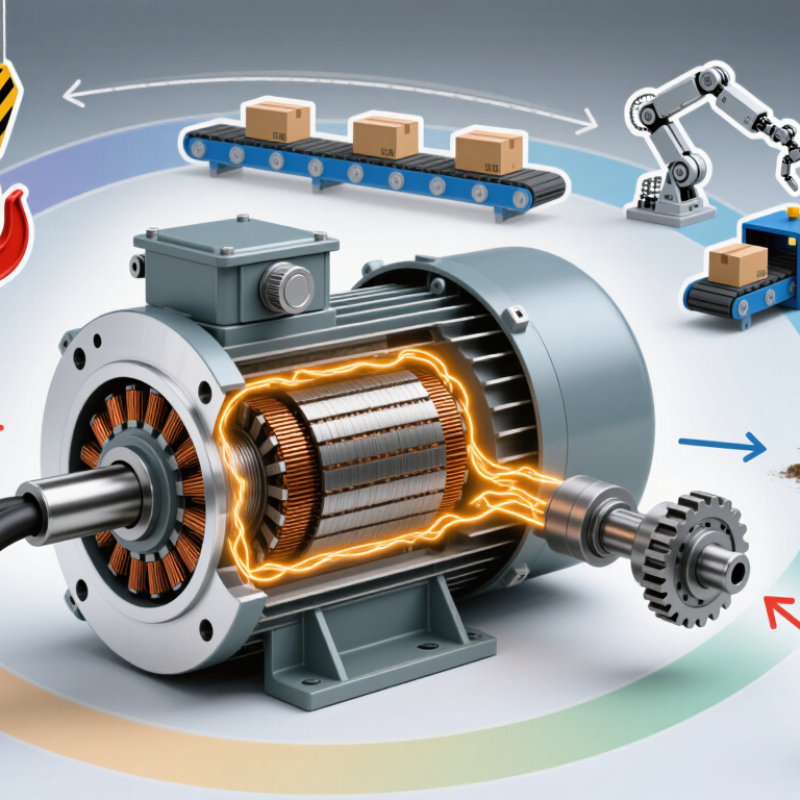
A high torque DC motor is an electric motor designed to produce strong rotational force, especially during startup and low-speed operation. Its core function is simple: convert direct-current electrical energy into controlled mechanical torque. Current flows through the armature, while magnetic fields create rotation. Higher current generally produces higher torque, although heat and efficiency limits remain important.
The term “high torque” has no universal numerical threshold. It depends on voltage, speed, motor size, duty cycle, and load conditions. A motor lifting a heavy valve may need high starting torque, while a conveyor motor may require steady torque for hours. In practical testing, engineers check stall torque, continuous torque, temperature rise, and speed stability. Small mistakes matter.
The U.S. Department of Energy reports that motor-driven equipment can consume about 70% of electricity used in manufacturing facilities. This figure explains why torque selection affects both production and operating cost. A properly matched DC motor can start a loaded mechanism smoothly, reduce mechanical shock, and maintain motion under changing resistance. However, excessive current may damage windings or shorten service life. The International Energy Agency also identifies motor systems as a major industrial efficiency opportunity, reinforcing the need for accurate sizing, cooling, and speed control.
Key Components That Generate High Torque
High torque DC motors convert electrical current into strong mechanical force at low or moderate speed. Their performance depends on several closely matched components, not motor size alone. The stator creates the magnetic field around the rotor. Permanent magnets or field windings provide this field. The rotor then turns as current flows through its armature windings.
The armature winding is central to torque production. More current usually creates more torque, but it also creates more heat. Copper resistance can waste energy through I²R losses. A strong shaft and carefully sized bearings transfer torque without excessive deflection.
Gear reduction can multiply output torque, although it reduces speed and adds mechanical losses. This trade-off is easy to underestimate.
The U.S. Department of Energy reports that motor systems consume about 70% of industrial electricity in the United States. That figure explains why efficient component selection matters beyond laboratory testing. Thermal paths, ventilation, and controller limits often decide whether a motor survives continuous load. A compact housing may look efficient, yet it can trap heat near the windings. Field experience shows that peak torque ratings can mislead users when duty cycles are ignored. Short bursts are different.
Accurate selection requires checking stall torque, continuous torque, current demand, duty cycle, and ambient temperature together. The International Energy Agency’s Energy Efficiency reports also emphasize system-level efficiency, rather than isolated component ratings. A high-torque design is therefore a coordinated system of magnets, copper, steel, bearings, electronics, and cooling.
How Torque, Speed, Current, and Voltage Are Related
A high-torque DC motor produces strong turning force, especially at low speed. Its behavior depends on four connected variables: torque, speed, current, and voltage. Motor torque is approximately proportional to armature current. More current creates more magnetic force. However, resistance and heat limit safe current levels.
Voltage mainly controls speed. A higher applied voltage usually increases speed, while load torque causes speed to fall. As speed falls, back electromotive force decreases, allowing more current to enter the winding. That extra current increases torque. The relationship is useful but not perfect. Brush friction, winding resistance, magnetic saturation, and temperature change the result.
Real machines rarely match the clean equation. The International Energy Agency has reported that electric motor systems consume about 46% of global electricity. This figure explains why efficiency and control matter beyond laboratory testing. IEC 60034-1 also requires motor performance to be evaluated under defined operating conditions, not only at peak output. In practice, a motor rated at 24 volts may draw several times its normal current during startup. That trade-off matters. A controller must limit the surge, or copper losses can rise sharply. Heat arrives quickly. Selecting a high-torque motor therefore requires checking continuous torque, peak torque, operating speed, current limits, and cooling conditions together. A low-speed application may need high current, while a high-speed application may need greater voltage. The correct choice is rarely based on torque alone.
What Is a High Torque DC Motor? - How Torque, Speed, Current, and Voltage Are Related
The following table shows calculated operating points for a representative 12 V brushed DC motor. It demonstrates how increasing current raises torque, while voltage, winding resistance, and back electromotive force determine motor speed.
Reference assumptions: Motor torque constant = 0.05 N·m/A; back-EMF constant = 0.05 V·s/rad; winding resistance = 0.20 Ω; estimated friction and windage torque = 0.01 N·m. Calculations use the relationships
T = KTI,
V = IR + KEω,
Pin = VI, and
Pout = Tshaftω.
Actual values vary with motor construction, temperature, controller limits, gearing, and cooling conditions.
Applications, Advantages, and Selection Considerations
A high-torque DC motor converts electrical energy into strong rotational force at relatively low speed. This makes it useful when a machine must start, lift, pull, or hold a heavy load. Typical applications include electric actuators, conveyor drives, mobility equipment, robotic joints, winches, and automated valves. In practical testing, technicians often notice its value during startup, when friction and load inertia demand extra torque. Some systems need torque only briefly. Others run for hours.
The main advantages are controllable speed, quick response, compact construction, and simple direction reversal. A suitable controller can adjust speed smoothly as operating conditions change. However, high torque usually requires higher current. That can create heat, reduce battery life, and increase wiring requirements. Brushed designs may also require maintenance because brushes and commutators gradually wear. Bigger is not always better. An oversized motor may waste energy and respond poorly to light loads.
Selection should begin with continuous torque, peak torque, speed range, and duty cycle. Calculate the load at startup, not only during normal movement. Check shaft dimensions, mounting space, supply voltage, and controller compatibility. For lifting applications, include gearbox efficiency and the effect of gravity. Thermal limits matter too, especially inside a sealed enclosure. Encoders or other feedback devices can improve positioning accuracy. In my experience, early calculations are often optimistic. Real friction, misalignment, and sudden impacts can change performance significantly. A prototype test under the actual load remains valuable. Listen for vibration. Measure temperature. Review the result before finalizing the motor.