
10 Best Automation Motors for Global Buyers
Choosing the right automation motors is no longer a simple price comparison. Global factories now demand precise motion, lower energy use, reliable diagnostics, and easier maintenance. The International Federation of Robotics reported 541,302 industrial robots were installed worldwide in 2023. That figure shows how quickly automated production is expanding. Every robot, conveyor, packaging line, and machining cell depends on motor performance.
Efficiency matters at scale. The International Energy Agency identifies electric motor systems as one of the largest industrial electricity loads. Even small losses become expensive when motors run continuously. IEC 60034-30-1 also provides recognized efficiency classes, including IE3 and IE4. These classifications help buyers compare products more consistently across markets. However, efficiency labels do not tell the whole story. A motor with excellent laboratory performance may still disappoint if its drive, gearbox, cooling system, or installation is poorly matched.
This guide examines 10 best automation motors for global buyers, including servo, stepper, induction, and brushless DC options. The evaluation considers torque stability, speed control, duty cycles, feedback compatibility, protection ratings, service access, and regional support. Practical details matter. A dusty packaging plant needs different protection than a clean electronics facility. A high-speed pick-and-place robot needs different feedback than a slow conveyor.
There is no universal winner.
Data sheets can also be incomplete. Some manufacturers publish impressive peak torque but provide limited continuous-duty information. Buyers should verify test conditions, warranty terms, spare-part availability, and compliance requirements before ordering. This review aims to be useful, but readers should challenge every ranking against their actual machine, climate, voltage, and maintenance capability.
Automation Motor Basics and Their Role in Industrial Systems
10 Best Automation Motors for Global Buyers
Automation Motor Basics and Their Role in Industrial Systems
Automation motors convert electrical energy into controlled mechanical motion. They drive conveyors, pumps, robotic joints, compressors, and packaging lines. Their value depends on more than rated power. Speed stability, starting torque, duty cycle, enclosure protection, and feedback compatibility all affect system performance.
Motor selection starts with the load. A conveyor needs steady torque, while a robotic axis may require rapid acceleration and precise positioning. In humid factories, sealing and corrosion resistance matter. In dusty areas, poor enclosure choices can shorten service life. The U.S. Department of Energy reports that motor-driven equipment uses about 69% of industrial electricity in the United States. Small efficiency losses can become expensive.
Efficiency matters, but it is not the only measure. The IEA’s Energy Efficiency 2023 report identifies industry as responsible for nearly 40% of global final energy demand. Correct sizing can reduce waste, heat, and maintenance pressure. Variable-speed control often helps pumps and fans, where demand changes frequently. Still, a drive can create electrical noise or poor low-speed cooling if engineers overlook installation details.
Field teams should check actual load data before ordering. Nameplate estimates are often incomplete. A six-month review may reveal oversized motors, frequent starts, or unexpected vibration. That review is rarely perfect. Yet it can prevent costly assumptions. Standards such as IEC 60034-30-1 also help buyers compare motor efficiency classes across markets.
Key Criteria for Comparing Motors in Global Markets
10 Best Automation Motors for Global Buyers
Comparing automation motors globally requires more than checking rated power. Start with the load profile, including acceleration, stopping frequency, peak torque, and daily operating hours. Torque matters. A motor sized only by horsepower may overheat during repeated starts.
Energy efficiency deserves careful attention. The International Energy Agency reports that motor-driven systems consume more than half of global electricity. The U.S. Department of Energy also identifies industrial motor systems as major electricity users. Therefore, compare efficiency across the actual load range, not only at the nameplate point. IEC 60034-30-1 efficiency classes provide a useful baseline, but inverter operation can change real performance. This is where many comparisons become incomplete.
Global buyers should verify voltage, frequency, insulation class, ingress protection, cooling method, and ambient temperature limits. A motor designed for a dry indoor plant may fail quickly in a humid coastal facility. Control compatibility matters too. Check encoder feedback, braking response, overload capacity, and communication interfaces before purchasing. Serviceability is equally practical: spare bearings, manuals, test certificates, and local technical support can reduce downtime. The International Organization for Standardization’s ISO 50001 framework supports measuring energy performance, yet measurement plans are often weak in smaller plants. That deserves honest review. A higher-efficiency motor may cost more initially, but its payback depends on runtime, electricity prices, maintenance, and production losses. Spreadsheet estimates can mislead. Field data is better.
Ten Leading Automation Motors and Their Core Features
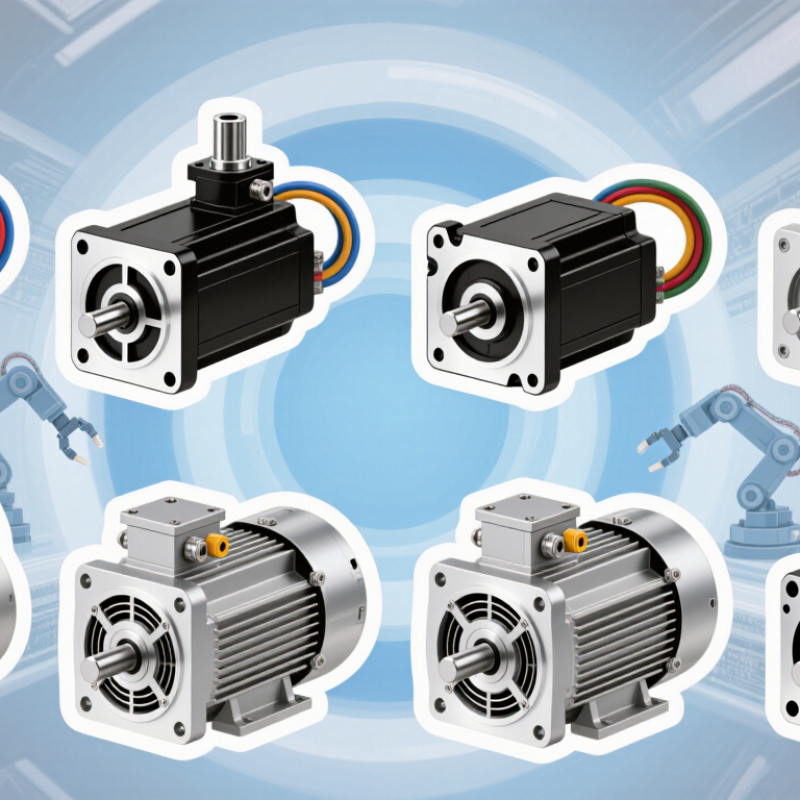
Global buyers often compare ten motor types for precise, reliable automation. Servo motors provide closed-loop feedback, rapid acceleration, and accurate positioning. Stepper motors offer simple control, strong holding torque, and economical operation at moderate speeds. Brushless DC motors deliver efficient continuous motion with low maintenance requirements. AC induction motors remain practical for conveyors, pumps, and other steady-load systems.
Synchronous motors maintain stable speed under changing loads. Their efficiency suits equipment that operates for long hours. Torque motors produce direct rotary force without traditional gear reduction. They work well in indexing tables and winding systems. Geared motors increase output torque and reduce speed for lifting or material handling. Planetary gear designs can provide high stiffness in compact spaces. Linear motors create direct straight-line motion, avoiding mechanical transmission parts.
Frameless motors integrate into custom robotic joints and allow flexible mechanical design. Pancake motors use a flat structure where installation space is limited. Each option has trade-offs. A compact motor may generate more heat than expected. A high-resolution encoder can improve control, but it also increases system cost. Buyers should check duty cycle, ambient temperature, overload capacity, noise, encoder compatibility, and service access. A neat specification sheet can still mislead without real load data. Prototype testing remains wise, especially when dust, vibration, or frequent starts are involved.
Motor Selection by Application, Load, Speed, and Control Needs
10 Best Automation Motors for Global Buyers
Motor Selection by Application, Load, Speed, and Control Needs
Choosing among ten automation motor types starts with the machine, not the catalogue. In commissioning work, the wrong motor often appears acceptable during testing. It overheats after eight hours. Define continuous torque, peak torque, duty cycle, and ambient temperature before comparing prices. Servo motors suit precise positioning and rapid acceleration. Stepper motors fit lower-cost indexing, but missed steps remain a practical risk. Induction motors handle pumps, fans, and conveyors reliably. Gearmotors deliver strong output torque in compact spaces. Linear motors support fast, direct movement without mechanical conversion. Brushless motors suit efficient, compact equipment.
Energy use deserves equal attention. The International Energy Agency reports that electric motor systems consume about 46% of global electricity. The U.S. Department of Energy also identifies motor-driven equipment as a major share of industrial power demand. Therefore, efficiency, standby losses, and control quality affect operating costs for years. IEC 60034-30-1 efficiency classes help buyers compare motor performance consistently. Yet an efficient motor can still waste energy when oversized. That mistake is common.
Tips: Match the motor to the real load profile. Measure acceleration time, shaft torque, and peak current. Check whether the controller supports feedback, braking, and safe torque limits. Leave thermal margin, but do not double the motor without evidence. Review maintenance access, replacement availability, voltage standards, and local service skills. A spreadsheet may recommend one option. Production conditions may disagree. Test the selection under heat, dust, and repeated starts before full deployment.
Global Purchasing Factors: Standards, Suppliers, Costs, and Support
For global buyers, the best automation motor is not always the highest-rated model. It must match voltage, frequency, duty cycle, load, and installation space. In practical sourcing work, I check IEC 60034 requirements and regional electrical rules before comparing prices. Buyers using NEMA-based equipment need equivalent documentation, not vague “international standard” claims. Request test reports, efficiency data, ingress protection, insulation class, and dimensional drawings. Small omissions can delay approval for weeks. This happens more often than expected.
Supplier evaluation should extend beyond a polished website. Ask about production capacity, quality-control records, export packaging, and traceable serial numbers. A sample motor should be tested under realistic temperature and load conditions. Check whether the supplier can provide spare bearings, seals, and replacement control components. Communication matters across time zones. A fast technical reply can prevent an expensive wiring mistake. However, one successful sample does not prove stable mass production. That assumption deserves challenge.
Compare total landed cost, including tooling, freight, duties, commissioning, energy use, and downtime. The cheapest purchase price may create higher operating costs over five years. Ask for a clear warranty process and response-time commitments. Remote troubleshooting is useful, but local service partners reduce recovery time. Keep written records of approvals and parameter changes. Some purchasing teams skip this step. They regret it later. Selection should remain evidence-based, yet forecasts are never perfect. Leave room for field feedback and redesign.
10 Best Automation Motors for Global Buyers - Global Purchasing Factors: Standards, Suppliers, Costs, and Support
| Rank | Motor Type | Typical Automation Use | Typical Rating | Common Supply | Speed / Control | Efficiency / Performance | Key Standards and Compliance | Indicative Unit Cost (USD) | Preferred Supplier Route | Typical Lead Time | Global Support Considerations |
|---|---|---|---|---|---|---|---|---|---|---|---|
| 1 | AC Servo Motor | Robotics, CNC equipment, packaging, electronic assembly, and high-speed positioning | 0.2–15 kW | 200–240 V or 380–480 V AC | Up to approximately 6,000 rpm; encoder feedback and closed-loop control | Very high positioning accuracy; high overload capability; low speed ripple | IEC 60034; IEC 61800-5-1; IEC 61800-3; UL 1004 where applicable; CE or UKCA market requirements | $350–$3,500, excluding drive and feedback cable | Specialized motion-control distributor or system integrator | 4–12 weeks for standard configurations | Confirm drive compatibility, encoder protocol, tuning software, spare feedback devices, and regional commissioning support |
| 2 | Three-Phase Induction Motor | Pumps, fans, conveyors, compressors, machine tools, and general factory automation | 0.12–315 kW | 230/400 V or 400/690 V AC, 50/60 Hz | Approximately 750–3,600 rpm; direct-on-line or variable-frequency drive | Robust, low maintenance, and widely serviceable; efficiency depends on design class and load | IEC 60034; IEC 60034-30-1 efficiency classes; IEC 60204-1 for machinery; NEMA MG 1 in North America; IE3 commonly specified | $120–$5,500 depending on power, frame, enclosure, and efficiency class | Authorized industrial electrical distributor or local motor stockist | 1–8 weeks; stocked sizes may ship within days | Check frame dimensions, mounting type, insulation system, service factor, local efficiency rules, and replacement availability |
| 3 | Permanent-Magnet Synchronous Motor | Energy-efficient pumps, compressors, HVAC systems, conveyors, and high-duty-cycle machinery | 0.75–250 kW | 200–240 V or 380–690 V AC through an inverter | Approximately 500–6,000 rpm; sensorless or encoder-based vector control | High efficiency at partial load; compact size; reduced operating losses | IEC 60034; IEC 60034-30-1; IEC 61800 series for drive systems; applicable EMC and safety requirements | $500–$8,000, excluding inverter | Energy-system integrator or authorized drive-and-motor package supplier | 6–16 weeks | Require a validated motor-drive combination, demagnetization protection, parameter files, and lifecycle energy calculations |
| 4 | Integrated Geared Motor | Conveyors, palletizers, material handling, mixers, and low-speed rotary equipment | 0.09–30 kW | 230/400 V or 400/690 V AC | Output speed commonly 5–500 rpm; fixed-speed or inverter-driven | High starting torque and compact installation; gearbox efficiency varies by ratio and design | IEC 60034; IEC 60072 dimensions; ISO 281 bearing practices; IEC 60204-1 for machine integration | $250–$4,500 depending on gearbox type, ratio, torque, and protection rating | Mechanical-power distributor or conveyor-system integrator | 3–10 weeks | Specify output torque, radial and axial loads, mounting position, lubricant, brake option, and seal requirements |
| 5 | Stepper Motor | Indexing tables, laboratory equipment, 3D printers, compact actuators, and light-duty positioning | 20–1,200 W; 0.1–20 N·m holding torque | 12–80 V DC through a dedicated stepper drive | Typically 300–1,500 rpm; open-loop or closed-loop operation | Excellent static holding torque and low purchase price; torque declines at higher speed | IEC 60034 where applicable; IEC 61800-5-1 for drive safety; UL and CE requirements for complete equipment | $25–$450 for the motor; $50–$600 for a compatible drive | Motion-component distributor or OEM automation supplier | 1–6 weeks | Verify load inertia, acceleration profile, resonance risk, thermal limits, shaft dimensions, and controller interface |
| 6 | Brushless DC Motor | Small conveyors, fans, pumps, inspection systems, medical devices, and battery-powered machinery | 10 W–5 kW | 12–96 V DC or up to approximately 320 V DC | 1,000–20,000 rpm; Hall sensors, sensorless, or encoder feedback | Good power density, long service life, and low maintenance; requires electronic commutation | IEC 60034 where applicable; IEC 61000 EMC requirements; UL 1004 and applicable low-voltage safety requirements | $30–$900 for the motor; $40–$500 for the controller | Embedded-motion supplier or qualified OEM component distributor | 2–10 weeks | Check controller firmware, Hall sequence, startup behavior, thermal derating, EMC testing, and replacement electronics |
| 7 | Linear Motor | High-speed pick-and-place, semiconductor equipment, inspection stages, and precision machine tools | 100 W–20 kW; 100–5,000 N continuous force | 48–750 V DC bus through a servo amplifier | Acceleration up to several g; feedback commonly uses linear scales or magnetic encoders | Very high acceleration and repeatability; no mechanical transmission backlash | IEC 61800 series; IEC 60034 principles where applicable; IEC 60204-1; machinery EMC and safety requirements | $1,000–$15,000 per axis, excluding guideways, amplifier, and feedback system | Precision-motion integrator or application-engineering supplier | 8–20 weeks | Plan for thermal management, magnetic protection, precision alignment, cable routing, and regional application engineering |
| 8 | Integrated Servo Gear Motor | Robot joints, automated guided vehicles, collaborative machinery, and compact positioning systems | 100 W–5 kW; 10–1,500 N·m output torque | 24–96 V DC or 200–480 V AC, depending on architecture | Output speed commonly 10–1,000 rpm; closed-loop position, speed, and torque control | High torque density and simplified installation; gearbox introduces wear and backlash considerations | IEC 61800; IEC 60034; ISO 13849-1 and IEC 62061 for functional-safety system design where applicable | $700–$7,500 per assembly | Robotics integrator or application-specific motion supplier | 6–18 weeks | Confirm communication protocol, safety functions, gearbox service life, brake rating, and complete-axis warranty terms |
| 9 | Explosion-Proof Induction Motor | Chemical processing, oil and gas equipment, grain handling, paint systems, and hazardous-area machinery | 0.12–250 kW | 230/400 V or 400/690 V AC, 50/60 Hz | Approximately 750–3,600 rpm; direct-on-line or certified inverter-duty operation | Reliable in hazardous environments; heavier, more expensive, and more documentation-intensive than standard motors | IEC 60079 series; ATEX or IECEx certification; NEC and UL requirements for applicable North American installations; IEC 60034 | $500–$12,000 depending on hazardous-zone certification, power, enclosure, and temperature class | Certified hazardous-area equipment distributor or process-industry integrator | 8–24 weeks | Match zone, equipment protection level, gas or dust group, temperature class, cable entries, certificates, and local inspection rules |
| 10 | Safety Brake Motor | Vertical axes, hoists, elevators, machine tools, conveyors, and equipment requiring controlled stopping | 0.25–75 kW; braking torque commonly 5–1,500 N·m | 230/400 V or 400/690 V AC; brake coil may use AC or rectified DC | Approximately 750–3,600 rpm; inverter-driven or direct-on-line | Fast stopping and load holding; brake lining and air-gap maintenance are required | IEC 60034; IEC 60204-1; ISO 13849-1 or IEC 62061 for safety-related control functions; local lifting standards where applicable | $300–$6,000 depending on motor size, brake torque, protection level, and safety monitoring | Industrial motor distributor or certified machinery-safety integrator | 3–12 weeks | Define stopping category, holding load, emergency-stop frequency, brake monitoring, manual release, and replacement-lining supply |
Cost and lead-time figures are typical global purchasing ranges for standard industrial configurations and can vary with quantity, certification, protection rating, customization, freight, duties, and local service requirements.
Related Posts
-
5 Best Ways to Optimize Motor Power for Industrial Efficiency
-

How to Choose the Right Small Servo Motor for Your Project?
-
Top 10 Tips for Choosing an Integrated Servo Motor?
-
Exploring the Future of DC Servomotors at the 138th Canton Fair 2025: Industry Trends and Insights
-
Exploring 2025 Tech Trends: How to Choose the Best Frameless Motor for Your Business Needs
-

How to Choose the Right Industrial Servo Motor for Your Application
