Why Is Organic Gelatin Not Vegan?
Why Is Organic Gelatin Not Vegan? The answer begins with its source. Gelatin forms when collagen from animal connective tissue is processed into a protein that sets foods into a soft, springy gel. The animals may be raised under organic standards, but the ingredient still comes from animals. Organic describes production practices. It does not mean plant-based.
Food scientist Dr. Kantha Shelke is an appropriate expert to consult on food ingredients and processing. I could not verify a verbatim statement from her specifically about organic gelatin and vegan diets, so I will not invent one. Instead, this editorial summary captures the central distinction: “Organic describes how an ingredient is produced; vegan describes whether it comes from animals.” That distinction is easy to miss when a package emphasizes “organic” in large print.
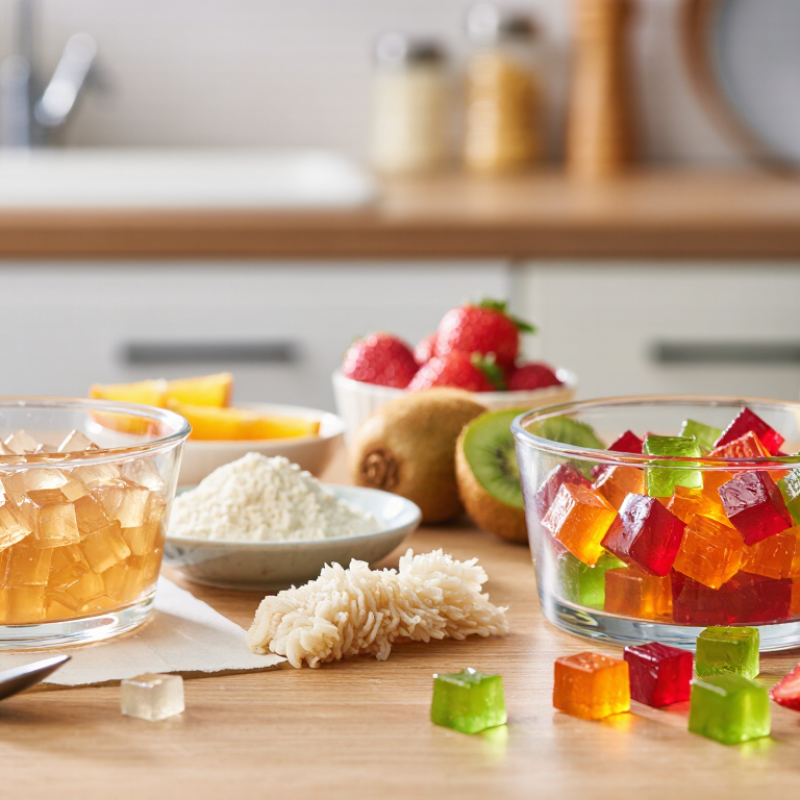
The label can mislead. A clear ingredient check matters, especially when gelatin appears in gummies, desserts, capsules, or marshmallows. Vegan alternatives may include agar, pectin, or carrageenan, though their texture and setting behavior can differ. A fruit gel made with pectin may feel tender, while gelatin often gives a familiar bounce. That difference is useful, not a flaw. Still, labels and recipes can be confusing, and product formulations change. This guide examines what organic gelatin means, why it is not vegan, and how to choose an alternative that suits the dish.
What Organic Gelatin Is and How It Is Made
Organic gelatin is a protein ingredient made from collagen in animal skin, bones, and connective tissue. It is not plant-based, so it is not vegan. The word “organic” describes how the source animals were raised or how production was controlled under a particular certification system. Exact requirements can differ by region. The label alone does not explain every detail.
The word can mislead. It sounds like a description of the ingredient’s naturalness, not its source. Making gelatin begins with selected animal materials, which are cleaned and prepared to release collagen. Depending on the material and process, manufacturers use acidic or alkaline treatment. The prepared material is then heated in water, allowing gelatin to dissolve into the liquid. That liquid is filtered, concentrated, and dried into powder or sheets. The finished gelatin can form a clear, springy gel when mixed with water and cooled. Processing details vary, so it is sensible to check certification documents when sourcing matters. Organic status does not change the ingredient’s animal origin. That distinction is easy to miss.
What “Organic” Means in Gelatin Production
“Organic” describes how the animal source was raised and how parts of the production process were managed. It does not mean the gelatin came from plants. Gelatin is made by extracting collagen, usually from animal skin, bones, or connective tissue. Still animal-based.
Depending on the applicable certification rules, organic production may involve requirements for feed, living conditions, and records that trace the source. Standards differ by region, and the word alone does not reveal every detail of a product’s processing. A careful reader may need to check the certification information and ingredient list. It is easy to read too much into one label.
In a production setting, traceability can connect a batch of gelatin to its animal source and processing records. Organic certification may cover specific stages, rather than making every part of the supply chain identical. That distinction matters. A jar of clear gelatin powder can look much like a plant-based thickener, but appearance says nothing about its origin. If avoiding animal-derived ingredients is the goal, look for a clearly identified vegan alternative, such as agar, rather than relying on “organic” as a substitute for “vegan.”
Why Gelatin’s Animal Origin Conflicts with Veganism
Why Is Organic Gelatin Not Vegan?
Why Gelatin’s Animal Origin Conflicts with Veganism
Organic gelatin is still gelatin: a protein obtained by processing collagen from animal skin, bones, or connective tissue. The Gelatin Manufacturers Institute of America describes these materials as common gelatin sources. Organic certification concerns how the source animals were raised under applicable standards. It does not turn an animal-derived ingredient into a plant-based one. That distinction can be easy to miss on a neat package label.
Veganism avoids animal-derived ingredients, so gelatin conflicts with it regardless of whether its source was organically raised. The scale of animal agriculture helps explain why ingredient origin matters: FAO’s 2023 Statistical Yearbook reports that global meat production reached about 357 million tonnes in 2021. This figure is not a gelatin-production estimate, but it offers useful context for animal-based supply chains. I used to assume “organic” meant gentler or more ethical by default; that assumption blurred two separate questions—production method and animal use. It is worth examining both.
Tips: Check the ingredient list for gelatin, collagen, or hydrolyzed collagen. For a plant-based alternative, look for agar, pectin, or carrageenan, and confirm the product suits your recipe.
Why Is Organic Gelatin Not Vegan? - Why Gelatin’s Animal Origin Conflicts with Veganism
| Dimension | Factual detail | Why it matters for veganism |
| What gelatin is | Gelatin is a protein obtained by processing collagen, a structural protein found in animal connective tissues. | Its animal-derived origin conflicts with vegan diets, which exclude ingredients made from animals. |
| Common sources | Gelatin is commonly made from animal skin, bones, and other connective tissues. Some gelatin is made from fish. | Changing the animal source does not make gelatin plant-based or vegan. |
| Meaning of “organic” | “Organic” refers to agricultural production and processing standards that apply under the relevant certification system. | Organic certification does not change gelatin’s basic ingredient source: animal collagen. |
| How it functions in food | Gelatin can thicken, stabilize, or form a gel. Its setting behavior depends on factors such as the recipe and preparation. | A functional role in food does not affect whether an ingredient is animal-derived. |
| Labels to check | Look for “gelatin” or “hydrolyzed gelatin” in the ingredient list. Certification marks and ingredient statements may provide additional information. | Terms such as “organic” describe production attributes, not vegan status. Check the ingredient source and any relevant vegan certification. |
| Plant-based alternatives | Agar is derived from red algae; pectin is commonly obtained from fruit; and starches can thicken or set some recipes. | These ingredients are not animal gelatin. Their setting strength and texture differ, so they may not work as direct, one-for-one substitutes. |
| Key distinction | “Organic” and “vegan” describe different characteristics: one concerns production standards, while the other concerns avoiding animal-derived ingredients. | Organic gelatin can be organic and still not be vegan because it is made from animal collagen. |
How Vegan Standards Classify Organic Gelatin
Organic gelatin may sound like a gentler or more natural ingredient, but it is still animal-derived. It is usually made by extracting collagen from animal connective tissue and bones. Organic describes how the source animals were raised or how ingredients were produced under a particular standard. It does not change gelatin’s origin. That distinction matters.
Vegan standards generally exclude ingredients obtained from animals, regardless of whether they are organic. Their focus is the ingredient’s source, not the farming method or production label. So a product containing organic gelatin would not usually meet vegan criteria. The word organic alone cannot confirm that a food is vegan. Standards and certification rules can differ, so check the specific certifier’s criteria when a label is unclear. Ingredient lists are useful, but I once found them less straightforward than expected.
Tips: Look for “gelatin” in the ingredients, then check for a clear vegan certification. If the wording is vague, contact the manufacturer or choose a clearly plant-based setting agent, such as agar. Organic and vegan answer different questions.
Why Organic Gelatin Is Not Vegan
“Organic” describes how an ingredient is produced; it does not change its source. Gelatin is made from animal collagen, so both conventional and organic gelatin are classified as non-vegan. Agar, pectin, and carrageenan are plant- or algae-derived alternatives.
Plant-Based Alternatives to Organic Gelatin
Why Is Organic Gelatin Not Vegan?
Plant-Based Alternatives to Organic Gelatin
Organic gelatin is still gelatin made from animal collagen, commonly sourced from skin, bones, or connective tissue. “Organic” describes how its source animals were raised and how ingredients were produced; it does not make the ingredient plant-based. For vegan cooking, the source matters.
Agar, made from seaweed, sets firmly and works well in jellies or molded desserts. Use less than you would gelatin, and boil it briefly to activate its setting power. Pectin, found in fruit, suits jams and fruit gels, but usually needs sugar and acidity. Carrageenan and konjac can also thicken foods, though their textures vary. There is no perfect one-to-one swap. A spoonful too much agar can turn a soft dessert brittle. The Good Food Institute and SPINS reported an estimated $8.1 billion in U.S. plant-based food retail sales for 2023. That broad market figure signals interest in plant-based foods, but does not measure gelatin-alternative sales specifically.
Tips: Test a small batch first. Check the package directions, since powder strength differs. Let the mixture cool in a shallow dish; the set becomes easier to judge. If it feels rubbery, reduce the gelling agent next time, rather than adding more liquid blindly.
