Who Are the Top Mud Pump Piston Manufacturers in China?
China’s mud-pump supply chain serves drilling contractors that need dependable parts, predictable lead times, and consistent performance under abrasive conditions. The International Energy Agency’s World Energy Investment 2024 report projected upstream oil and gas investment of about US$570 billion for 2024, a 7% increase from 2023. That figure describes the broader sector, not the Mud Pump Piston market specifically. It does, however, show why buyers need careful supplier evaluation.
A piston may look simple on a workbench. Its elastomer, bonding, dimensions, and resistance to drilling fluid can determine how well it performs under pressure. Buyers comparing Chinese manufacturers should check material specifications, inspection records, production capabilities, and evidence of field use. API publications can help frame equipment requirements, but a standard or certificate alone does not prove that a particular piston suits every pump and operating condition. Details matter.
Reliable rankings need reliable evidence. The material provided for this introduction contains no named Mud Pump Piston specialist or verifiable quotation, so attributing a statement to an expert would risk misleading readers. That gap deserves attention. A useful comparison should disclose its sources and explain how suppliers were assessed, rather than relying on broad claims or polished product photos. The sections ahead can examine manufacturers through verifiable product information, quality controls, and customer support—while noting where public evidence remains limited.
What Mud Pump Pistons Do in Drilling Operations
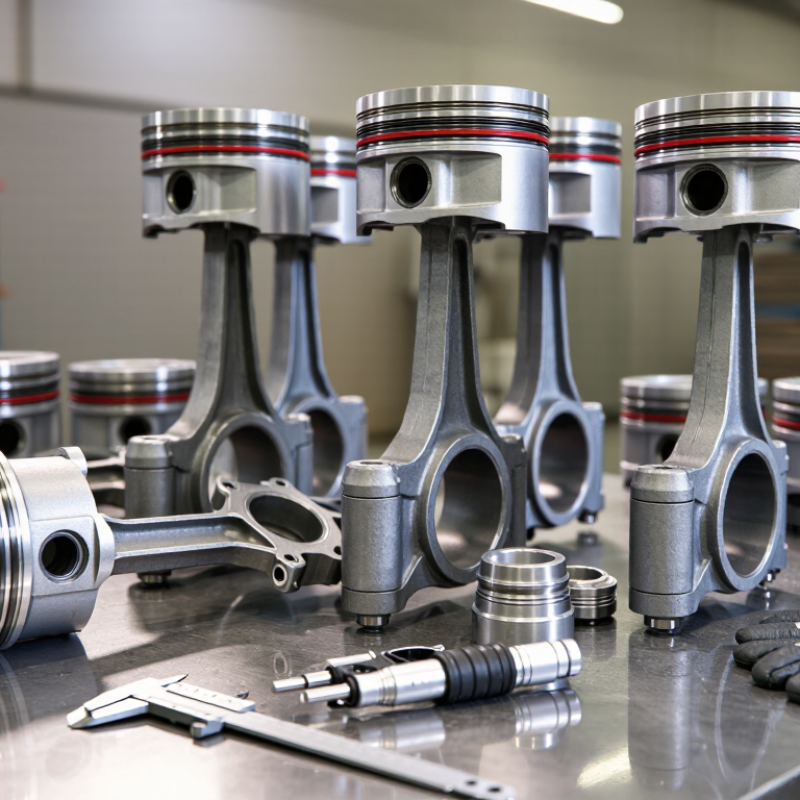
A mud pump piston turns the pump’s reciprocating motion into the pressure needed to circulate drilling fluid. It moves inside a liner, sealing against its wall during each stroke. As the piston retracts, the fluid chamber fills; as it advances, fluid is pushed toward the discharge line. The cycle repeats thousands of times. Small seal failures can matter.
Drilling mud often carries sand, cuttings, and other abrasive particles. These can wear the piston’s sealing surface and the liner, while pressure changes and heat add stress. A worn piston may allow fluid to bypass the seal, reducing discharge pressure or making pump output less steady. Watch for leakage, unusual wear marks, and pressure changes. Look closely.
Piston selection depends on the pump model, liner dimensions, operating pressure, and fluid chemistry. Elastomer materials must suit the mud and working temperature; a close fit alone is not enough. During inspection, check the piston and liner together, since replacing one without examining the other can shorten service life. It is easy to blame the piston for every pressure problem, but valves, liners, and fluid conditions also deserve attention. Maintenance records help reveal patterns, though they are not always kept as carefully as they should be.
How to Define “Top” Among Chinese Manufacturers
“Top” should describe verifiable performance, not company size or a polished catalog. For mud pump pistons, compare dimensional consistency, elastomer bonding, and resistance to heat, abrasion, and drilling-fluid additives. Ask for material specifications and inspection records. A reliable manufacturer should explain how it controls piston dimensions and checks bonding quality across production batches. Small differences matter: an uneven sealing edge can lead to leakage, faster wear, or extra maintenance. No single rating captures every field condition.
Tip: Request sample test reports, production tolerances, and a clear warranty. Check whether the stated operating limits match your pump, fluid, temperature, and solids. Vague answers deserve a closer look.
Delivery reliability and technical support also help define “top.” Ask how quickly the supplier can investigate premature wear and whether it can trace a part to its production batch. Compare like with like: similar piston sizes, service conditions, and test methods. A low price or impressive service-life claim is not enough without supporting data. Even careful testing has limits; actual drilling conditions can differ, and that deserves honest discussion. Manufacturers that acknowledge those limits may be easier to assess than those promising perfect results.
Who Are the Top Mud Pump Piston Manufacturers in China? - How to Define “Top” Among Chinese Manufacturers
“Top” is best assessed against documented product fit, quality controls, and service—not assumed from a company’s location or marketing claims. This proposed framework helps buyers compare manufacturers without implying a ranking of specific companies. The weights are suggested evaluation criteria, not industry statistics.
Suggested evaluation scorecard for mud pump piston suppliers | Evaluation dimension | Suggested weight | What to assess | Evidence to request |
| Pump and liner compatibility | 25% | Whether the piston is specified for the buyer’s pump model, liner size, fluid, pressure, and operating conditions. | Dimensioned drawings, model or part-number cross-reference, tolerances, and written confirmation of application limits. |
| Materials and construction | 20% | Suitability of the piston core, elastomer or bonding system, and sealing surfaces for the specified mud and service conditions. | Material specifications, batch traceability, and application-specific compatibility information. Confirm material choice against the actual fluid and temperature range. |
| Quality control and testing | 20% | Consistency of inspection and controls from incoming materials through production and final release. | Inspection plans, sample inspection records, batch or lot identification, and test reports relevant to the product specification. |
| Standards and documentation | 15% | Whether claimed certifications and product documents are relevant, current, and within their stated scope. | Copies of certificates and scope statements, technical data sheets, drawings, and inspection documents. API Spec 7K relates to drilling and well-servicing equipment; verify whether any claimed conformity applies to the offered product and scope. Do not assume a piston itself is API-certified. |
| Delivery and supply continuity | 10% | Ability to meet the buyer’s order quantity, agreed lead time, packaging requirements, and repeat-order needs. | Written lead-time commitments, packing details, order records where available, and a clear process for communicating delays. |
| Technical support and warranty | 10% | Clarity of installation guidance, product selection support, complaint handling, and warranty conditions. | Written warranty terms, response channels, installation instructions, and a documented procedure for investigating product issues. |
Suggested scoring method
| Score | Interpretation |
| 0 | No information supplied or the requirement is not met. |
| 1–2 | Partial evidence; important details or verification are missing. |
| 3 | Requirement is met with relevant supporting documents. |
| 4–5 | Strong, consistent evidence is provided and can be checked against the buyer’s requirements. |
Calculate a weighted score by multiplying each dimension’s score by its suggested weight, then adding the results. Treat the result as a comparison aid, not a guarantee of field performance; confirm critical specifications and terms before purchase.
Profiles of Leading Mud Pump Piston Manufacturers in China
China’s mud pump piston sector includes large industrial producers and smaller specialist workshops. An integrated manufacturer may machine metal cores, mold elastomer parts, and inspect finished pistons under one roof. Buyers can ask about material traceability, dimensional checks, and batch records. These details show more than a polished catalog.
Specialist producers often focus on piston rubber and polyurethane compounds. Their value lies in matching material hardness and bonding methods to fluid temperature, pressure, and abrasive solids. A useful profile should explain test procedures, not just list compound names. Ask for sample measurements and wear-test conditions. Small details matter. Test results can be difficult to compare when operating conditions differ.
Export-oriented suppliers may offer custom dimensions, packaging, and technical support for different pump models. Their responsiveness is worth checking through clear drawings, written tolerances, and realistic lead times. Some manufacturers provide strong technical documentation; others rely more on buyer experience. That gap deserves attention. No single profile fits every drilling operation, so compare verified production capabilities against the pump’s actual service conditions.
How Products and Manufacturing Capabilities Differ
Who Are the Top Mud Pump Piston Manufacturers in China?
How Products and Manufacturing Capabilities Differ
Chinese manufacturers differ in piston design, material choices, and process control—not only in quoted price. Some produce bonded rubber pistons for a stable seal; others offer replaceable cups that simplify field changes. Elastomer compounds also vary in resistance to heat, abrasive solids, and drilling fluids. Fit matters. A small mismatch between piston and liner can cause uneven wear or leakage.
The International Energy Agency’s Oil 2024 report projects global oil demand will reach 105.4 million barrels per day by 2030, up 3.2 million from 2023. This outlook gives context to continued demand for durable drilling equipment, but it does not measure piston quality. Compare manufacturers’ machining tolerances, molding and bonding controls, traceability, and documented wear tests. API Spec 7K is a useful reference for drilling-equipment requirements; ask suppliers how their quality system applies to piston production. Published capacity figures rarely reveal scrap rates or batch consistency. That gap deserves attention.
Tips: Request a sample, material specification, and inspection record. Check dimensions against your liner and operating conditions. Ask how the supplier handles a failed batch. A polished brochure is not proof.
Typical Elastomer Temperature Ranges for Mud Pump Pistons
Material selection is one way mud pump piston products differ. The ranges below are general reference values for elastomer families, not specifications for any particular manufacturer or product.
Actual operating limits depend on compound formulation, fluid compatibility, pressure, and duty cycle. Confirm the rated limits with the piston supplier before selection.
How Buyers Can Evaluate Quality and Supplier Suitability
For Chinese mud pump piston manufacturers, supplier suitability starts with the well, not the catalog. The IEA’s Oil 2024 report projects global oil demand will approach 106 million barrels per day by 2030. That forecast does not predict piston orders, but it highlights why dependable equipment matters. Match elastomer type, liner size, pressure, temperature, and drilling-fluid chemistry to actual operating conditions. Small mismatch. Rapid wear.
Ask for material certificates, batch traceability, dimensional inspection records, and bonding or hardness test results. Where applicable, check the supplier’s stated conformity with API Spec 7K; do not treat a certificate as proof that every production batch performs alike. Request test methods, acceptance limits, and recent batch records. Compare them with an independent sample inspection. A polished sample can mislead.
Before a large order, run a production sample under representative mud and operating conditions. Record leakage, wear, and service hours, then compare results with your current piston. Review spare-part availability, realistic lead times, and how the supplier handles failed batches. One point deserves reflection: buyers often focus on unit price, yet an undocumented replacement arriving late can cost more than a modest price difference. No checklist removes risk.
