Top 10 Ice Soaking Tub Manufacturers for Global Buyers
Choosing an Ice Soaking Tub involves more than comparing appearance or advertised cooling power. Global buyers must weigh water capacity, temperature range, insulation, filtration, electrical requirements, warranty coverage, and access to replacement parts. A compact indoor model may suit a home gym, while a larger commercial unit needs durable surfaces and straightforward maintenance. Details matter.
Cold-exposure instructor Wim Hof is widely associated with the phrase, “The cold is your friend.” The reminder is useful, but purchasing equipment still calls for careful judgment. A tub’s temperature display does not, by itself, establish cooling consistency, build quality, or suitability for frequent use. Ask manufacturers for clear specifications, operating guidance, and support arrangements. Check what is included, too: filters, covers, and delivery can affect the real cost.
This guide introduces ten Ice Soaking Tub manufacturers for global buyers. It focuses on practical comparison points, including product range, construction, cooling options, customization, and after-sales service. No single supplier fits every project. Some details may also be difficult to compare when companies publish different specifications; that limitation deserves attention. Treat the list as a starting point, then confirm current product information directly with each manufacturer. A careful choice may take longer. Better than guessing.
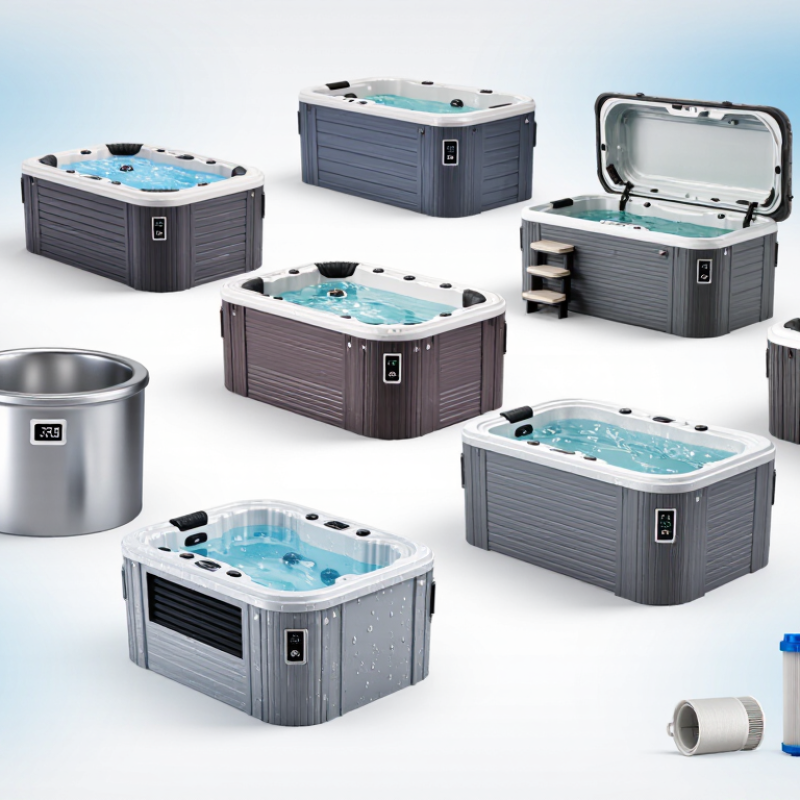
How Ice Soaking Tubs Are Designed and Used
An ice soaking tub is designed around temperature control, safe entry, and straightforward cleaning. Its shell needs insulation to slow heat gain, while a tight-fitting cover helps keep debris out between sessions. Smooth, nonporous surfaces are easier to rinse and inspect. Drain placement matters, too: water should empty without leaving a stagnant puddle in a corner. Small details matter.
The tub should leave enough room for the user to sit comfortably without making entry difficult. Textured steps, stable handholds, and a level installation area can reduce slips. A circulation pump and filter help manage water quality, but they do not replace routine cleaning or water testing. Cold water can feel intense within seconds. Start with a brief exposure, keep the head above water, and leave if numbness, dizziness, or unusual discomfort develops. People with health conditions should seek medical advice before cold immersion.
In daily use, check the water temperature with a reliable thermometer rather than guessing by touch. Rinse off before entering, and follow the equipment maker’s instructions for disinfection and filter maintenance. One trade-off is easy to overlook: stronger circulation may improve mixing, yet add noise and maintenance. A quiet tub is not automatically a better one. The best design depends on who will use it, how often, and who will clean it.
Criteria for Evaluating Ice Soaking Tub Manufacturers
When comparing ice soaking tub manufacturers, assess temperature control under real operating conditions, not just the lowest advertised setting. Ask for test records showing how evenly a filled tub cools and how well it holds temperature during repeated use. Check insulation thickness, lid fit, filtration capacity, drainage access, and the stated cleaning routine. Small details matter. A narrow drain or hard-to-reach filter can turn routine maintenance into a chore. Request material specifications and independent electrical-safety test documentation, especially for equipment used near water. A polished control panel is not proof of reliable engineering.
Water hygiene deserves equal attention. The CDC’s report, Outbreaks Associated with Treated Recreational Water, United States, 2015–2019, recorded 208 outbreaks, 3,646 cases, 286 hospitalizations, and 13 deaths. These figures describe treated recreational-water outbreaks, not private ice tubs, but they show why sanitation design should not be an afterthought. Ask manufacturers how their filtration and disinfection guidance addresses changing users, water replacement, and visible debris. Compare warranty terms, spare-part availability, and response times for service—not only purchase price. I would still verify claims with written test results; product brochures rarely show performance after months of daily use.
Profiles of Ten Manufacturers Serving Global Buyers
The Global Wellness Institute’s 2024 Global Wellness Economy Monitor valued the wellness economy at $6.3 trillion in 2023 and projected $9 trillion by 2028. This is broad industry context, not a cold-plunge sales forecast. Against that backdrop, ten manufacturer profiles help global buyers compare different capabilities: custom-built tubs, portable insulated models, commercial stainless-steel systems, and integrated tub-and-chiller packages. Some suppliers focus on compact units for homes; others build larger installations for gyms or hospitality spaces. The distinction matters. A glossy product photo cannot show whether a tub drains cleanly or holds temperature through repeated use.
Across the profiles, useful comparisons include shell material, insulation, filtration access, chiller capacity, electrical requirements, and shipping options. Ask for real operating specifications, not only peak cooling claims. A unit that reaches a target temperature once may perform differently in a warm room or during frequent use. Check whether replacement filters and service support are available in the destination market. Small details count. Doorway clearance and crate dimensions can complicate delivery. One caveat: published product data is not always presented consistently, so buyers may need to request comparable test conditions. That extra step is easy to overlook.
Comparing Tub Designs, Materials, and Cooling Systems
When comparing the top 10 ice soaking tub manufacturers for global buyers, look beyond photographs. A compact upright tub suits tight indoor spaces, while a longer model allows more room to stretch. Check internal dimensions, entry height, and filled weight against your installation area. Small details matter. A stable step and a secure cover can make everyday use easier.
Materials affect upkeep and comfort. Insulated acrylic or molded shells feel rigid, while inflatable designs pack away more easily but may need gentler handling. Ask how seams, fittings, and exposed surfaces are protected from moisture and temperature changes. Stainless steel components can resist corrosion, but grade and maintenance still matter. No material is maintenance-free.
Cooling systems deserve a close comparison. Some tubs accept ice; others pair with a chiller, filter, and circulation pump. Confirm the stated cooling range, water capacity, power needs, and performance at your local ambient temperature. A rating without test conditions tells only part of the story. Filter access, drainage, noise, and replacement-part availability affect ownership over time. Request operating guidance and warranty terms in writing. A low purchase price can be appealing, but service delays may complicate routine use. That part is easy to overlook.
Assessing Suppliers, Certifications, and Purchasing Terms
When comparing ice soaking tub suppliers, examine more than catalogue photos. Request material specifications, wall thickness, insulation details, and the temperature range confirmed by testing. Ask how the tub handles drainage, condensation, and repeated filling. A clear production timeline and named quality checks can reveal whether a supplier understands real installation needs. Photos of finished units help, but they do not replace written specifications.
Treat certificates as documents to verify, not badges to collect. Check the issuing body, validity period, product scope, and whether the tested model matches your order. Requirements can vary by destination and product configuration, so confirm applicable standards with a qualified local adviser. For purchasing terms, clarify deposit milestones, lead times, packaging, shipping responsibilities, inspection windows, and warranty coverage. A low quote may exclude spare parts or damage claims. I would still ask for a sample before a large order; it adds time and cost, but can expose finish or fit issues. Details matter.
Tips: Compare quotations using the same capacity and included accessories. Put agreed specifications, delivery dates, and remedies for defects in the purchase contract. Keep records. Ask who pays for replacement parts and freight if a unit arrives damaged.
