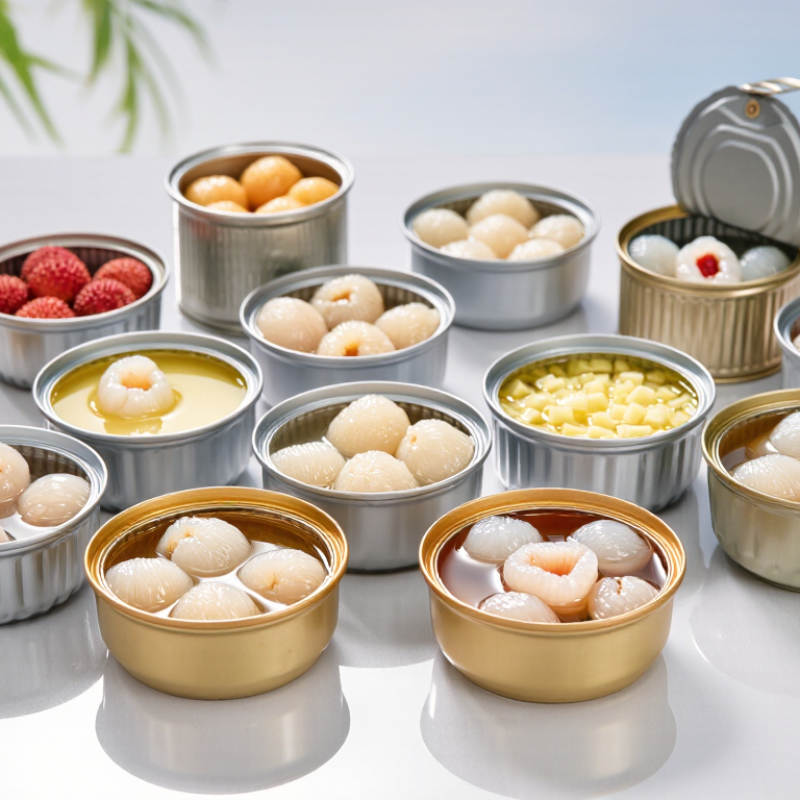
Top 10 Types of Canned Lychee for Global Buyers

For global buyers, Canned Lychee is more than a sweet fruit packed in syrup. It is a sourcing decision shaped by variety, processing method, packaging, and destination-market expectations. This guide introduces ten important types, helping importers compare products with greater confidence. Some are selected for crisp texture. Others prioritize floral aroma, appearance, or cost efficiency.

Product names can be confusing. The same lychee variety may perform differently after peeling, heating, and storage. Drain weight matters. Syrup concentration matters too. A bright, intact fruit may suit retail shelves, while smaller pieces can support foodservice applications and dessert manufacturing. Buyers should examine harvest regions, ingredient lists, can dimensions, shelf life, and batch documentation before making commitments. Reliable suppliers should provide clear specifications, traceability records, food-safety certifications, and realistic delivery information. Details matter.

Practical experience also reveals a common weakness: attractive photographs cannot confirm texture or flavor. Samples are essential. A trial shipment may expose bruising, excessive syrup, or inconsistent grading. Therefore, this overview considers both commercial strengths and possible limitations. It does not assume one type fits every market. Consumer preferences, tariff classifications, labeling rules, and climate conditions can change the best choice. Careful comparison remains necessary, especially when purchasing at container scale. The ten types below offer a useful starting point, not a substitute for supplier verification and local compliance checks.

Top 10 Types of Canned Lychee for Global Buyers

What Canned Lychee Is and How Global Buyers Classify It

Top 10 Types of Canned Lychee for Global Buyers

What Canned Lychee Is and How Global Buyers Classify It

Canned lychee is peeled lychee preserved in syrup, juice, or another permitted packing liquid. Heat processing protects the fruit and supports safe storage in sealed cans. Global buyers usually classify it by fruit shape, size, packing medium, and can format. Common types include whole, pitted, halved, sliced, diced, and lychee pulp. Whole pitted fruit often suits desserts and retail shelves. Diced lychee works better in bakery fillings, drinks, and fruit salads. Buyers may also request light syrup, heavy syrup, or juice-packed products. Sugar levels and permitted ingredients must match the destination market.

From my sourcing experience, appearance matters, but it should not lead the decision alone. Buyers inspect fruit firmness, color, aroma, drained weight, and liquid clarity. They also review can seams, production dates, lot codes, and traceability records. Size grades may use fruit counts per can, although grading methods differ between suppliers. This system is useful, but not perfect. A beautiful can may still contain soft fruit. Samples and laboratory documents remain important before contract approval.

Tips: Request a product specification sheet and a pre-shipment sample. Compare net weight with drained weight. Check whether “pitted” means fully pitted or nearly pitted. Confirm syrup composition, packaging materials, shelf life, and storage conditions. Keep written approval records. Small details prevent expensive misunderstandings.

Top 10 Canned Lychee Types by Fruit Variety and Processing Style

Top 10 Types of Canned Lychee for Global Buyers

Canned lychee differs by fruit variety and processing style, not only by syrup taste. Common choices include:

Whole peeled lychee
Whole unpeeled lychee
Pitted lychee
Halved lychee
Sliced lychee
Lychee in heavy syrup
Lychee in light syrup
Lychee packed in juice
Reduced-sugar lychee
Aseptically packed lychee

Feizixiao often offers balanced sweetness, while Nuomici may provide softer flesh. Guiwei can deliver a stronger floral aroma. Texture depends on harvest maturity, peeling method, heat treatment, and storage time. Whole fruit suits dessert presentation. Halves and slices work better in bakery fillings, drinks, and prepared fruit cups.

Tips: Check drained weight, fruit count, syrup Brix, can integrity, and lot traceability. Ask for samples from different production dates. A bright appearance can hide soft texture. Do not judge quality from sweetness alone. Destination labeling and food safety requirements must be verified before shipment.

Experienced buyers should compare firmness after opening the can, not just before delivery. I would also check whether the fruit keeps its shape after refrigeration. One mistake is assuming a higher syrup concentration means better quality. It may only create a sweeter product. Specifications sometimes look precise, yet natural fruit variation remains. That part deserves honest discussion.

How Can Size, Syrup, Packaging, and Origin Affect Product Selection

Top 10 Types of Canned Lychee for Global Buyers

Canned lychee can be whole peeled, pitted whole, halved, quartered, diced, crushed, light-syrup, heavy-syrup, juice-packed, or low-sugar. Each format serves a different sales channel. Whole fruit looks attractive in desserts and gift packs. Halves and quarters suit foodservice kitchens because they reduce preparation time. Diced and crushed lychee blend easily into fillings, drinks, and dairy products. Confirm the cut size with a retained sample. Pictures can be misleading.

Syrup strength affects sweetness, texture, and shipping weight. Light syrup preserves a cleaner fruit impression, while heavy syrup delivers a richer dessert profile. Juice-packed options may appeal to buyers seeking a less sugary taste, but they still require careful label review. Check drained weight, fruit-to-syrup ratio, Brix, acidity, and can integrity. A low-sugar claim is not enough. Ask for laboratory results and batch records.

Packaging decisions depend on destination, handling, and customer use. Small cans work for households and hotel minibars. Larger cans reduce unit costs in restaurants, but opened product needs faster turnover. Easy-open ends improve convenience, yet they may need stronger protection during long transport. Origin also changes color, aroma, firmness, harvest timing, and price. Compare samples from more than one growing region. One trial may not reveal seasonal variation. That part is easy to underestimate. Also inspect dents, rust, leakage, coding clarity, and pallet stability before approving a shipment.

Key Quality Standards, Certifications, and Labeling Requirements for Importers

Top 10 Types of Canned Lychee for Global Buyers

Key Quality Standards, Certifications, and Labeling Requirements for Importers

Canned lychee commonly comes as whole, peeled, pitted, halved, sliced, diced, crushed, syrup-packed, juice-packed, or reduced-sugar fruit. Each format needs consistent size, texture, color, and drained weight. Buyers should inspect can seams, dents, swelling, and leakage before accepting shipments. The syrup should appear clear, not cloudy or fermented. Fruit should remain firm, with a fresh floral aroma. A soft texture may indicate poor processing or extended storage.

Reliable suppliers should provide batch records, laboratory results, and traceability documents. Useful systems include HACCP, ISO 22000, BRCGS, or IFS certification. Organic, halal, and kosher claims require valid certification for the destination market. Certifications alone do not guarantee every shipment. Importers must verify certificate scope, expiry dates, and production-site details. Labels should show the product name, ingredients, allergens, net weight, drained weight, country of origin, lot code, date marking, storage instructions, nutrition information, and importer details. Local language rules can differ. Check them before printing.

Tips: Request a pre-shipment sample. Measure drained fruit weight yourself. Compare syrup clarity across cartons. Confirm the can lining suits acidic fruit. Keep photographs and inspection notes for each lot. A clean label is not enough. No checklist is perfect. I have seen minor weight differences become expensive claims. Review tolerances with your customs broker and quality team before signing the purchase agreement.

Top 10 Types of Canned Lychee for Global Buyers - Key Quality Standards, Certifications, and Labeling Requirements for Importers
No. Canned Lychee Type Typical Product Format Common Packing Medium Key Quality Standards for Importers Relevant Certifications or Compliance Programs Core Labeling Requirements Best-Fit Commercial Applications
1 Whole Peeled Lychee with Seed Whole fruits with the outer skin removed; the seed remains inside.
Premium appearance
Light syrup, medium syrup, or water.
  • Uniform whole-fruit appearance and size.
  • Clean, intact flesh with limited bruising and discoloration.
  • Seed should remain substantially intact and easy to identify.
  • Control of drained weight, fill weight, vacuum, seam integrity, and commercial sterility.
  • HACCP-based food-safety system.
  • Food-safety certification schemes recognized by the buyer or retailer may be requested.
  • Halal or Kosher certification may be required for specific markets.
  • Product name must state that the lychees contain seeds.
  • Ingredient list, net contents, drained weight, lot code, date marking, country of origin, and storage instructions.
  • Nutrition declaration and importer details must follow the destination market.
Retail fruit cups, dessert toppings, hotel buffets, and premium foodservice.
2 Whole Peeled and Pitted Lychee Whole peeled fruits with the seed removed.
Ready to eat
Light syrup, fruit juice, or water with permitted acidity regulators where applicable.
  • Complete seed removal with minimal flesh loss.
  • Whole shape, firm texture, clean color, and low incidence of crushed fruit.
  • No hard seed fragments or foreign matter.
  • Microbiological safety and thermal-process controls must be documented.
  • HACCP plan and validated thermal process.
  • Good Manufacturing Practices and traceability records.
  • Organic certification only when the product and processing meet the importing market’s organic rules.
  • Use a clear description such as “Peeled and Pitted Lychees.”
  • Declare all ingredients, including syrup, juice, acidulants, or additives.
  • State drained weight where required by the importing jurisdiction.
Retail cans, cocktail service, bakery fillings, and ready-to-eat applications.
3 Lychee Halves Peeled fruit cut into two pieces, usually pitted.
Uniform cut
Light syrup, heavy syrup, juice, or water.
  • Consistent half size and cut surface.
  • Firm but tender texture without excessive fragmentation.
  • Limited browning, leakage, skin remnants, and mechanical damage.
  • Consistent drained weight and fruit-to-medium ratio.
  • HACCP or equivalent preventive food-safety controls.
  • Third-party laboratory testing may cover microbiology, pesticide residues, heavy metals, and additives.
  • Retailer-specific ethical or environmental audits may apply.
  • Declare the cut form and packing medium.
  • List the percentage of lychee where required for emphasized ingredients.
  • Include allergen information according to destination-country rules, even though lychee is not generally a major regulated allergen.
Desserts, cakes, fruit salads, catering, and restaurant preparation.
4 Lychee Quarters or Slices Peeled and pitted fruit divided into quarters or sliced into smaller pieces.
Value format
Syrup, fruit juice, or water.
  • Defined cut size and acceptable proportion of small pieces.
  • Good color retention and resistance to excessive softening.
  • Minimal skin, seed, stem, and foreign-material defects.
  • Accurate drained-weight and piece-count specifications when stated in the contract.
  • Food-safety management certification may be requested by major buyers.
  • Residue compliance must meet the maximum residue limits of the destination market.
  • Packaging materials should be suitable for food contact.
  • Identify the product as quarters, slices, or pieces.
  • Declare sweeteners, acidity regulators, preservatives, and other permitted additives.
  • Include net quantity, drained weight, lot identification, and best-before or use-by information as applicable.
Industrial desserts, bakery products, smoothies, toppings, and foodservice packs.
5 Diced Canned Lychee Small, standardized cubes or diced fruit, usually pitted.
Foodservice
Light syrup, juice, water, or formulated dessert syrup.
  • Specified cube dimensions and tolerance range.
  • Low percentage of puree, fines, and oversized pieces.
  • Firm texture suitable for mixing and portioning.
  • Stable color and flavor after processing and storage.
  • HACCP-based controls, batch traceability, and process records.
  • Supplier testing for pesticide residues and contaminants should match the buyer’s risk assessment.
  • Nutrition and additive declarations must comply with the importing market.
  • Use a precise product description such as “Diced Lychees in Syrup.”
  • Declare size grade or cut specification when used as a purchasing requirement.
  • Foodservice labels should include handling, storage, and once-opened instructions.
Ice cream, yogurt, bakery fillings, bubble tea, sauces, and catering.
6 Lychee Pieces and Irregular Fruit Non-uniform pieces created during trimming or processing.
Cost-efficient
Syrup, juice, or water.
  • Contract-defined percentage of pieces, fragments, and puree.
  • No objectionable fermentation, off-odors, mold, or foreign matter.
  • Controlled color and texture despite the less uniform appearance.
  • Accurate solids, drained weight, and container fill.
  • GMP, sanitation controls, and traceability are essential.
  • Buyer may require certificates of analysis for each lot.
  • Claims such as organic, halal, or non-GMO require appropriate substantiation where used.
  • Label as “Lychee Pieces” or another accurate standardized description.
  • Avoid “whole” or “premium” claims if the fruit is visibly irregular.
  • Declare all processing aids or additives that require labeling in the destination market.
Sauces, fillings, purees, beverages, jams, and industrial food manufacturing.
7 Lychee in Light Syrup Whole, halved, sliced, or diced lychee packed in a lower-solids sugar syrup.
Mainstream retail
Water and sugar; acidity regulators or antioxidants may be used where permitted and declared.
  • Buyer should specify soluble-solids target, commonly measured in degrees Brix.
  • Balanced sweetness, natural lychee aroma, firm texture, and clear syrup.
  • Control of container vacuum, seam quality, leakage, corrosion, and commercial sterility.
  • Color and sensory quality should remain acceptable through the stated shelf life.
  • Compliance with the destination country’s food-additive and sugar-labeling rules.
  • HACCP or a recognized food-safety certification may be required by importers.
  • Packaging must meet food-contact and migration requirements.
  • State “in Light Syrup” when this is the commercial identity.
  • Provide sugar and nutrition information in the format required by the destination market.
  • Declare added sweeteners and acidity regulators by their legally accepted names.
Supermarkets, household consumption, desserts, cocktails, and catering.
8 Lychee in Juice or No-Added-Sugar Medium Lychee packed in fruit juice or in water without added sugar, subject to the exact formulation.
Health-positioned
Lychee juice, another declared fruit juice, water, or a blend of these.
  • Verify the actual formulation and absence of added sugar through specifications and testing.
  • Control juice authenticity, soluble solids, acidity, flavor, and color.
  • Fruit should remain firm, clean, and free from excessive breakage.
  • Claims must be supported by formulation and analytical records.
  • Nutrition and health-related claims are regulated differently by market.
  • Laboratory verification may be needed for sugar, juice content, and declared nutrients.
  • Organic status requires certification under the importing market’s organic scheme.
  • Use “No Added Sugar” only when the formulation and destination-country rules permit the claim.
  • Do not imply “sugar-free” unless the product meets the applicable legal threshold.
  • Declare the juice source, ingredients, nutrition information, net quantity, and drained weight.
Health-oriented retail, lunchbox products, fruit salads, and premium foodservice.
9 Flavored or Infused Canned Lychee Lychee packed with a declared flavor profile, such as rose, citrus, ginger, or another permitted flavor.
Specialty product
Flavored syrup, juice, water, or a combination of these.
  • Flavor should be consistent, clean, and appropriate for the declared description.
  • Use only permitted flavorings, colors, preservatives, and acidity regulators.
  • Verify allergen and cross-contact risks associated with added ingredients.
  • Maintain commercial sterility and package integrity.
  • Regulatory review of flavorings and additives is essential before importation.
  • Halal or Kosher review may be needed for flavor carriers or processing aids.
  • Supporting technical documentation should identify each added flavoring and additive.
  • Flavoring must be clearly identified in the product name or ingredient list.
  • Declare colors, preservatives, sweeteners, and other additives where required.
  • Marketing claims must not mislead consumers about the natural composition of the fruit.
Premium beverages, cocktails, gift products, desserts, and specialty retail.
10 Certified Organic Canned Lychee Whole, pitted, halved, sliced, or diced lychee processed and packed under an approved organic system.
Certification-dependent
Organic syrup, organic juice, or water, depending on the certified formulation.
  • All agricultural and processing inputs must comply with the applicable organic standard.
  • Prevent commingling with non-organic product through segregation and documented traceability.
  • Verify ingredient status, cleaning procedures, storage controls, and mass-balance records.
  • Organic certification does not replace food-safety, microbiological, or commercial-sterility controls.
  • Valid certification from an authorized body recognized in the destination market.
  • Separate organic certificates may be required for export, processing, or import documentation.
  • HACCP or recognized food-safety certification may still be requested by the buyer.
  • Use the organic claim and logo only as permitted by the destination jurisdiction.
  • Identify the certifier or control body where legally required.
  • Ensure the ingredient list, country of origin, lot code, net quantity, drained weight, and organic status are consistent with certification records.
Organic supermarkets, natural-food distributors, premium retail, and specialty foodservice.

How Global Buyers Can Compare Suppliers and Choose the Right Type

Top 10 Types of Canned Lychee for Global Buyers

Global buyers should compare suppliers by product type, not only by price. Common options include whole, peeled, pitted, halved, quartered, syrup-packed, juice-packed, low-sugar, organic-certified, and aseptic-packed lychees. Each type serves a different use. Whole fruit suits retail cans. Halves and quarters reduce preparation time for desserts and foodservice.

UN Comtrade 2023 trade data places canned lychees under HS 200899, covering many prepared or preserved fruits. Therefore, reported trade totals are not lychee-specific. Buyers should request shipment records for the exact product. The Codex Alimentarius Standard for Canned Lychees, CXS 42-1981, provides a useful quality reference. Check fruit count, drained weight, syrup concentration, color, texture, and can seam integrity. Ask for recent laboratory reports, not old templates. A supplier may pass a visual inspection yet fail during storage.

Tips: Compare three samples from different production lots. Verify Brix, pH, microbiological results, pesticide compliance, and metal-can migration documents. Confirm whether “pitted” means fully pit-free. One overlooked fragment can damage customer trust. Also inspect cartons after simulated transport. Humidity, pallet pressure, and temperature changes reveal weak packaging. Supplier audits matter, but they are not perfect. Keep a retained sample for every approved lot.

Top 10 Types of Canned Lychee for Global Buyers

Common commercial pack-size references help buyers compare product formats, shipment efficiency, and foodservice suitability. Actual availability, drained weight, syrup strength, and certifications should be confirmed with each supplier.

How to compare suppliers: Check net weight and drained weight together, then review fruit count, syrup or juice medium, Brix specification, can or jar material, certifications, shelf life, carton configuration, and minimum order quantity.