
China Top 10 Granulation Machine Suppliers?
China’s granulation equipment market has expanded from basic mixers to highly automated production systems. This guide examines ten notable Chinese Granulation Machine suppliers for pharmaceutical, food, chemical, fertilizer, and industrial applications. The selection considers manufacturing experience, process control, product range, customization, documentation, and after-sales support.
Granulation is more than pressing powder into larger particles. Dr. Simon Iveson and his colleagues wrote, “Granulation is the process whereby small particles are gathered into larger, semi-permanent aggregates in which the original particles can still be identified.” This definition remains useful when comparing wet granulators, dry granulators, high-shear systems, fluid-bed equipment, and pelletizing lines. A serious supplier should explain particle size, moisture control, output, energy use, and cleaning requirements clearly.
Real purchasing decisions often happen beside the machine. Buyers inspect stainless-steel welds, observe discharge behavior, and ask how quickly components can be replaced. Some suppliers provide strong engineering support. Others may present impressive specifications but limited production evidence. No ranking is perfect. Supplier information changes, and regional service quality can differ. Therefore, this article treats the top ten as a practical shortlist, not an unquestionable verdict. Readers should still request test batches, factory records, technical drawings, and references for similar materials. Small details matter. A blocked screen or inconsistent feed rate can damage an otherwise capable production line.
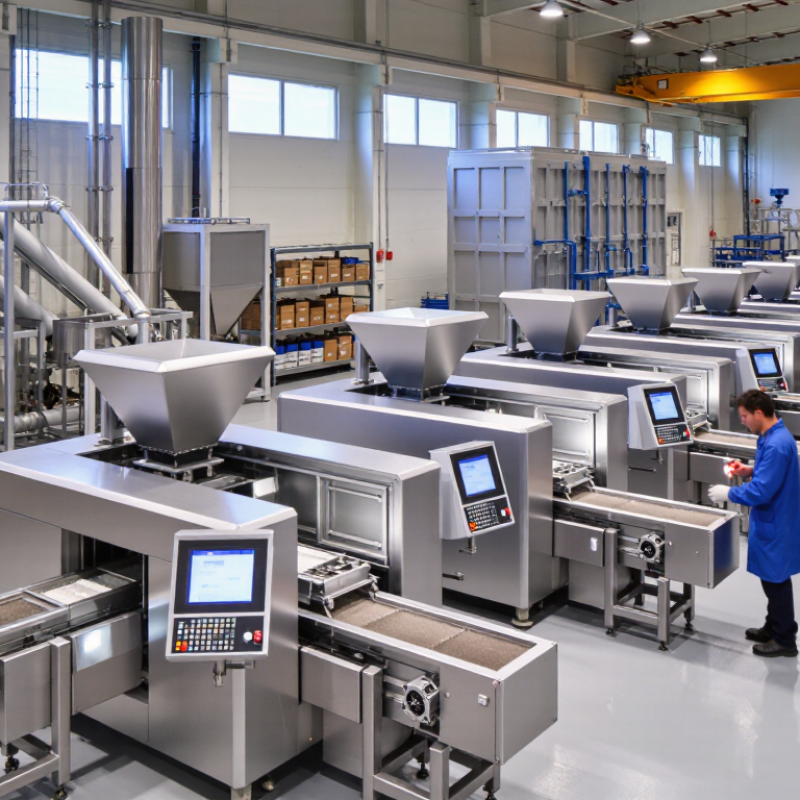
What Is a Granulation Machine and How Does It Work?
A granulation machine converts powders into uniform, free-flowing granules. This improves filling accuracy, mixing consistency, and material handling. The process usually begins inside a mixing chamber. A high-speed impeller blends the powder with a controlled liquid binder. The damp mass then passes through a perforated screen. Granule size depends on screen openings, rotor speed, moisture, and pressure.
Dry granulation uses rollers or compaction force instead of liquid. It suits materials that react poorly to moisture or heat. Wet granulation often produces stronger, more consistent particles, but it needs careful drying. An experienced operator checks moisture levels, temperature, motor load, and screen wear. A machine may appear efficient on paper, yet produce uneven granules when feeding is unstable. That detail is easy to overlook.
Tips: Match the machine to powder behavior, not only production capacity. Test a small batch before full-scale operation. Record binder flow, mixing time, and discharge temperature. Inspect seals and screens regularly. Cleaning should be practical, especially where product changes are frequent. Do not rely on default settings; they are only a starting point. Even skilled teams sometimes adjust too quickly, so measured changes and clear records matter.
China Top 10 Granulation Machine Suppliers? - What Is a Granulation Machine and How Does It Work?
| Supplier Profile | Typical Granulator Type | Primary Working Principle | Common Materials | Typical Capacity | Typical Feed Moisture | Typical Particle Size | Main Application | Key Selection Factor |
|---|---|---|---|---|---|---|---|---|
| Profile 01 | Wet high-shear granulator | An impeller mixes powders with a binder, forming dense wet granules through controlled shear. | Pharmaceutical powders, fine chemicals, detergents | 5–1,000 kg per batch | Usually 5–20% after binder addition | 0.2–4 mm after wet sizing | Pharmaceutical and chemical processing | Binder control, cleanability, and batch uniformity |
| Profile 02 | Fluid-bed granulator | Heated air suspends particles while sprayed liquid binds and dries them in one process. | Pharmaceutical ingredients, food powders, extracts | 5–500 kg per batch | Variable; liquid is sprayed during processing | 0.3–2.5 mm | Granulation, drying, and coating | Airflow distribution and temperature control |
| Profile 03 | Roller compactor | Dry powder is compressed between counter-rotating rolls into ribbons, then milled into granules. | Moisture-sensitive pharmaceuticals, minerals, fertilizers | 10–1,500 kg per hour | Normally below 5% | 0.5–5 mm after milling | Dry granulation without liquid binder | Roll pressure, ribbon density, and powder flowability |
| Profile 04 | Disc pan granulator | A rotating inclined pan rolls particles while moisture or binder builds spherical granules. | Fertilizers, minerals, limestone, ceramic powders | 1–20 tonnes per hour | Typically 8–18% | 1–8 mm | Fertilizer and mineral granulation | Pan angle, rotation speed, and feed consistency |
| Profile 05 | Rotary drum granulator | A rotating drum tumbles solids while liquid binder or steam agglomerates the material. | Compound fertilizers, minerals, biomass mixtures | 5–30 tonnes per hour | About 10–20% | 2–10 mm | Large-scale fertilizer production | Residence time, drum inclination, and liner durability |
| Profile 06 | Double-roll granulator | Material is compacted and shaped between two grooved or smooth counter-rotating rolls. | Fertilizer blends, salts, chemicals, powdered minerals | 1–20 tonnes per hour | Usually 2–8% | 2–8 mm, depending on roll design | Compact dry granulation | Roll geometry, compression force, and anti-blocking design |
| Profile 07 | Extrusion granulator | A moistened mixture is forced through a die and cut into uniform cylindrical or pellet-shaped granules. | Fertilizers, animal feed, biomass, specialty chemicals | 0.5–10 tonnes per hour | Typically 10–20% | 1–6 mm diameter | Uniform pellet and fertilizer production | Die opening, cutter speed, and material plasticity |
| Profile 08 | Vibrating granulator | Vibration moves wet or damp material across a perforated screen to form and size granules. | Pharmaceutical wet masses, food products, chemicals | 20–1,000 kg per hour | Usually 10–25% | 0.5–5 mm | Wet sizing and controlled particle formation | Screen aperture, vibration amplitude, and cleaning access |
| Profile 09 | Organic fertilizer granulator | Organic material is mixed with moisture and binder, then rounded or compacted into granules. | Compost, manure, sludge, agricultural residues | 1–15 tonnes per hour | About 15–35%, depending on feedstock | 2–8 mm | Organic and compound fertilizer production | Feedstock biodegradability, moisture, and wear resistance |
| Profile 10 | High-speed centrifugal granulator | High-speed centrifugal motion distributes liquid binder across particles and promotes rapid agglomeration. | Fine chemicals, pigments, detergents, specialty powders | 50–2,000 kg per hour | Typically 5–20% | 0.5–5 mm | Fast agglomeration and particle-size control | Rotor speed, spray distribution, and heat removal |
Key Criteria for Evaluating Chinese Granulation Machine Suppliers
Choosing among China’s top 10 granulation machine suppliers requires more than comparing prices. Start with process evidence. Ask for trial data using your actual material, moisture level, and target particle size. A credible supplier should report throughput, energy use, screen life, and yield under repeatable conditions. The ISO Survey 2022 recorded more than 1.2 million ISO 9001 certificates worldwide, but certification alone proves little. Review the certificate scope, audit date, corrective-action records, and factory procedures. Inspect welding quality, rotor balance, sealing, and spare-part storage. Small details often decide production stability.
Energy performance deserves close attention. UNIDO reports that industrial motor systems can consume about 69% of industrial electricity, making motor efficiency a significant operating cost. Request measured power consumption at different loads, not only catalogue ratings. Confirm whether the granulator supports variable-speed control, overload protection, dust management, and easy cleaning. For export projects, the World Bank’s 2023 Logistics Performance Index rated China’s overall logistics performance at 3.7 out of 5, yet delivery still depends on packaging, documentation, and commissioning support. Ask for a clear FAT protocol, installation drawings, remote troubleshooting, and response times. I would not accept vague promises. Supplier references help, but one successful installation may not represent your material or climate. Pilot testing remains the safer decision.
China Top 10 Granulation Machine Suppliers? Key Criteria for Evaluating Chinese Granulation Machine Suppliers
This procurement benchmark assigns a total evaluation weight of 100% across ten practical criteria. Process suitability, product quality, compliance documentation, throughput, and granule uniformity should receive the greatest attention when comparing Chinese granulation machine suppliers. Buyers should validate each criterion through technical datasheets, factory audits, sample testing, certifications, and after-sales service records.
China’s Top 10 Granulation Machine Suppliers
China’s top ten granulation machine suppliers are often judged by engineering evidence, not attractive catalogs. Strong suppliers provide pilot testing, material compatibility checks, and clear production data. Their equipment may include wet granulators, dry roller compactors, fluid-bed systems, and high-shear mixers. These machines support pharmaceutical, food, chemical, agricultural, and mineral processing applications.
Pilot testing · Compatibility · Production data
A reliable supplier should explain particle-size control, moisture limits, cleaning access, and power requirements. Factory audits should examine welding quality, surface finish, electrical safety, and spare-parts availability.
Ask for a factory acceptance test using a similar material. Observe feeding stability and discharge consistency. Small details matter.
The leading ten suppliers usually differ in customization depth. Some build compact laboratory units, while others install continuous production lines. Experienced engineers should provide drawings, commissioning support, and operator training.
Certifications help, but they do not replace practical testing. No ranking stays perfect. A supplier with strong machinery may still have slow technical communication or limited overseas service.
Buyers should compare output, downtime risk, warranty terms, and real test records before signing a contract. Temperature, pressure, and cleaning requirements must match the final process. Five kilograms of test material can reveal problems that a brochure hides.
Supplier Comparison: Technologies, Industries, and Production Capacity
China’s top 10 granulation machine suppliers differ mainly in technology, target industries, and verified production capacity. High-shear wet granulators suit pharmaceutical and nutritional powders, while fluid-bed systems combine granulation and drying in one controlled chamber. Roller compactors support moisture-sensitive materials. Extrusion granulators are common in fertilizers, chemicals, and detergent production.
Technology changes the buying decision. According to Grand View Research’s 2024 pharmaceutical manufacturing equipment analysis, demand is moving toward automated, contained, and energy-efficient processing. Suppliers offering PLC control, recipe storage, dust isolation, and online moisture monitoring deserve closer review.
For food and nutraceutical plants, contact surfaces should support hygienic cleaning. GMP documentation matters more than polished sales language.
Capacity claims need caution. Small laboratory units may process 1–20 kilograms per hour, while industrial lines can exceed 1–10 tonnes per hour, depending on material density and formulation. The 2024 MarketsandMarkets pharmaceutical processing equipment report identifies continuous manufacturing as a growing direction, but many factories still require batch flexibility.
Ask suppliers for witnessed trials, yield records, particle-size distribution, and power consumption. A machine rated at 2,000 kilograms per hour may perform far below that figure with sticky or fragile powders.
That detail is easy to miss. Industry experience suggests comparing complete lines, not isolated machines, because feeding, drying, screening, and packaging often limit real output.
How to Select the Right Chinese Granulation Machine Supplier
China Top 10 Granulation Machine Suppliers?
Selecting the right Chinese granulation machine supplier requires more than comparing online prices. Start with your material, target capacity, particle size, and moisture range. Test the material. A supplier should explain whether a dry, wet, or extrusion granulator fits your process. Paper promises are easy. Request a live video test using your actual powder, not a similar sample. Check feeding stability, granule shape, dust levels, and cleaning time.
Reliable suppliers provide clear technical drawings, motor details, wear-part lists, and operating limits. Ask for production records from comparable applications. Visit the factory if possible, and inspect welding quality, electrical cabinets, safety guards, and spare-part storage. Details matter. Confirm the machine’s contact surfaces match your hygiene or corrosion requirements. For food, feed, fertilizer, or pharmaceutical production, request suitable material certificates and compliance documents for your destination market.
A serious supplier should offer installation guidance, operator training, troubleshooting support, and a written warranty. Clarify response times and replacement-part availability before signing. Do not select the lowest quotation automatically. Cheap equipment may hide weak motors, thin screens, poor sealing, or incomplete controls. I have seen specifications appear complete while excluding conveyors and dust collection. That mistake changes the budget. Ask for a complete quotation with exclusions listed plainly. Leave room for doubt. A small pilot test can reveal problems that polished brochures never show.
