
Top 10 10G SFP Copper Modules for Global Buyers

A 10g Sfp Copper module can look like a simple swap: insert it into an SFP+ port, connect an RJ45 cable, and bring a copper device onto a 10GbE network. The details matter. Reach, power draw, heat, and host compatibility can differ between modules, even when their product descriptions appear similar. Some 10GBASE-T SFP+ modules support distances up to 30 meters, but actual performance depends on the module, cabling, and equipment.

This guide compares ten options for global buyers, focusing on specifications that affect real deployments: supported link distance, power consumption, operating temperature, and compatibility information. A module that runs hot in a crowded switch may be a poor fit, even if its price is attractive. Check the switch vendor’s compatibility guidance, too.

No source article or verifiable expert quotation was supplied, so this introduction does not invent one. That is worth acknowledging: a confident-sounding quote is not evidence. Buyers should confirm claims against current manufacturer documentation and test compatibility in their own environment where possible. Small details count. A short copper link can still expose a mismatch. The comparison ahead is a starting point, not a substitute for checking the exact switch model, cable path, and operating conditions.
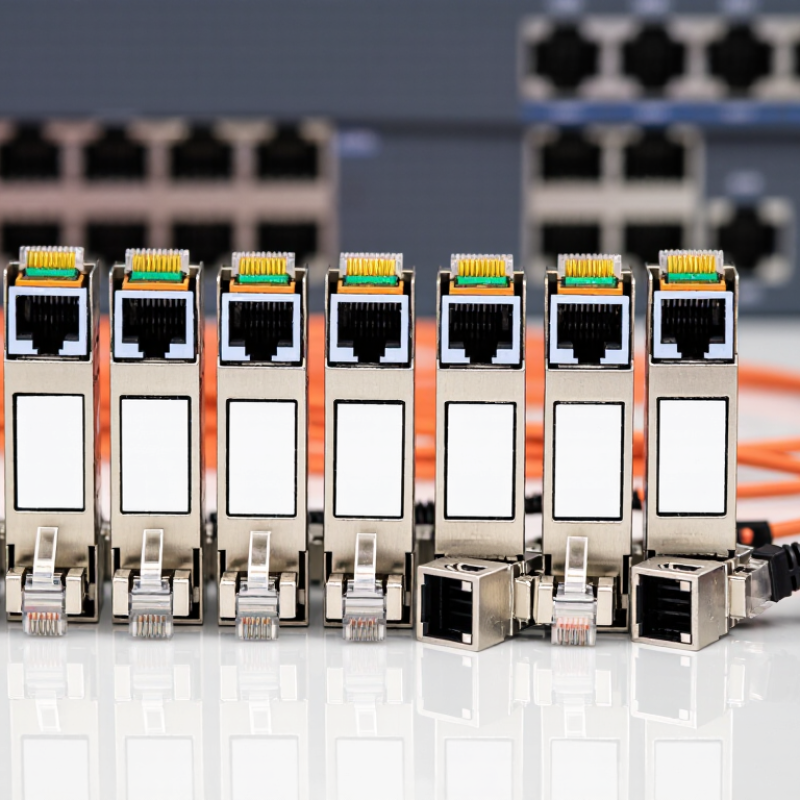
Top 10 10G SFP Copper Modules for Global Buyers

Understanding 10G SFP+ Copper Modules

A 10G SFP+ copper module provides a 10-gigabit Ethernet connection through an RJ45 port. It converts the switch’s electrical interface for twisted-pair cabling, making it useful when existing copper runs must remain in place. It is not the same as a passive direct-attach cable. Small, but warm. Power draw and airflow matter, especially when several modules sit side by side.

A distance figure needs careful reading. IEEE 802.3an-2006 specifies 10GBASE-T operation over up to 100 metres of Category 6A cabling. That standard limit does not mean every SFP+ copper module reaches 100 metres. Many module specifications cap operation at 30 metres, reflecting the power and heat constraints of the compact form factor. Check the module’s stated cable category, reach, and supported switch platform before ordering. A neat-looking specification can still leave out a key compatibility detail.

For a rack link, a short Cat6A patch cable may be practical; for a longer building run, verify the exact module rating and installed cable grade. The Ethernet Alliance’s 2023 Ethernet Roadmap documents 10GbE as part of the broader Ethernet speed landscape, while IEEE defines the physical-layer reach. These sources answer different questions. I would not treat a standard’s maximum as a promise for every module. Check the actual datasheet, then test the link under normal rack temperatures.

How Copper SFP+ Modules Deliver 10-Gigabit Ethernet

A copper SFP+ module converts the switch’s electrical interface into 10GBASE-T, allowing a standard twisted-pair Ethernet cable to carry 10-Gigabit Ethernet. Inside, digital signal processing manages complex signaling across four cable pairs. That makes it useful when connecting a switch to a nearby server with existing copper cabling. No fiber patch cord is needed.

The Ethernet Alliance’s Ethernet Roadmap identifies 10GBASE-T operation over up to 100 meters of Category 6A cable, in line with the IEEE 802.3an standard. But that reach describes the cabling standard, not every SFP+ module. Many copper modules specify shorter distances, often because compact transceivers face power and heat limits. A warm module in a densely packed switch is worth checking. The trade-off is easy to miss.

Tips: Check the module’s stated reach, switch compatibility, and port power limits before installation. Use certified Category 6A cable for longer links, and inspect the cable route for tight bends or damaged connectors. For very short connections, a direct-attach copper cable may use less power. Measure the actual link, too. Standardized does not mean effortless.

Key Specifications for Comparing 10G Copper Transceivers

A useful comparison starts with the link, not the “10G” label. IEEE 802.3an specifies 10GBASE-T over suitable twisted-pair cabling, with up to 100 metres on Category 6A. The Ethernet Alliance’s Ethernet Roadmap also tracks 10GbE as an established Ethernet speed. However, that 100-metre channel figure does not automatically apply to an SFP+ copper module. Many compact modules specify shorter reaches, often around 30 metres, because power and heat are limiting factors. Check the module’s own reach rating.

Compare supported data rate, cable category, maximum distance, power consumption, operating temperature, and host-device compatibility. Latency matters too, especially for storage or low-latency links; use the published module specification rather than assuming all copper transceivers behave alike. Heat matters. A module that works in an open test bench may run hotter inside a densely populated switch. I would not rely on the connector alone: an RJ45 fit does not prove the host supports that module’s power draw or coding.

Tips: Confirm the switch’s compatibility list, then test the intended cable length under real airflow. Note the link status and module temperature after several minutes; the detail is easy to overlook.

Ten 10G SFP+ Copper Modules for Global Buyers

A useful comparison of ten 10G SFP+ copper modules starts with the link, not the price. These modules connect an SFP+ port to a standard twisted-pair Ethernet cable, often with an RJ45 jack. They suit short connections to servers, switches, and test equipment. Many support up to 30 metres, but the stated reach depends on cable category and module design. Check the datasheet for supported 10GBASE-T operation, power draw, and temperature range. Small details matter.

When comparing ten options, match each module to the host switch and the cable route. Some ports restrict supported transceivers, and high power use can increase heat inside a crowded switch. A module that works on a bench may behave differently in a warm rack. For global purchasing, confirm the seller’s compatibility list, warranty terms, and delivery requirements for your destination. These checks are easy to skip. That can be costly.

Tips: Use certified Cat6A cable for demanding 10G links, keep cable runs within the module’s rated distance, and test the connection under normal rack temperatures. If a link drops, inspect cable quality and port settings before replacing hardware. The specification sheet is helpful, though real installations can still surprise you.

Top 10 10G SFP Copper Modules for Global Buyers - Ten 10G SFP+ Copper Modules for Global Buyers

No. Module Buyer Profile Network Interface Copper Port and Cabling Typical Reach Guidance Speed Support Key Compatibility Check Best-Fit Use Case
1 Standard 10GBASE-T, 30 m class SFP+ host interface; 10GBASE-T Ethernet RJ-45; Category 6A or better recommended Up to 30 m when specified for that module and installed channel 10 Gbps Confirm the switch or server supports 10GBASE-T SFP+ modules and their power and thermal requirements. General-purpose 10G links in access and aggregation networks
2 Short-run rack connection SFP+ host interface; 10GBASE-T Ethernet RJ-45; Category 6A patch cabling is a practical choice Use within the module's published limit; short rack links are well below 30 m 10 Gbps Check port-level compatibility and airflow, especially in densely populated switches. Top-of-rack switches, nearby servers, and equipment in the same rack
3 Multi-rate 1G/10G option SFP+ host interface; copper Ethernet RJ-45; cabling category and channel length depend on negotiated speed Follow the module datasheet for each supported speed 1 Gbps and 10 Gbps only when explicitly supported Both the module and host port must support the required rate; do not assume automatic multi-rate operation. Networks migrating selected links from 1G to 10G
4 NBASE-T-capable option SFP+ host interface; multi-rate copper Ethernet RJ-45; Category 6A is suitable for demanding 10G channels Reach varies by negotiated rate, cable category, and module design 2.5G or 5G, and possibly 1G/10G, only if listed in the datasheet Verify rate support end-to-end, including the host port, module firmware, and connected device. Wi-Fi access points and other devices using intermediate Ethernet rates
5 Commercial-temperature option SFP+ host interface; 10GBASE-T Ethernet RJ-45; Category 6A or better recommended for 10G links Use the rated reach stated for the selected module 10 Gbps Commercial temperature ratings commonly start at 0°C; verify the exact operating range and equipment environment. Climate-controlled offices, server rooms, and data centers
6 Extended-temperature option SFP+ host interface; 10GBASE-T Ethernet RJ-45; cabling must meet the specified Ethernet channel requirements Use the rated reach stated for the selected module 10 Gbps Some models offer extended ranges such as −40°C to 85°C; confirm the rating for the exact product and host. Outdoor cabinets and facilities with wider temperature variation
7 Power-conscious deployment option SFP+ host interface; 10GBASE-T Ethernet RJ-45; Category 6A or better recommended Reach is model-specific and should not be inferred from power rating 10 Gbps 10GBASE-T SFP+ modules can draw more power and produce more heat than many optical modules; check the host's per-port limits. Deployments where switch power budgets and cooling capacity are limited
8 High-density switch deployment option SFP+ host interface; 10GBASE-T Ethernet RJ-45; cable routing should preserve access and airflow Stay within the module's published reach, typically up to 30 m for this module class 10 Gbps Check whether the switch restricts copper-module placement or simultaneous use because of heat or power. Switches with many populated SFP+ ports
9 Structured-cabling upgrade option SFP+ host interface; 10GBASE-T Ethernet RJ-45; Category 6A or better is recommended for reliable 10GBASE-T channel performance Channel performance depends on the complete installed cabling system and module rating 10 Gbps Check cable certification, patch panels, connectors, and total channel length—not just the horizontal cable. Buildings standardizing copper Ethernet links at 10G
10 Interoperability-focused option SFP+ host interface; 10GBASE-T Ethernet RJ-45; Category 6A or better recommended Confirm the module's reach rating for the intended cable and operating conditions 10 Gbps; additional rates are model-dependent Check the equipment compatibility list, supported coding, firmware requirements, and return policy before purchase. Global buyers sourcing modules for mixed-vendor network environments

Buyer note: These are representative buyer profiles, not a product test ranking. Specifications vary by module. Confirm the exact datasheet, host-device compatibility, cabling channel, operating temperature, power budget, and applicable regional requirements before ordering.

Compatibility, Cabling, and Deployment Considerations

A 10G SFP copper module can connect an SFP+ switch port to familiar RJ45 cabling, but physical fit alone does not guarantee compatibility. Check the device’s supported module list, port mode, and firmware notes before ordering. Some ports accept only specific electrical and thermal profiles. That detail gets missed. A module may also draw more power and generate more heat than an optical transceiver, especially in a densely populated switch.

Cable choice shapes the usable link. Cat6A is a practical option for runs up to 100 metres when the module supports that distance and the installation meets cable specifications. Cat6 may work over shorter distances, but performance depends on cable quality, termination, and interference. Keep patch leads away from power cables where possible. Test the installed channel, not just the cable on its spool.

Plan around the actual distance and airflow. A copper module’s supported reach can be shorter than the cable standard’s maximum, so verify its data sheet before deployment. Monitor port temperature and link stability after installation. Not always. A link that comes up during a bench test may behave differently in a warm, fully loaded rack. Leave room for airflow, label both cable ends, and record the module type and negotiated speed for later troubleshooting.

Article Source: