Top Tips for Choosing the Right Integrated Servo Motor?
Choosing the right integrated servo motor is crucial in today's automation and robotics industries. With advancements in technology, companies are shifting towards more efficient solutions. According to a recent report by MarketsandMarkets, the global servo motor market is projected to reach $15.1 billion by 2026, reflecting the growing demand for integrated options.
Expert Dr. Emily Tran, a leading figure in motion control technology, emphasizes the importance of proper selection. She states, "The right integrated servo motor can significantly enhance system performance and energy efficiency." Understanding the factors that influence motor choice is vital for manufacturers looking to optimize their operations.
When selecting an integrated servo motor, consider parameters like torque, speed, and control options. A mismatch can lead to performance issues. Moreover, assessing the integration capabilities with existing systems is often overlooked but essential for seamless operation. Balancing these considerations requires careful thought, and even the best decisions may come with uncertainties, prompting ongoing evaluation as technology evolves.

Understanding Integrated Servo Motors: Basics and Applications
Integrated servo motors combine a motor and a controller in one compact unit. This integration can reduce the complexity of systems and save space. Understanding how these motors work and their applications is vital for making a wise choice. They are commonly used in robotics, CNC machinery, and conveyor systems. Their design allows for high precision in motion control, making them suitable for demanding applications.
When selecting an integrated servo motor, consider key factors such as torque, speed, and application requirements. Torque is crucial for applications requiring strength. Speed affects overall efficiency and time management. It’s essential to match the motor’s specifications to your project needs. However, there can be trade-offs. Sometimes, a motor may deliver high speed but at the expense of torque.
Potential challenges include the need for accurate power supply and thermal management. If not managed correctly, these factors can lead to performance issues. Regularly reviewing the motor's thermal performance ensures reliability over time. Ultimately, a well-informed selection and ongoing observation can lead to successful implementation in your projects.
Top Tips for Choosing the Right Integrated Servo Motor
This chart illustrates key performance characteristics of integrated servo motors including torque, speed, precision, response time, and power consumption. These metrics are essential for evaluating the suitability of a servo motor for specific applications.
Key Specifications for Evaluating Integrated Servo Motors
When selecting an integrated servo motor, key specifications are crucial. Start by examining torque ratings. Torque influences the motor's ability to handle loads effectively. Look for motors that offer high peak torque for quick accelerations and consistent operation. This is vital in applications that require precise control.
Next, consider the motor's speed range. A broad speed range allows for flexibility in various tasks. Verify the motor's maximum speed and the responsiveness of its control system. A high-speed motor may be necessary for dynamic applications, but it should align with your system's capabilities.
Another important specification is feedback type. Integrated servo motors typically utilize encoders or resolvers for position feedback. Encoders provide higher resolution and are suitable for applications demanding precision. In contrast, resolvers can withstand harsher environments, offering reliability in tough conditions. Evaluate your project's environment to choose the suitable feedback mechanism. These factors can impact motor performance significantly.
Industry Standards and Ratings for Servo Motor Performance
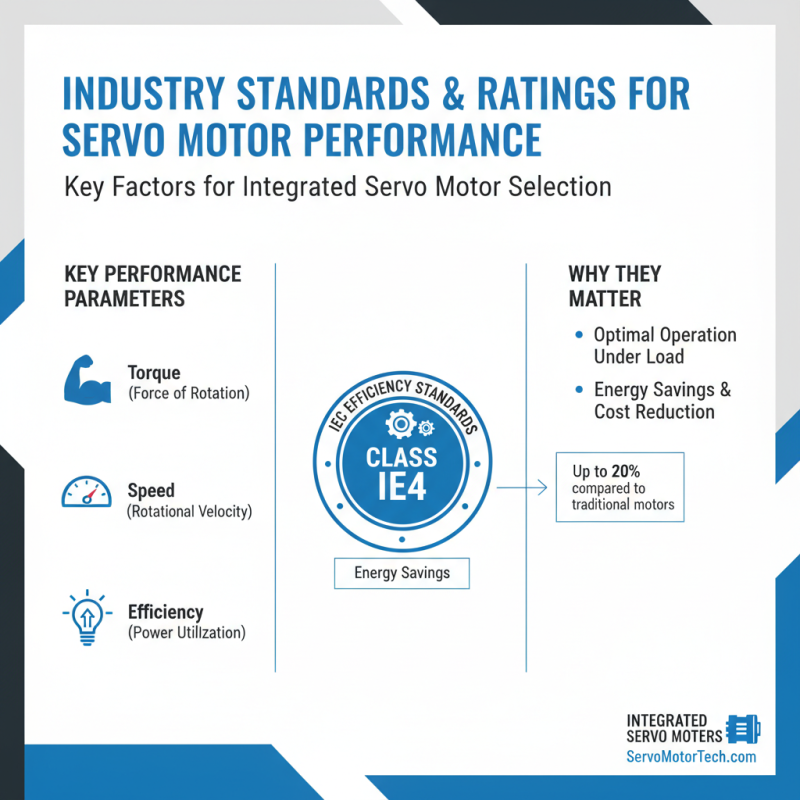
When selecting an integrated servo motor, understanding industry standards and performance ratings is crucial. Servo motors are often evaluated based on parameters like torque, speed, and efficiency. According to the International Electrotechnical Commission (IEC) standards, servo motors must meet specific efficiency ratings, ensuring they operate optimally under load. For instance, Class IE4 motors provide energy savings of up to 20% compared to traditional motors.
Consider these essential tips: Check the torque ratings carefully. A mismatch can lead to inadequate performance and even potential damage to your machinery. Evaluate the speed ratings based on your application. Many applications require a precise control response time, which is tied to the motor's speed capabilities.
Moreover, attention to detail can prevent costly mistakes. Look for torque curves that reflect the motor's performance under various conditions. This data is vital for ensuring reliable operation in different workloads. It's also beneficial to assess how the motor manages thermal performance and cooling. Often overlooked, thermal efficiency can significantly impact longevity and reliability over time.
Factors Influencing Servo Motor Selection: Torque, Speed, and Size
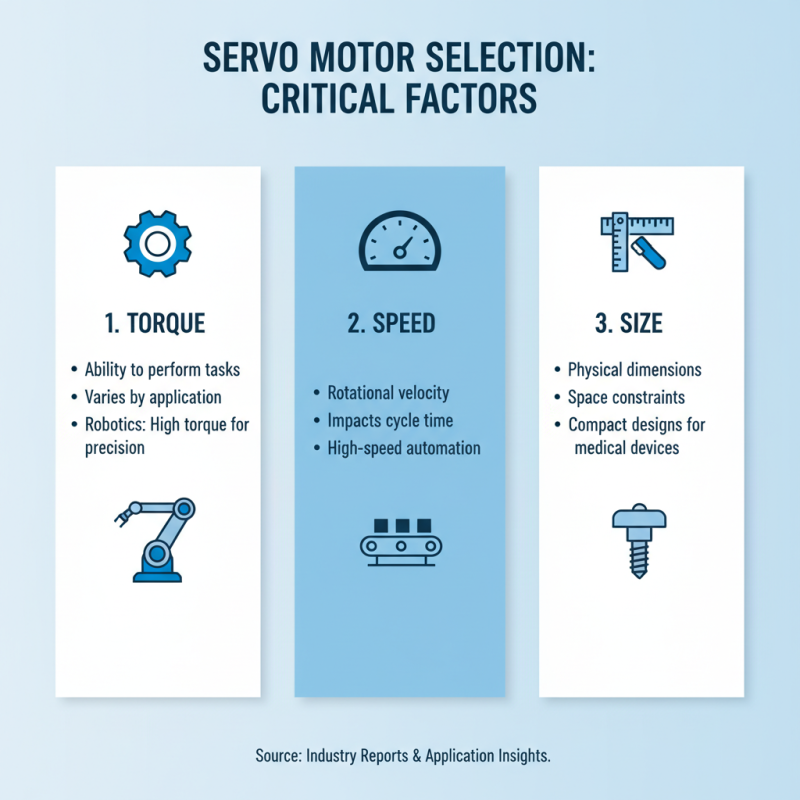
When selecting an integrated servo motor, understanding torque, speed, and size is crucial. Torque determines the motor's ability to perform tasks effectively. According to industry reports, torque requirements can vary significantly based on application. For example, robotics often requires high torque for precision movements. Considering the torque rating is essential to meet these demands.
Speed is another vital factor. Servo motors need to operate efficiently within specific speed ranges to avoid overheating. Data from mechanical engineering studies suggests that motors have a typical operating speed of 3000 to 6000 RPM for optimal performance. It's essential to match the motor's speed with the application's requirements to ensure seamless operation.
Tip: Evaluate your application’s load and speed requirements before selecting a servo motor. This understanding can prevent issues related to motor undersizing or oversizing.
Size also plays a significant role in the selection process. A motor that is too large may occupy unnecessary space and increase costs. Conversely, an undersized motor may lead to performance failure. Assess the physical constraints of your setup before making a choice.
Tip: Always leave some margin in torque and speed ratings. This foresight can accommodate future changes in application demands.
Integration Considerations: Compatibility with Control Systems and Gearheads
When selecting an integrated servo motor, compatibility is crucial. Ensuring your motor aligns well with existing control systems is pivotal for seamless operation. Some systems require specific communication protocols. Others might have stringent performance requirements. Do not overlook these factors. Conduct thorough tests to ascertain compatibility.
Considering the integration with gearheads is equally important. Different gear ratios affect speed and torque output. Misalignments can lead to reduced efficiency or even damage. Analyze the mechanical constraints of your setup. Does the chosen gearhead support the motor's specifications? Sometimes, it is beneficial to consult experts in the field. Their insights can help bridge gaps in understanding.
While navigating these choices, reflect on past experiences. Have earlier selections consistently met your project needs? Sometimes, the most advanced options aren't the best fits. Balancing innovation with practicality often yields the best results. Choose wisely, as the right motor can enhance your project’s performance significantly.