
7 Tips for Buying Stainless Steel Shackles?
Buying Stainless Steel Shackles can look simple until a real load, wet deck, or tight connection exposes a poor choice. A polished surface does not prove strength. The correct shackle must match the application, working load limit, pin design, dimensions, and environment. Saltwater, chemicals, repeated movement, and limited clearance can all change the buying decision.
This guide presents seven practical tips for choosing more dependable shackles. It examines stainless steel grades, load markings, manufacturer documentation, pin fit, corrosion resistance, and inspection points. Check the working load limit carefully. Never estimate it by appearance. A small bow shackle may fit neatly through an eye, yet fail to provide enough capacity for the intended task. That detail is easy to miss.
Reliable purchasing starts with traceable information. Look for clear markings, consistent dimensions, test records, and instructions from an established manufacturer. Independent certifications can add confidence, but they should not replace careful inspection. Examine threads for roughness. Check the body for cracks, deep scratches, or uneven finishing. The pin should turn smoothly without excessive looseness.
Some advice sounds obvious. It still gets ignored. Stainless steel is not automatically suitable for every lifting or marine condition, and “heavy duty” is not a technical rating. The most useful choice may depend on facts buyers rarely record, such as side loading, shock loading, or frequent salt exposure. Recheck those assumptions before ordering. A lower price can become expensive when replacement, downtime, or unsafe performance enters the picture.
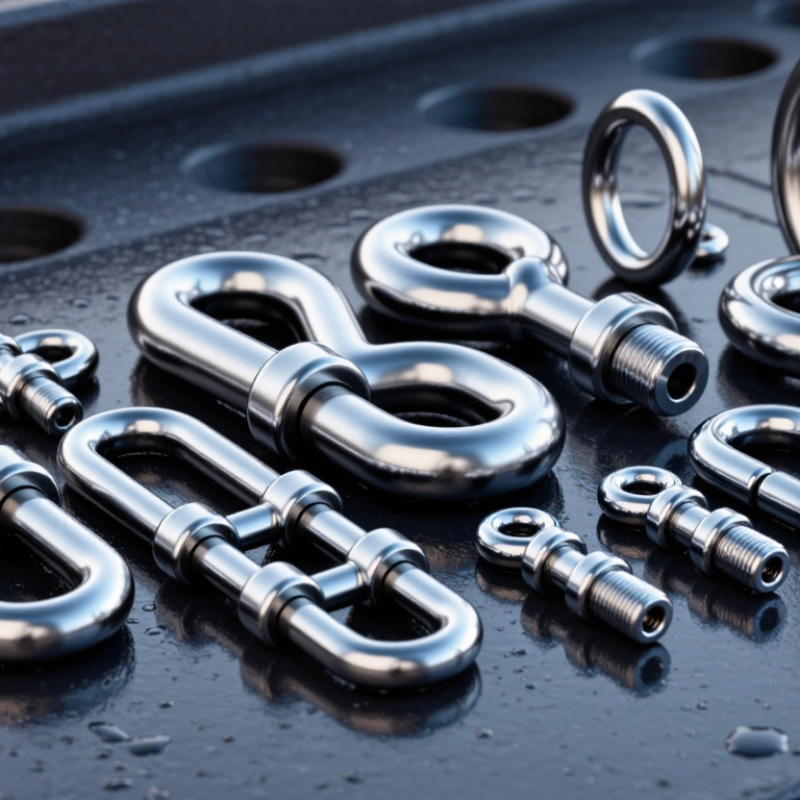
Identify the Right Stainless Steel Shackle Type for Your Application
7 Tips for Buying Stainless Steel Shackles
The correct stainless steel shackle starts with the load path, not its appearance. A dee shackle suits straight, aligned pulls. A bow shackle offers more room for multiple connections, but it must not be side-loaded without approval. Bolt-type shackles suit semi-permanent installations. Screw-pin designs are better for temporary, accessible connections. Swivel versions can reduce twisting, although they do not correct poor rigging angles.
Check the working load limit, pin diameter, body shape, and certification together. Never select a shackle by breaking load alone. ASME B30.26 and EN 13889 distinguish rated working capacity from ultimate failure strength. The label should show traceability and material information. A 316 stainless shackle generally handles chloride exposure better than 304, yet neither grade is immune to crevice corrosion. Rinse salt deposits from threads and inspect hidden contact areas.
The World Stainless Association reported 58.4 million tonnes of crude stainless steel production in 2023, showing the material’s broad industrial use. That figure does not prove every stainless shackle is suitable for lifting. It only reflects material scale. In field inspections, damaged threads and bent pins are easy to notice; hairline cracks and galling are not. I once trusted a polished finish too quickly. That was a poor habit. Use a calibrated gauge, compare the marking with the certificate, and reject any shackle with deformation, deep pitting, or uncertain history. Marine, food-processing, and architectural applications may need different priorities. Corrosion resistance is important. Load direction remains decisive.
7 Tips for Buying Stainless Steel Shackles? - Identify the Right Stainless Steel Shackle Type for Your Application
| Tip | What to Check | Common Options | Best-Suited Application | Buying Guidance |
|---|---|---|---|---|
| 1 | Choose the correct shackle shape | D shackles have a narrower opening and generally keep loads more in line. Bow shackles provide a wider, more flexible connection. | D shackles: straight-line connections, compact assemblies, and limited space. Bow shackles: slings, multiple-leg connections, and applications requiring greater articulation. | Match the inside width, inside length, and pin diameter to the connected hardware. Do not force a sling or fitting into an undersized bow or D shackle. |
| 2 | Select the appropriate pin style | Screw-pin shackles are quick to install. Bolt-type or safety-pin shackles offer a more secure connection where vibration, movement, or long-term installation is expected. | Screw pin: temporary rigging, removable assemblies, and marine hardware. Safety or bolt-type: permanent or semi-permanent installations and vibration-prone locations. | Use a pin style that suits the service conditions. A screw pin should be fully tightened by hand and inspected regularly; it should not be side-loaded. |
| 3 | Compare stainless steel grades | Type 304 stainless steel provides general corrosion resistance. Type 316 stainless steel contains molybdenum and usually performs better against chlorides and marine exposure. | 304: indoor, freshwater, architectural, and general-purpose environments. 316: seawater, coastal locations, chemical exposure, and frequent salt contact. | Do not assume 316 is automatically stronger. Select the grade for corrosion resistance, then verify the product’s tested working load limit separately. |
| 4 | Verify the working load limit | Working load limit (WLL) depends on material, shackle size, geometry, manufacturing method, and loading direction. Breaking strength is not the same as WLL. | Lifting, anchoring, tensioning, and marine connections where the load path must be clearly defined. | Buy only products with a clearly stated WLL, test documentation, and loading conditions. Never use a shackle above its rated capacity or for an unknown load. |
| 5 | Check the loading direction | Shackles are generally strongest when loaded in line with the body. Side loading, twisting, point loading, and uneven contact can reduce capacity. | Straight-line lifting and pull connections with aligned pins and load-bearing surfaces. | Use a bow shackle or an engineered connector when angular movement is required. Follow the manufacturer’s reduction factors for any permitted side loading. |
| 6 | Inspect finish and corrosion protection | Look for a smooth, clean surface, consistent machining, readable markings, and a pin that threads smoothly without binding or excessive looseness. | Marine, outdoor, food-processing, water-treatment, and hygienic environments where contamination or corrosion can affect service life. | Avoid deep scratches, cracks, burrs, galling, severe pitting, or dissimilar-metal contact that may accelerate corrosion. Rinse salt deposits with fresh water where appropriate. |
| 7 | Confirm traceability and service requirements | Reliable products should have identifiable material information, size, WLL or rated capacity, inspection guidance, and installation instructions. | Safety-critical lifting, industrial maintenance, marine systems, and installations requiring documented inspection. | Request material certificates, proof-test records where required, dimensional drawings, and applicable compliance information. Establish a routine inspection schedule and remove damaged shackles from service. |
Check Load Ratings, Dimensions, and Working Capacity
Buying a stainless steel shackle starts with its load rating, not its polished appearance. I learned this after choosing a compact shackle that looked strong but had limited working capacity. Check the marked Working Load Limit (WLL) and compare it with the actual lifting or securing load. Never treat breaking load as a safe operating figure. It describes failure strength, not routine capacity.
Dimensions must match the hardware and sling used with the shackle. Measure pin diameter, inside width, and inside height. A narrow opening can pinch a sling or force it against an edge. A long pin may not seat fully. Fit matters. Confirm that the pin threads close completely without binding. Also check whether the design suits a straight pull, side pull, or multi-leg connection. Side loading can reduce capacity sharply, especially when the force moves away from the shackle’s centerline.
Working capacity changes with load angle. A vertical pull is usually the clearest reference. At an angle, each sling leg can experience greater tension than expected. Use the supplier’s angle reduction data instead of guessing. Inspect the body, pin, threads, and holes for cracks, distortion, corrosion, or deep scoring. I once overlooked light thread damage during a routine check. That was careless. Remove questionable hardware from service until a qualified person evaluates it. Keep records of inspections, rated capacity, and the conditions where each shackle is used.
Compare Stainless Steel Grades and Corrosion Resistance
7 Tips for Buying Stainless Steel Shackles
Compare Stainless Steel Grades and Corrosion Resistance
Stainless steel shackles are not equally resistant to corrosion. Grade 304 suits fresh water, indoor lifting, and ordinary outdoor conditions. Grade 316 usually performs better near saltwater because molybdenum improves resistance to pitting. That difference matters around docks, coastal platforms, and spray-filled work areas.
Look beyond the grade number. Crevices, trapped seawater, and surface contamination can damage even 316 stainless steel. A shackle with smooth machining and proper passivation often lasts longer than a poorly finished product. Check the working load limit, pin design, and traceable material documentation before buying. A polished surface looks attractive, but it does not prove structural quality.
I have seen buyers focus on appearance first. That was a costly assumption. Inspect threads, pin holes, and curved sections for rust marks or rough edges. In highly corrosive settings, 316L may offer useful weld-area protection, while precipitation-hardening grades can provide higher strength but need careful specification. Higher strength does not automatically mean better corrosion resistance. Use fresh water to rinse salt deposits, then dry the hardware fully. Small maintenance habits help. Also, do not mix stainless shackles with incompatible metals without checking galvanic corrosion risks. Supplier certificates and independent load testing provide stronger evidence than a confident product description.
7 Tips for Buying Stainless Steel Shackles
Stainless steel grade strongly affects a shackle’s resistance to chloride corrosion. The chart compares approximate Pitting Resistance Equivalent Numbers (PREN), calculated from nominal alloy composition. A higher PREN generally indicates better resistance to pitting, but actual performance also depends on load, temperature, surface condition, crevices and maintenance.
- Choose 316 or 316L for frequent exposure to seawater, salt spray or coastal environments.
- Use 304 mainly for freshwater, indoor or low-chloride applications.
- Consider duplex 2205 where higher corrosion resistance and strength are required.
- Verify the working load limit rather than judging capacity by shackle size alone.
- Check that the pin, body and markings correspond to the specified stainless steel grade.
- Avoid mixing stainless steel with incompatible metals in wet or salty environments to reduce galvanic corrosion.
- Inspect threads, pins and load-bearing surfaces regularly for pitting, deformation or wear.
PREN reference: Approximate values use the formula PREN = %Cr + 3.3 × %Mo + 16 × %N. These values are comparative indicators, not a substitute for application-specific testing or manufacturer certification.
Inspect Manufacturing Quality, Safety Features, and Certification
Tip 1: Inspect Manufacturing Quality
Stainless steel shackles should look precise, not merely polished. Check the body for cracks, deep tool marks, uneven curves, or visible porosity. Threads must engage smoothly without binding or excessive play. The pin should seat fully and match the shackle body. In workshop inspections, I also compare the pin diameter with the stated specification. Small differences can matter. My first mistake was trusting a bright surface too quickly.
Tip 2: Verify Safety Features
Read the working load limit, material grade, and identification marks on the shackle. The rating should remain clear after handling and cleaning. Avoid products with missing markings or vague load claims. Select a safety factor suitable for the actual lifting or securing application, not an imagined best case. Inspect the crown, pin, and contact points for deformation. Stop using it after overload, even if damage is not obvious. Metal can remember stress.
Tip 3: Request Reliable Certification
Ask for material certificates, dimensional records, and proof-test documentation when the application demands traceability. A credible certificate should identify the batch, material, test method, and responsible inspection party. Check whether the documents match the markings on the product. Certification does not replace a physical inspection. It supports one. Also consider corrosion exposure, temperature, and side loading, because standard ratings may not cover every condition. When uncertain, consult a qualified lifting engineer and document the decision. Mistakes happen. Good records make them easier to find.
Evaluate Suppliers, Pricing, Maintenance, and Long-Term Value
7 Tips for Buying Stainless Steel Shackles?
Evaluate Suppliers, Pricing, Maintenance, and Long-Term Value
Choose a supplier that provides material certificates, load ratings, and traceable inspection records. Ask how each shackle is tested before shipment. Clear markings should show size, grade, and working load limit. Do not rely on polished photographs alone. Request sample documents and inspect the actual finish. A serious supplier will explain tolerances, pin design, and corrosion resistance without vague promises.
Compare total cost, not only the invoice price. A cheaper shackle may have poor threads, inconsistent dimensions, or weak surface protection. Check packaging, delivery reliability, warranty terms, and replacement availability. Ask whether the supplier maintains stable production records. One overlooked detail can become an expensive delay. A small trial order may reveal more than a confident sales presentation.
Maintenance also affects long-term value. Rinse shackles after exposure to salt, chemicals, or abrasive dust. Dry them fully before storage. Inspect pins, threads, holes, and body curves for distortion or unusual wear. Remove any shackle showing cracks, severe corrosion, bent parts, or unreadable markings. Never exceed the stated working load limit. Store equipment in a dry, ventilated area. Periodic inspection is essential. Even experienced buyers can overestimate service life when usage records are incomplete. That assumption deserves review.
