How to Choose the Right Motion Motor for Your Project?
Choosing the right motion motor for your project can be daunting. With numerous types and specifications available, it’s easy to feel overwhelmed. A motion motor is essential for many applications, from robotics to automation systems. Selecting the wrong motor can lead to inefficiencies and increased costs.
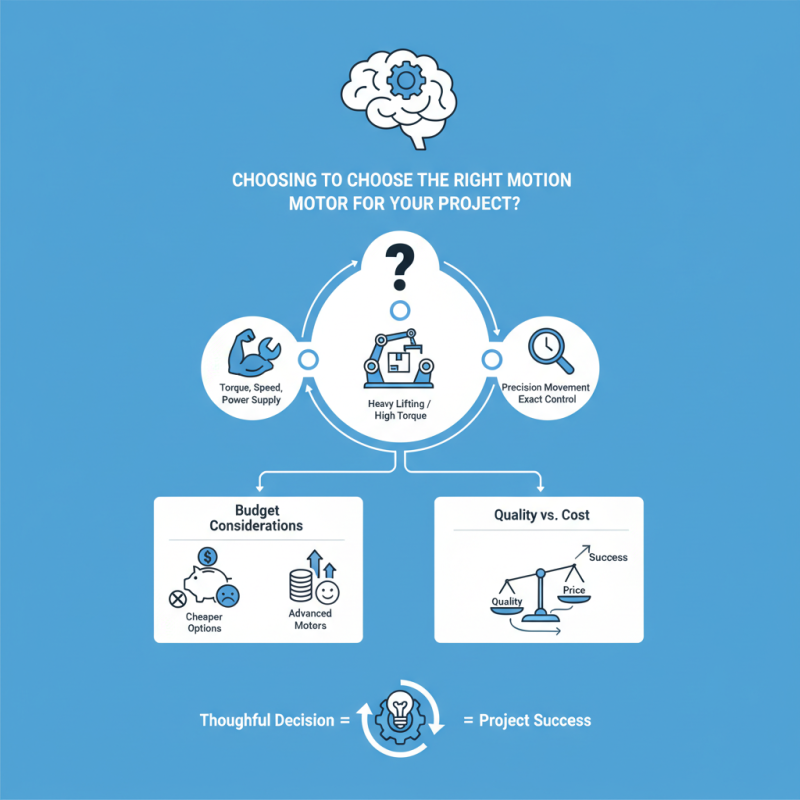
Consider the specific requirements of your project. Think about torque, speed, and power supply needs. Each project may call for different characteristics. For example, a high-torque motor is crucial for heavy lifting tasks. Alternatively, projects requiring precision movement need motors that can provide exact control.
Don't forget to account for your budget. Advanced motion motors can be costly, but cheaper options may not meet performance expectations. Reflect on the trade-offs between price and quality. Sometimes, investing a bit more upfront can save you headaches later. Ultimately, a thoughtful decision on your motion motor will enhance your project’s success.
Understanding the Different Types of Motion Motors Available
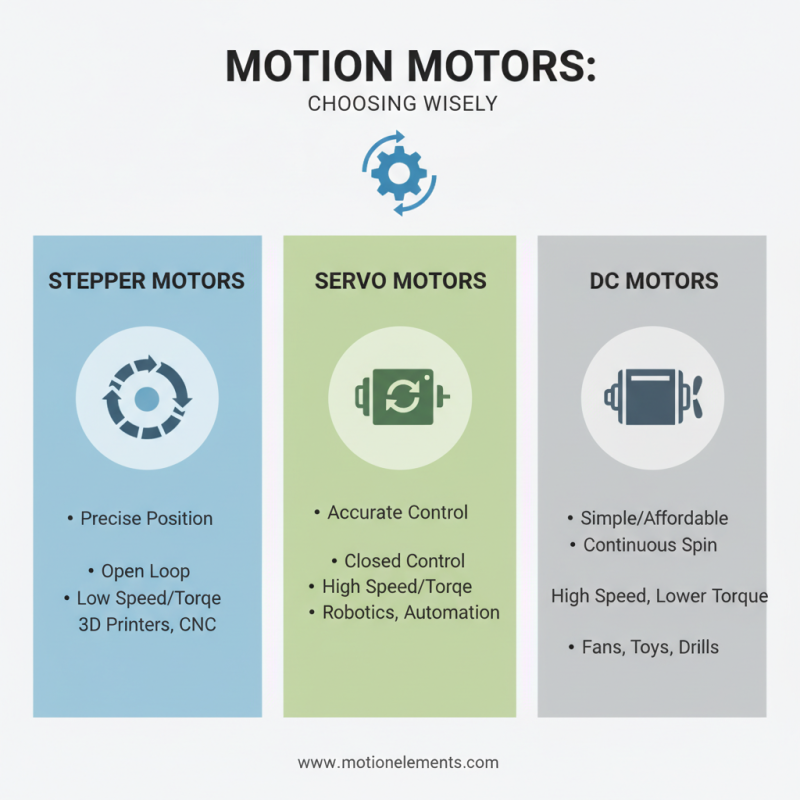
Choosing the right motion motor is crucial for any project. Understanding the types of motion motors can be overwhelming. Various options exist, including stepper motors, servo motors, and DC motors. Each type serves unique purposes and fits different applications.
Stepper motors are ideal for precise movements. They divide a full rotation into equal steps. This makes them great for 3D printers and CNC machines. However, they might struggle with high speeds. Consider the torque requirements for your project. It’s essential to balance precision and speed.
Servo motors provide excellent control and feedback. They are often used in robotic applications. Yet, they can be complex to set up. Keep in mind that not all projects need the precision of a servo. Sometimes, a simple DC motor may suffice. These motors are easy to control, but they lack feedback. If speed is your priority, opt for DC motors.
Tips: Always check the voltage and current ratings before selection. Identify your project’s specific needs. Don’t rush the choice. Take the time to evaluate your options and reflect on your requirements.
Evaluating the Requirements of Your Specific Project
When selecting a motion motor, understanding your project's specific requirements is crucial. Evaluate factors like
load capacity, speed, and torque. According to industry reports,
47% of projects fail due to inadequate motor specifications. These parameters directly influence the motor's performance.
Examining the environment also matters. Motors may need to withstand humidity, dust, or extreme temperatures. This affects
durability and maintenance. A study by the Motion Control Association found that
70% of projects experienced failures from environmental factors. It’s essential to anticipate these variables.
Additionally, consider power consumption and efficiency. Motors vary in energy use, impacting operational costs. Reports indicate that
optimizing motor selection can reduce energy consumption by up to 30%.
Be mindful of these details. Reflect on whether your chosen motor aligns well with your project goals and operational requirements.
Key Factors to Consider When Selecting a Motion Motor
Selecting the right motion motor for your project requires careful consideration of several key factors. One major aspect is the type of application. Is it for a robotics project, an automation system, or something else? Each application has unique requirements. Understanding these needs will guide your decision-making process.
Torque and speed are critical parameters to evaluate. High torque suits heavy loads, while speed is vital for fast operations. Think about how these factors affect the overall design. Test different motors if possible. Sometimes, specifications can be misleading. Don't assume that a seemingly perfect motor will perform as expected.
Another consideration is energy efficiency. Motors consume different amounts of power. Choosing one that uses less power can save costs in the long run. However, low energy doesn’t always mean high performance. Reflect on the trade-offs between power consumption and operational effectiveness. This balance is essential for project longevity and sustainability.
Motion Motor Selection Performance Metrics
Analyzing Motor Specifications and Performance Metrics
Choosing the right motion motor involves analyzing specifications and performance metrics. Key parameters include torque, speed, and efficiency. Torque indicates how much power a motor can deliver. Higher torque is crucial for heavy-duty applications. Speed, typically measured in RPM, affects how quickly the motor can complete its task. Selecting an optimal speed can be tricky; it depends on the application requirements.
Efficiency is another vital factor. A more efficient motor converts electricity to mechanical power better. This saves energy and minimizes heat generation. Be cautious though—efficient motors can vary based on load conditions. Testing under actual conditions is often needed to gauge true performance. Sometimes, a motor that seems perfect on paper underperforms in practice, prompting a need for reevaluation.
Diving deeper, don't overlook size and weight. Compact designs can be advantageous in tight spaces. However, a smaller motor may sacrifice power or efficiency. Balancing size with capability can be challenging. It’s worth discussing these trade-offs with peers to gain valuable insights. After all, even seasoned engineers can benefit from a second opinion. Consider all these factors when making your choice and reflect on past experiences for informed decisions.
How to Choose the Right Motion Motor for Your Project?
| Motor Type |
Voltage (V) |
Rated Current (A) |
Power (W) |
Max Speed (RPM) |
Torque (Nm) |
| DC Motor |
12 |
1.5 |
18 |
6000 |
0.5 |
| Stepper Motor |
24 |
2.0 |
48 |
3000 |
1.2 |
| Servo Motor |
48 |
4.0 |
192 |
5000 |
3.5 |
| BLDC Motor |
36 |
1.8 |
65 |
4000 |
0.8 |
Testing and Prototyping: Ensuring Compatibility with Your Project
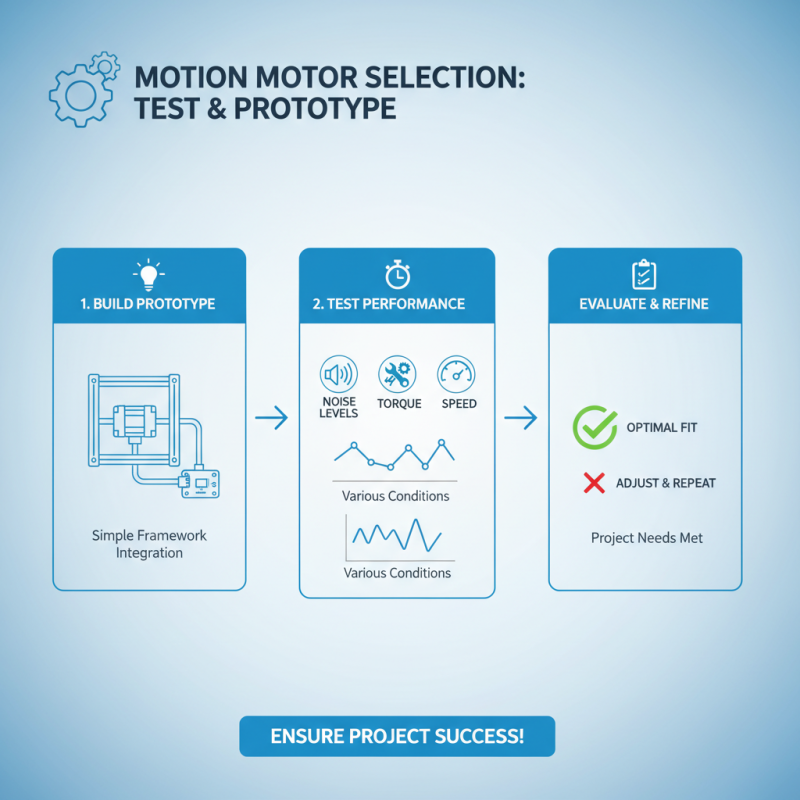
When it comes to selecting a motion motor, testing and prototyping are crucial steps. They help ensure that the motor you choose fits your project's unique needs. Start by building a simple prototype. This could be a basic framework where you can integrate the motor. Test its performance in various conditions to see how well it operates. Pay attention to noise levels, torque, and speed. These factors can deeply impact your project's success.
Don't hesitate to make adjustments based on your findings. Sometimes, an initial choice may not deliver as expected. It's okay to question your decisions. For instance, if a motor doesn't provide the required torque, consider alternatives. Explore different sizes or types. Prototyping can lead to unexpected results, revealing insights you might have missed.
Document your tests meticulously. This will help you track progress and reflect on what works and what doesn’t. Analyzing your prototypes can spark new ideas. Learning from failures is a part of the process. The goal is to find the right balance between performance and compatibility with your project. Embrace the journey of experimentation as you refine your motor selection.