How to Choose the Right Electric Servo Motor for Your Project?
Choosing the right electric servo motor for your project is crucial for optimal performance. The global market for electric servo motors is projected to reach $12.6 billion by 2025, highlighting their importance in various industries. According to expert Dr. John Smith, "Selecting the right electric servo motor can significantly enhance the efficiency of complex systems."
When selecting, consider specifications like torque, speed, and size. Each project has unique requirements. Misjudgments in these areas can lead to inefficiency. A mismatched motor may not provide the necessary precision or speed. That's a common oversight in the industry.
It's essential to analyze your application carefully. Different projects, from robotics to CNC machines, require tailored solutions. Take time to evaluate existing systems and future needs. Experts often overlook this, leading to costly mistakes. However, proper consideration of these factors ensures better outcomes in your projects.

Understanding the Types of Electric Servo Motors: Key Differences Explained
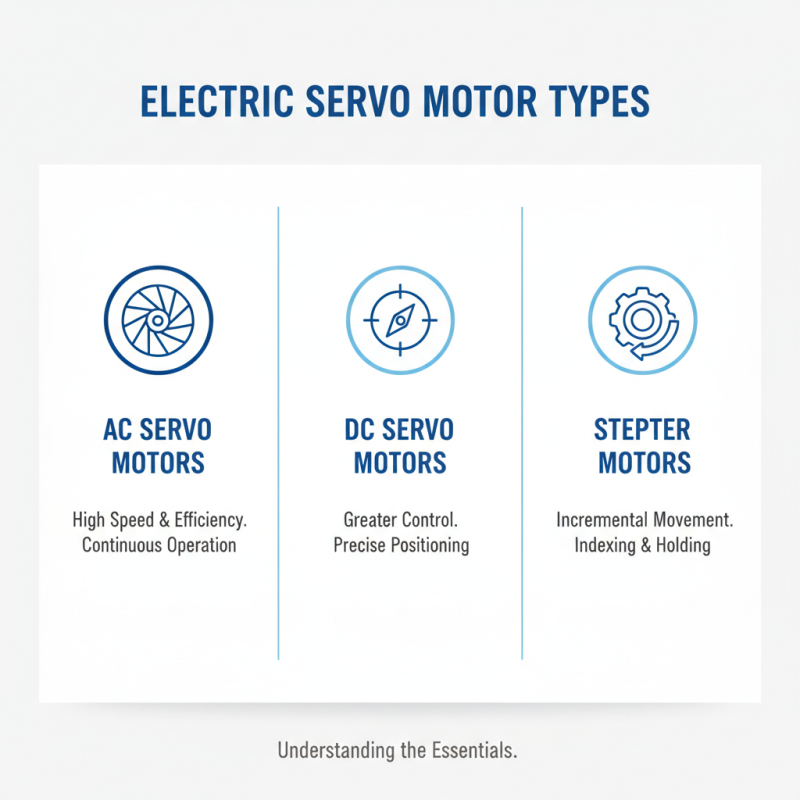
When selecting an electric servo motor, understanding the types is essential. There are three main categories: AC servo motors, DC servo motors, and stepper motors. AC motors are known for their high speed and efficiency. They excel in applications that require continuous operation. DC servo motors offer greater control and are perfect for applications needing precise positioning. Stepper motors are ideal when incremental movement is required.
Here are some tips: Consider the load requirements of your project before choosing a motor type. Assess the speed and torque needed for optimal performance. Think about the control system as well; it should match your motor's specifications. Don't overlook the importance of the environment where the motor will operate.
While choosing the right motor, you may face some challenges. Compatibility with existing equipment might not always be straightforward. Sometimes, the power supply requirements are more complex than expected. It's crucial to weigh your options and maybe even rethink your initial choice. A thorough evaluation can save time and resources in the long run.
Key Specifications to Evaluate When Selecting an Electric Servo Motor
Choosing the right electric servo motor requires careful evaluation of several key specifications. Torque is one of the most important factors to consider. High torque allows your motor to handle heavier loads and provides better performance in demanding applications. Pay attention to the required torque for your specific project. It's common to underestimate this value and face issues later.
Speed is another crucial specification. It dictates how quickly the motor can operate, impacting your project’s efficiency. A motor's speed rating is typically measured in RPM (revolutions per minute). Assess whether your project needs high-speed capabilities or if moderate speeds will suffice. Again, overlooking speed can lead to inefficiencies.
Don't forget about the feedback type your application requires. Closed-loop systems provide precise control, while open-loop systems can be easier to implement but less accurate. Think about your specific needs. Reflect on the environment where the motor will be used, as factors like temperature and humidity can influence its performance. Making an informed choice about these specifications will ensure better project outcomes.
How to Choose the Right Electric Servo Motor for Your Project? - Key Specifications to Evaluate When Selecting an Electric Servo Motor
| Specification |
Description |
Typical Range |
| Rated Torque |
The maximum torque the motor can provide. |
0.5 - 20 Nm |
| Rated Speed |
The speed at which the motor can operate at rated load. |
100 - 3000 RPM |
| Operating Voltage |
The electrical voltage required for operation. |
12 - 400 V |
| Feedback Type |
The type of feedback used to control the motor’s position and speed. |
Incremental, Absolute |
| Control Method |
The approach used to control the motor’s movements. |
Position, Velocity, Torque Control |
| Protection Class |
The degree of protection against environmental factors. |
IP20 - IP67 |
Assessing Application Requirements: Torque, Speed, and Precision Needs
Selecting the right electric servo motor for a project hinges on understanding specific application requirements like torque, speed, and precision. Torque is crucial; it's the force that determines how much load a motor can handle. For instance, a recent industry report emphasizes that applications requiring over 1 Nm typically demand high-torque servo motors. Choosing an inappropriate torque level may lead to inefficiencies or even damage to the system.
Speed is another critical factor. Different applications operate optimally at varying speeds. Some projects require low-speed, high-torque motors, while others might need fast response times. According to an analysis, servo motors with speeds exceeding 3000 RPM are preferred for high-precision tasks. However, faster motors can introduce complexities in control and require more sophisticated programming. It's essential to balance the need for speed with overall system coherence.
Precision plays a significant role too. Some systems need tight error margins, while others can be more lenient. Servo motors often offer positional accuracy within 1 arc minute, but achieving such precision requires careful integration and calibration. Many projects fail to meet their objectives due to underestimating this aspect. Overlooking precise requirements might lead to suboptimal performance and increased wear over time.
The Importance of Feedback Systems in Choosing Servo Motors
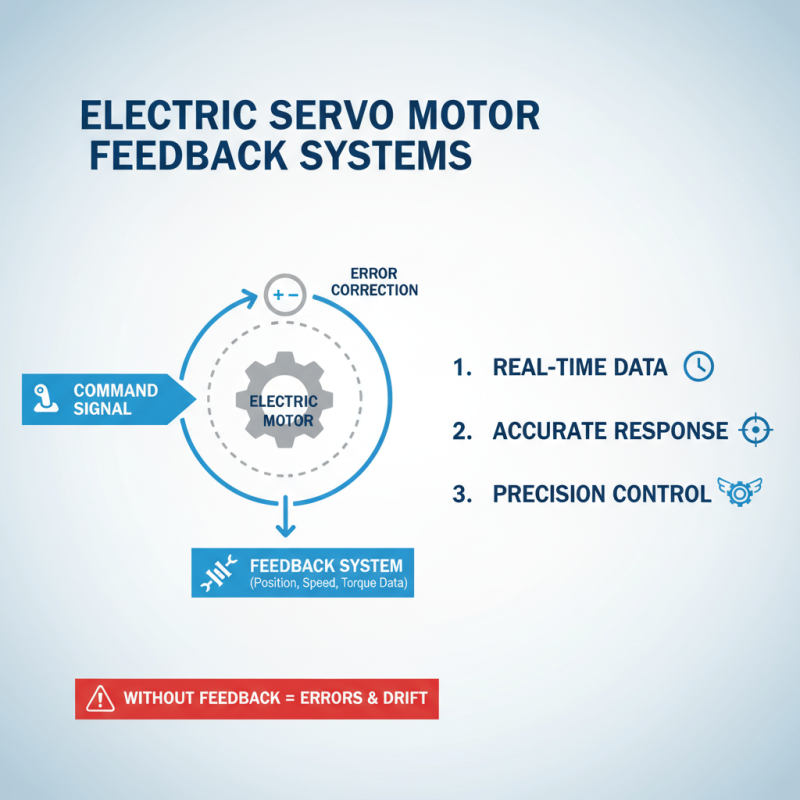
When selecting an electric servo motor, feedback systems play a crucial role. These systems provide real-time data about motor position, speed, and torque. They ensure that the motor responds accurately to commands. This feedback loop is essential for applications requiring precision. Without it, systems can drift off course, leading to errors.
Different feedback types exist. Encoders, resolvers, and Hall effect sensors each offer unique advantages. Encoders are popular due to their fine resolution. However, they can introduce noise and complexity. Resolvers are robust but may require more extensive wiring. Understanding these trade-offs is vital. Sometimes, a simple solution might be overlooked.
Improper feedback choices can compromise your project. If responsiveness is critical, investing in high-quality feedback mechanisms is necessary. Yet, achieving the ideal balance between cost and performance can be challenging. Every decision may not yield a perfect outcome. Reflecting on past experiences can guide future choices. Embracing the learning process helps refine your selection.
Evaluating Cost versus Performance: Making Informed Choices for Budgets
When considering an electric servo motor for your project, balancing cost and performance is crucial. Evaluate the specific needs of your application. The right motor should offer sufficient torque and speed. Yet, it shouldn't stretch your budget too thin. A well-informed decision can prevent costly mistakes later.
Tip: Analyze your project's requirements closely. List key features that matter most. Performance levels should align with your operational goals. Sometimes, a mid-range motor with solid specs may outperform a high-end option that doesn't meet your needs. Don't rush this part.
Remember to think about long-term costs too. Maintenance and energy efficiency can significantly impact your budget over time. High initial prices may be tempting. But they can lead to higher operational expenses. Sometimes, cheaper options can save you money, but they also may require more frequent replacements. Seek a balance that feels right for your project.
Electric Servo Motor Cost vs. Performance