How to Choose the Right Direct Drive Motor?
Choosing the right direct drive motor begins with the application, not the catalogue.
The International Energy Agency reports that electric motor systems consume roughly 43–46% of global electricity. Industry uses the largest share. This makes efficiency important, but efficiency alone cannot decide the purchase. The wrong motor may waste energy through oversized bearings, poor cooling, or unstable control. A neat spreadsheet can still mislead.
Professor Thomas A. Lipo, a respected electric-machine researcher, has stated, “The design of an electric machine is always a compromise between performance, cost, and manufacturability.” That principle remains practical today. A factory engineer should examine torque at zero speed, continuous torque, peak torque, duty cycle, rotor inertia, thermal limits, and feedback accuracy. A motor that looks powerful on paper may overheat beside a slow conveyor. Another may perform beautifully but require an expensive custom drive.
Reports from MarketsandMarkets and Grand View Research identify automation, robotics, renewable energy, and precision equipment as major growth areas for direct-drive technologies. Their forecasts suggest expanding demand, although market definitions differ between reports. That difference deserves attention.
This guide compares motor types through measurable operating conditions. It also considers installation space, maintenance access, noise, controller compatibility, and lifetime cost. The best choice is rarely the most impressive model. It is the model that delivers stable torque, acceptable heat, and predictable service over thousands of operating hours. Sometimes, the honest answer is not choosing direct drive.
Define Direct Drive Motor Types and Operating Principles
How to Choose the Right Direct Drive Motor?
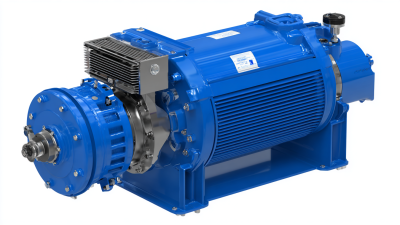
A direct drive motor transfers torque or force without a gearbox, belt, or leadscrew. This layout reduces backlash, mechanical wear, and lubrication needs. It also connects the load directly to the motor shaft or moving section. The missing gearbox matters. A low-speed load may need a wide torque motor, while a precision stage may need a linear motor.
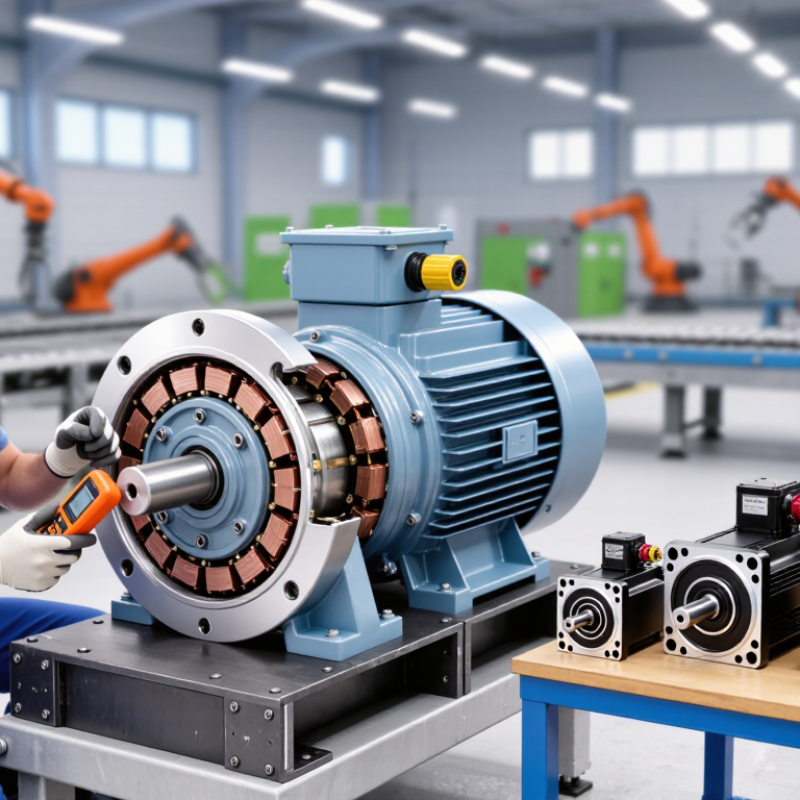
Rotary direct drive motors commonly use permanent magnets and an electronically controlled stator. The rotor follows the rotating magnetic field, producing smooth torque at low speed. Torque motors suit rotary tables, robotic joints, and indexing systems. Linear motors create motion along a straight path. Their magnetic field moves a slider instead of turning a shaft. Voice coil motors are another type. They provide short-stroke force through a coil and permanent magnet assembly.
Check the load’s peak torque, continuous torque, speed, acceleration, and stopping requirements. A motor can meet peak torque but overheat during continuous operation. That mistake is common. Measure the actual load inertia, not only the rated machine weight. Encoder resolution, thermal paths, bearing capacity, and control-loop response also affect performance. In practical testing, listen for vibration and monitor temperature near the winding housing. A quiet motor is not automatically a precise motor. Misalignment, poor tuning, or an undersized encoder can still produce errors. Leave room for uncertain friction and changing loads. Direct drive systems remove transmission problems, but they do not remove design problems.
Compare Motor Sizes, Feedback Systems, and Control Options
How to Choose the Right Direct Drive Motor?
Motor size should match the real motion profile, not only the peak load. Measure torque, speed, acceleration, duty cycle, and available installation space. Start with the load. A larger motor may provide useful thermal margin, but it can also increase inertia, cost, and energy use. Check continuous torque during normal operation, then compare it with peak torque during acceleration. Pay attention to heat. Poor cooling can reduce performance, even when the calculations look acceptable. If the spreadsheet looks perfect, question the assumptions.
Feedback systems determine how accurately the motor knows its position and speed. An encoder may support precise positioning, while a resolver can offer strong performance in demanding environments. The correct choice depends on resolution, temperature, cable length, vibration, and maintenance access. More feedback data does not automatically create better motion. The controller must process it reliably. Compare control options carefully, including speed control, torque control, and closed-loop positioning. Check communication timing and fault handling before installation. A control method that works in a laboratory may behave differently near heavy machinery.
Tips: Test the motor with the actual load when possible. Record temperature, settling time, noise, and current. Leave space for tuning. Do not ignore cable routing or grounding. A short trial can expose assumptions that a specification sheet misses. Recheck the choice after reviewing real measurements.
How to Choose the Right Direct Drive Motor? - Compare Motor Sizes, Feedback Systems, and Control Options
| Motor Size Class |
Typical Continuous Torque |
Typical Peak Torque |
Typical Speed Range |
Typical Outer Diameter |
Recommended Applications |
Selection Considerations |
| Compact |
0.5–5 N·m |
1.5–15 N·m |
Up to approximately 3,000 rpm |
50–100 mm |
Small rotary stages, indexing tables, camera systems, laboratory equipment |
Prioritize low rotor inertia, compact packaging, and adequate thermal dissipation. |
| Medium |
5–50 N·m |
15–150 N·m |
Up to approximately 2,000 rpm |
100–200 mm |
Robotic joints, packaging machinery, machine-tool rotary axes, precision positioning systems |
Balance continuous torque, peak acceleration, bearing load, and available cabinet power. |
| Large |
50–500 N·m |
150–1,500 N·m |
Up to approximately 1,000 rpm |
200–500 mm |
Heavy rotary tables, high-load indexing systems, test stands, large robotic axes |
Check structural stiffness, heat removal, brake requirements, and peak-current capacity. |
| Heavy-Duty |
Above 500 N·m |
Above 1,500 N·m |
Typically below 800 rpm |
Above 500 mm |
Large machine tools, industrial test equipment, heavy-duty rotary platforms |
Verify foundation rigidity, cooling method, bearing capacity, emergency stopping, and service access. |
Feedback System Comparison
| Feedback Type |
Typical Resolution |
Main Advantages |
Limitations |
Best Use Case |
| Incremental Encoder |
Commonly 1,000–10,000 pulses per revolution |
Cost-effective, high-speed feedback, widely supported |
Position reference may be lost after power interruption unless a homing routine is used |
General automation and speed or position control |
| Absolute Encoder |
Typically 17–23 bits per revolution |
Retains position information after power loss; minimizes startup homing |
Higher cost and greater communication or setup requirements |
Robotics, precision indexing, and safety-sensitive positioning |
| Resolver |
Analog angular position feedback; resolution depends on the converter |
Robust against heat, vibration, and contamination |
Requires excitation and signal-conversion electronics |
Harsh industrial environments and high-temperature applications |
| Hall Sensors |
Typically six commutation states per electrical cycle |
Simple commutation and low system cost |
Limited positioning accuracy and less precise low-speed control |
Basic motion, fans, pumps, and cost-sensitive systems |
Control Option Comparison
| Control Mode |
Control Variable |
Typical Performance |
Advantages |
Recommended Applications |
| Torque Control |
Motor current and produced torque |
Fast force response; speed varies with load and external limits |
Useful for tension, force, winding, and compliant motion |
Web handling, press systems, force-controlled robotics |
| Speed Control |
Rotational speed |
Stable speed regulation over changing loads |
Simple integration for continuous rotation |
Pumps, rollers, spindles, conveyors, and fans |
| Position Control |
Position, velocity, and acceleration profile |
High repeatability when paired with suitable feedback |
Supports indexing, point-to-point moves, and synchronized axes |
Rotary tables, robotics, pick-and-place equipment |
| Servo Control |
Nested current, speed, and position loops |
High dynamic response and coordinated motion capability |
Best overall control flexibility and disturbance rejection |
Precision automation, machining, robotics, and synchronized multi-axis systems |
Engineering Note:
Torque, speed, thermal capacity, inertia, duty cycle, bearing loads, feedback resolution, and drive compatibility should be verified from the selected motor's technical data. The ranges shown are typical design-selection values and may vary by motor construction and cooling method.
Select the Motor Using Cost, Reliability, and Maintenance Criteria
How to Choose the Right Direct Drive Motor?
Select the Motor Using Cost, Reliability, and Maintenance Criteria
A direct drive motor can reduce mechanical parts, but its purchase price is only one cost. Compare the motor, controller, installation, and expected energy use together. A cheaper unit may require stronger cooling or a more expensive drive. That difference appears later on the maintenance budget.
Start with the real load profile, not the machine’s average load. Record peak torque, operating speed, acceleration, duty cycle, and ambient temperature. For example, a motor running near its thermal limit during twelve-hour shifts may need additional cooling. Ask for documented efficiency curves, thermal test results, bearing specifications, and service-life assumptions. Independent test reports are more useful than broad marketing claims.
Reliability depends on fit.
Inspect the sealing method, encoder protection, cable routing, and bearing replacement procedure. A motor with accessible connectors can shorten troubleshooting time beside a dusty production line. Check whether technicians can inspect it without removing nearby equipment. Review failure data under similar loads, while remembering that laboratory results may not match your factory. I once focused too heavily on rated torque and underestimated frequent starts. The motor performed, but the maintenance team disliked its difficult access. That mistake changed our evaluation checklist.
Calculate maintenance cost over several years. Include spare parts, downtime, technician hours, cooling components, and planned inspections. Require clear warranty terms and technical support response times. A reliable selection should satisfy the load, remain serviceable, and offer evidence that supports its claimed performance.
How to Choose the Right Direct Drive Motor?
Compare motor options using purchase cost, five-year maintenance cost, reliability, and maintenance requirements. The values represent a transparent engineering scenario for a continuous-duty rotary application and exclude installation, controls, and downtime costs.
A direct drive motor usually requires a higher initial investment, but it removes the gearbox, couplings, and related wear points. This can reduce scheduled maintenance and improve system reliability when high torque at low speed, low backlash, and frequent speed changes are required. Select the motor by balancing total cost of ownership against performance and service requirements.