
China Best Aluminum MIG Welder for Sale?

Choosing a China-made Aluminum Mig Welder is not just a price comparison. It is a decision about arc stability, feeding control, and the finished joint. The International Aluminium Institute reported global primary aluminium production of about 70.6 million tonnes in 2023. That scale reflects aluminium’s broad industrial use, but welding it remains demanding. Its oxide layer melts at a much higher temperature than the base metal, while the metal itself conducts heat rapidly. Small setup errors show up quickly.

J. F. Lancaster, a respected welding researcher, examined the physics behind welding processes. A concise paraphrase of his published work is: “Good welds depend on controlling heat and metal transfer.” This is a paraphrase, not a verbatim quotation. The American Welding Society’s welding references likewise treat process selection, joint design, and operator technique as connected choices. A capable machine helps, but it cannot fix poor wire feeding or an unsuitable setup.

Details matter. Check whether the welder supports a spool gun or push-pull gun, offers adjustable pulse settings, and matches your workshop’s input power. Look closely at duty cycle, service support, and consumable availability. A smooth bead is useful evidence. It is not the whole story. Ask for test welds on your actual alloy and thickness, then inspect the root and the heat-affected area. This guide compares key buying factors for a China-made Aluminum Mig Welder, while recognizing that specifications and factory quality can vary. Price alone is a weak test. Sometimes, the honest answer is that the best machine depends on your workload.
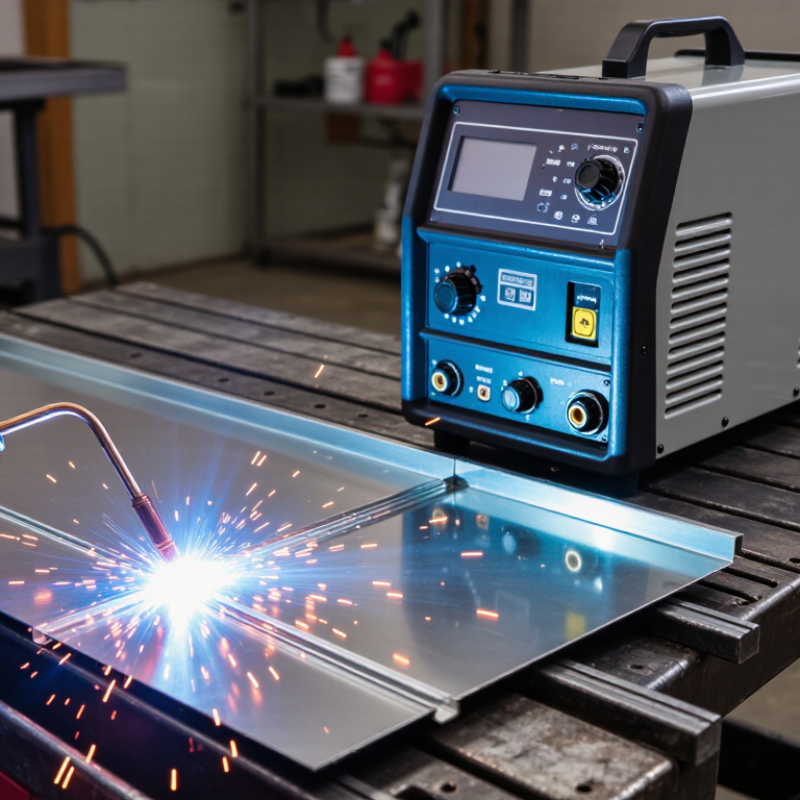
China Best Aluminum MIG Welder for Sale?

Understanding Aluminum MIG Welding and Its Key Requirements

Aluminum MIG welding depends on steady wire delivery, clean surfaces, and controlled heat. Aluminum wire is soft, so long conventional liners can cause bird-nesting or uneven feeding. A spool gun or push-pull system often improves consistency, especially with longer cable runs. Match the wire alloy to the base material and the part’s service needs; 4043 and 5356 are common choices, but they are not interchangeable in every application. Check the material specification when strength or corrosion resistance matters.

Clean metal matters. Remove oil, then gently brush away the oxide layer with a stainless-steel brush reserved for aluminum. Use argon shielding gas and protect the weld area from drafts. Aluminum conducts heat quickly, yet its surface can melt through with little warning. Watch the puddle. Set voltage, wire speed, and travel speed for the material thickness, then test them on a matching scrap coupon. A practical setup is rarely perfect on the first try. If the bead looks cold at the start but suddenly spreads, the workpiece may be heating up; pause and adjust rather than simply increasing wire speed. Check the machine’s duty cycle and keep the contact tip close to the work without crowding the puddle.

Comparing MIG Welder Types and Essential Specifications

For “China Best Aluminum MIG Welder for Sale,” compare more than price. Conventional MIG with a spool gun suits short runs; its motor keeps soft aluminum wire feeding steadily. A push-pull feeder is better for longer torch reach. Pulsed MIG alternates current to manage heat and spatter, but adds cost and setup complexity. A useful option, not a cure-all.

Check the machine’s rated output, duty cycle, wire-feed range, and pulse controls. Match capacity to the thickest material you expect to weld, not just occasional thin sheet. ASM Handbook, Volume 2, lists thermal conductivity for 6061-T6 aluminum at about 167 W/m·K. That rapid heat flow makes stable arc control and suitable amperage important, especially near the start of a weld. Verify the rating at your intended output; duty-cycle figures can be easy to misread.

Tips: Use DCEP and pure argon for typical aluminum MIG work. Clean oxide from the joint, then test settings on a scrap piece of the same thickness. Watch the puddle closely. A setting that looks right on paper may still produce burn-through or poor fusion.

Evaluating Chinese Aluminum MIG Welders for Sale

When evaluating Chinese aluminum MIG welders for sale, look beyond the advertised amperage. Aluminum wire feeds poorly through long, curved liners, so check whether the machine supports a spool gun or push-pull gun. Ask which torch connections and wire diameters it accepts. Small details matter.

Request a test weld on clean 3 mm aluminum plate, using the wire type and diameter you plan to run. Watch for bird-nesting, uneven wire feed, and excessive spatter around the bead. Ask for the duty cycle at a stated amperage, not just the maximum output. A clear control panel helps, but it cannot compensate for unstable feeding. Check whether replacement rollers, liners, and contact tips are readily available, and get the warranty terms in writing. I would be cautious about relying on a polished product video alone; it may not show a cold start or a longer weld. A missed detail here can become an expensive frustration.

Choosing a Supplier and Verifying Product Quality

China Best Aluminum MIG Welder for Sale?
Choosing a Supplier and Verifying Product Quality

A suitable aluminum MIG welder depends on your material thickness, production pace, and workshop setup. Ask suppliers which wire-feeding system they recommend for your application. Aluminum wire is soft, so poor feeding can cause bird-nesting, uneven beads, and wasted material. A spool gun or push-pull system may help, but confirm compatibility before ordering.

Ask for the machine’s rated duty cycle, output range, supported wire sizes, and input-power requirements. Request clear photos of the control panel, wire feeder, torch connections, and included accessories. Ask for the user manual and written warranty terms, too. Small details matter. A polished product page is not proof of consistent quality.

Where possible, request a sample weld using the same alloy and thickness you plan to work with. Inspect the bead for consistent width, porosity, and burn-through, then check whether feeding remains steady during repeated passes. Ask how the supplier tests each unit and whether inspection records are available. A response with specific measurements is more useful than a vague promise. I still find it easy to focus on price and overlook service; that can be a costly mistake when parts or setup guidance are needed. Verify lead times, spare-part availability, and technical support before placing an order.

China Best Aluminum MIG Welder for Sale? - Choosing a Supplier and Verifying Product Quality
Evaluation Dimension What to Check Evidence or Practical Acceptance Criteria Result
Aluminum welding configuration Confirm how the machine feeds soft aluminum wire and whether the required torch or feeder is included. Verify compatibility with a spool gun or push-pull system, if required. Check that the quoted package lists the feeder, torch, cable, and connectors. Verify against quotation
Wire and alloy compatibility Check supported wire diameters and the aluminum filler wires recommended in the operating manual. Confirm the machine’s feed system and consumables match the intended wire, such as ER4043 or ER5356, and the workpiece application. Verify in manual
Power and duty cycle Compare input voltage, rated output, and duty cycle with the intended workshop supply and workload. Request the rating plate and datasheet. Duty cycle should state the test period, output current, and ambient temperature; do not compare figures without matching conditions. Check ratings
Gas and polarity requirements Confirm the specified shielding gas, gas connection, and welding polarity for the intended aluminum MIG process. Many aluminum MIG applications use pure argon and electrode-positive polarity, but follow the machine manual and filler-wire guidance for the specific setup. Confirm setup
Sample weld testing Ask for a demonstration using the intended wire, base-metal alloy, thickness, and joint type. Review a weld sample for consistent feeding, stable arc behavior, visible porosity, and acceptable fusion. For critical work, use a qualified procedure and appropriate inspection. Test before order
Quality-control documentation Request inspection records for the specific production batch and the finished machine. Check that serial or batch identification, test results, and inspection dates are traceable to the equipment being shipped. Request records
Electrical and safety compliance Verify that certifications and test reports apply to the exact model and its intended destination market. Review the relevant declaration, certificate, or test report and confirm model number, standard, issuing body, and validity. A logo alone is not sufficient evidence. Validate documents
Warranty and after-sales support Clarify warranty duration, covered components, claim process, and availability of replacement parts. Obtain written terms covering labor, freight, exclusions, response time, and spare-parts supply before placing the order. Get terms in writing
Export packaging and shipment Confirm packaging protection, shipping terms, included accessories, and pre-shipment inspection arrangements. Request a packing list and dated photographs of the packed unit. Ensure the agreed trade term, destination, and responsibility for transport costs are stated in the contract. Confirm before dispatch

Preparing, Operating, and Maintaining an Aluminum MIG Welder

China Best Aluminum MIG Welder for Sale?

Preparing an aluminum MIG welder starts with clean metal and a stable setup. Aluminum oxide forms quickly, so remove it with a dedicated stainless-steel brush just before welding. Degrease the surface and let it dry fully. Check the joint fit; even a small gap can cause burn-through on thin sheet. Use wire, shielding gas, and polarity suited to the alloy and machine specifications. Pure argon is commonly used for aluminum MIG welding. Wear clean gloves to keep oil off the workpiece. Then test the voltage and wire feed on a scrap piece of matching thickness. A first test may look rough. Adjust one setting at a time.

During welding, keep the torch moving steadily and maintain a consistent distance. Aluminum transfers heat quickly, so watch the puddle rather than relying only on sound. Short practice beads help reveal whether the wire feed or travel speed needs adjustment. After each pass, inspect for porosity, missed edges, or excessive distortion. Let the work cool without forcing it. For maintenance, clear dust from the feeder, check the liner and contact tip, and use suitable drive rolls that feed soft aluminum wire without crushing it. Store wire dry, and check gas connections for leaks before use. Small checks matter. I still find that rushed cleaning can spoil an otherwise sound setup.

China Best Aluminum MIG Welder for Sale? — Preparing, Operating, and Maintaining an Aluminum MIG Welder

Why Aluminum Surface Preparation Matters

Aluminum melts at about 660°C, while aluminum oxide melts at roughly 2,050°C. Remove surface oxide and contamination with a clean, dedicated stainless-steel brush before welding, and keep the joint clean to help achieve consistent fusion.