
How to Buy Pharmaceutical Grade Activated Carbon in 2026?
Buying Pharmaceutical Grade Activated Carbon in 2026 requires more than comparing price per kilogram. This material may contact active ingredients, process water, or medicinal formulations. Small differences in ash, moisture, particle size, and adsorption capacity can affect performance. A reliable purchasing decision begins with the intended application, not a supplier’s broad product label. Ask whether the carbon suits your process, dosage form, and purification stage. The answer should be supported by current specifications and documented testing.
Experienced buyers examine the certificate of analysis, safety data sheet, manufacturing controls, and batch traceability. They also request evidence of compliance with applicable pharmacopeial requirements and quality systems, such as GMP where relevant. Important checks include raw material origin, activation method, microbial limits, heavy metals, extractables, and packaging integrity. Supplier qualification should include technical discussions, sample evaluation, and, when appropriate, an audit. A polished brochure is not enough. Evidence matters.
Real purchasing work is rarely perfect. A sample can pass one adsorption test yet behave differently in a complex formulation. We may also overlook shipping humidity or storage conditions. That is why acceptance criteria, change notifications, retesting rules, and complaint procedures deserve written agreement. Compare suppliers using total risk, consistency, technical support, and verified delivery history. The cheapest option may become expensive after a failed batch. In 2026, careful buyers choose evidence over confident promises, while keeping final decisions aligned with qualified quality and regulatory professionals.
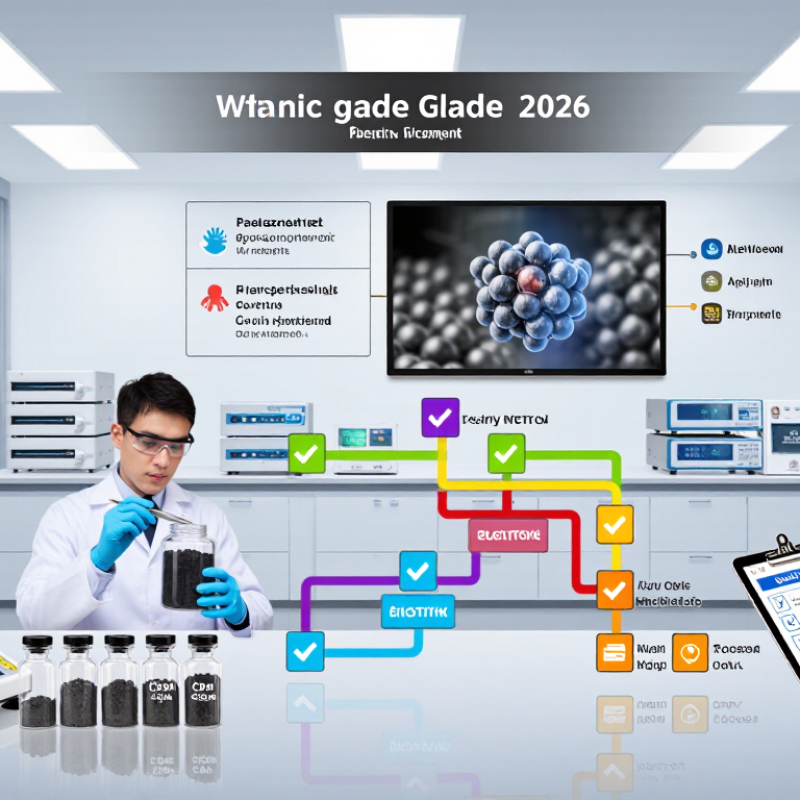
What Defines Pharmaceutical-Grade Activated Carbon?
How to Buy Pharmaceutical Grade Activated Carbon in 2026?
Pharmaceutical-grade activated carbon is defined by control, not by appearance. It should come from a documented manufacturing process with consistent activation and purification. Each lot needs clear identification, traceability, and a certificate of analysis. Important checks include adsorption capacity, moisture, ash, particle size, pH, and heavy metal limits. Microbial specifications also matter, especially when the carbon contacts pharmaceutical solutions.
A reliable supplier should provide GMP-based records and current quality documentation. Ask for test methods, sampling procedures, residual solvent data, and storage conditions. The product should match recognized pharmacopeial requirements where applicable. Yet compliance language can be vague. A certificate alone is not enough. I would review the actual limits and compare them with the intended process.
Application testing remains essential. Powder may work well for rapid decolorization, while granular material can support controlled filtration. Small differences in pore structure may change adsorption performance. Conduct a laboratory trial using the real solvent, temperature, and contact time. Do not assume a higher surface area guarantees better results. It may not. In 2026, digital batch records and supplier audit access can improve purchasing decisions, but human review still matters. A specification sheet cannot reveal every handling problem. Check packaging integrity, dust control, delivery conditions, and change-notification procedures before approving the material.
How to Buy Pharmaceutical-Grade Activated Carbon in 2026?
What Defines Pharmaceutical-Grade Activated Carbon?
Pharmaceutical-grade activated carbon is defined by documented compliance with the applicable pharmacopoeial or regulatory requirements, controlled raw materials, validated testing, low impurities, suitable particle characteristics, and batch-to-batch consistency. Iodine number and methylene-blue adsorption are useful screening indicators, but they do not independently prove pharmaceutical suitability. Actual acceptance limits vary by monograph, dosage form, and procurement specification.
How to Identify the Right Carbon Specifications
Buying pharmaceutical-grade activated carbon in 2026 requires more than choosing a high iodine number. Start with the intended use: color removal, impurity adsorption, or process-water treatment. USP–NF General Chapter <1231> emphasizes controlling pharmaceutical water through chemical, physical, and microbiological attributes. Therefore, request a complete certificate of analysis, not a single performance figure. Check iodine number, methylene blue adsorption, moisture, ash, pH, soluble metals, chloride, and microbial limits. ASTM methods such as D4607, D2867, and D2866 can support consistent testing.
Typical purchasing targets may include an iodine number above 900 mg/g, moisture below 5%, and ash below 8%. These are practical screening values, not universal pharmacopoeial limits.
Particle size matters too. Powder can disperse quickly but creates filtration challenges; granular carbon may reduce dust and improve bed handling.
The 2023 International Pharmaceutical Federation reports continued pressure on manufacturers to strengthen contamination control and supply-chain qualification. Ask for lot-specific results, traceability, residual-solvent statements, and packaging details. A sealed inner liner is useful when humidity is high.
Do not accept “pharmaceutical grade” as a complete specification. Some suppliers provide impressive surface-area data while omitting extractables or bioburden results. That gap deserves attention. Confirm the carbon source, activation process, sterilization status, and change-control procedure. Test a representative sample in your own process, because adsorption capacity can shift with pH, temperature, contact time, and competing compounds. A specification that looks excellent on paper may still perform poorly in a real production vessel.
Which Quality Certifications and Tests Matter?
How to Buy Pharmaceutical Grade Activated Carbon in 2026?
When buying pharmaceutical grade activated carbon, verify certifications before comparing prices. A current GMP certificate supports controlled manufacturing practices, but it does not prove every batch meets your specification. Look for ISO 9001 systems and testing performed by an ISO/IEC 17025 accredited laboratory. Pharmacopeial compliance, such as USP-NF, Ph. Eur., or JP, may also matter for your application. Check the certificate scope, issuing body, expiry date, and covered production site. Documents can look impressive. Details decide their value.
Ask for a batch-specific certificate of analysis, not a generic template. Important tests may include identity, adsorption performance, moisture, ash, pH, particle size, heavy metals, and microbial limits. Bioburden and bacterial endotoxin testing may be necessary for certain pharmaceutical processes. Review sampling methods and acceptance limits carefully. A high iodine number alone does not confirm suitability. Test results should match your material grade and intended process. I would also question unusual results, because perfect numbers can hide weak testing.
Tips: Request three recent batch reports and compare trends. Confirm packaging integrity, lot traceability, and storage conditions. Ask whether residual solvents, extractables, or leachables require evaluation. A supplier may provide every certificate yet still lack process consistency. That is an uncomfortable gap. Independent verification testing can expose it before production does. Keep written specifications, change-notification terms, and a clear rejection procedure in your purchasing file.
How to Evaluate Suppliers and Compare Product Offers
Buying pharmaceutical grade activated carbon in 2026 requires more than comparing prices per kilogram. Supplier quality should be examined through documented evidence, not attractive claims. Request a current certificate of analysis for each batch. Check assay-related specifications, moisture, ash, particle size, microbial limits, and adsorption performance. Confirm which pharmacopeial standards the product follows.
Ask how raw materials are controlled. A reliable supplier should explain manufacturing steps, cleaning procedures, contamination controls, and batch traceability. Review its quality agreement, change-control process, deviation records, and recall procedure. Request representative samples in the same packaging used for commercial delivery. Small details matter. A damaged inner liner can affect product integrity.
When comparing offers, place price, testing, lead time, minimum order quantity, packaging, freight, and technical support in one table. I have seen buyers compare different units without noticing. That mistake makes a cheap offer look better than it is. Check whether analytical testing is included or billed separately. Confirm shelf life and storage conditions, especially for humid warehouses. Supplier audits, virtual or on-site, can reveal gaps that documents hide.
Do not accept vague answers. Ask for evidence. One supplier may offer faster delivery, while another provides stronger validation support. Neither is automatically better. Your intended process, batch size, and internal quality resources should guide the decision. Leave room for uncertainty, too. Specifications may change after scale-up, so trial results should support the final purchase.
How to Buy Pharmaceutical Grade Activated Carbon in 2026? - How to Evaluate Suppliers and Compare Product Offers
| Evaluation Dimension | Why It Matters | Common Reference Range or Requirement | Offer Profile A Powdered Carbon | Offer Profile B Granular Carbon | Offer Profile C Washed Low-Ash Carbon |
|---|---|---|---|---|---|
| Primary physical form | Determines dispersion, filtration behavior, dust generation, and process compatibility. | Powder, granular, or extruded form selected according to the process design. | Fine powder; suitable for rapid adsorption and batch processing. | Granular particles; suitable for fixed-bed or column applications. | Fine powder with additional washing intended to reduce soluble impurities. |
| Carbon source | Feedstock affects pore structure, hardness, ash content, and adsorption selectivity. | Common sources include coconut shell, coal, and wood; source alone does not prove pharmaceutical suitability. | Wood-based or coconut-shell-based profile. | Coconut-shell- or coal-based profile. | Coconut-shell- or wood-based profile with post-treatment washing. |
| Iodine number | A conventional indicator of micropore development and adsorption capacity for small molecules. | Commercial activated carbons commonly fall around 800–1,200 mg/g; the approved specification should be product-specific. | 900–1,100 mg/g | 800–1,000 mg/g | 900–1,200 mg/g |
| Methylene blue adsorption | Provides information about larger mesopores and adsorption of relatively larger organic molecules. | Typical commercial values may be approximately 150–300 mg/g, depending on test method and grade. | 180–260 mg/g | 150–230 mg/g | 200–300 mg/g |
| Moisture content | High moisture reduces usable carbon per kilogram and may affect stability, flow, and microbial control. | Many commercial grades specify approximately 2–10% by mass; use the supplier’s validated method. | ≤8% | ≤5% | ≤5% |
| Ash content | Ash represents inorganic residue and can affect extractables, pH, conductivity, and process compatibility. | Unwashed commercial material may be around 2–12%; low-ash pharmaceutical grades are often specified below 5%. | ≤8% | ≤6% | ≤3% |
| pH of aqueous extract | Indicates whether acidic or alkaline soluble substances may influence the formulation or process. | Common commercial ranges are approximately pH 4–11; the application may require a narrower range. | pH 6–10 | pH 6–9 | pH 5–8 |
| Particle-size distribution | Controls dissolution or dispersion rate, filtration load, dusting, and adsorption kinetics. | Powder grades may use mesh or micrometre limits; granular grades commonly use defined mesh fractions such as 8×30 or 12×40. | Most particles below 75 μm | Predominantly 0.6–2.4 mm | Most particles below 75 μm |
| Heavy metals and elemental impurities | Mineral ash and feedstock can introduce inorganic impurities that may affect patient safety and regulatory compliance. | Require a risk-based elemental-impurity assessment and applicable pharmacopoeial or regulatory limits; do not accept “pass” without test details. | Batch-specific results required | Batch-specific results required | Batch-specific results required |
| Microbial quality | Activated carbon is not automatically sterile; microbial quality can be important for aqueous and pharmaceutical processing. | Specify total aerobic microbial count, total combined yeasts and moulds count, and absence of specified organisms when required by the application. | Test report required | Test report required | Test report required |
| Endotoxin status | Relevant when the material is used in a process with endotoxin-control requirements; it is not an automatic feature of every pharmaceutical-grade carbon. | Require a validated endotoxin limit and test method only when justified by the intended use. | Confirm before purchase | Confirm before purchase | Confirm before purchase |
| Residual processing chemicals | Acid-, alkali-, or water-washing residues may affect pH, conductivity, extractables, and product quality. | Request a process description and limits for soluble chloride, sulfate, conductivity, and other application-specific residues. | Process declaration required | Process declaration required | Washing validation preferred |
| PAHs and organic contaminants | Feedstock and thermal activation conditions can influence polycyclic aromatic hydrocarbons and other extractables. | Request a risk assessment and validated analytical data for the intended pharmaceutical application. | Risk assessment required | Risk assessment required | Specific contaminant panel preferred |
| Documentation package | Documentation supports qualification, release, deviation review, and regulatory inspection readiness. | At minimum: current specification, representative certificate of analysis, SDS, traceability statement, and change-notification procedure. | COA, SDS, traceability | COA, SDS, traceability | COA, SDS, washing records |
| Quality-system evidence | A controlled quality system reduces risks associated with batch inconsistency, unapproved changes, and poor traceability. | Evaluate GMP-relevant controls, audit history, calibration, deviation management, CAPA, and change control. ISO 9001 alone does not equal pharmaceutical GMP. | Audit or questionnaire required | Audit or questionnaire required | Audit plus washing-process review |
| Packaging and storage | Activated carbon can adsorb vapours and moisture from the environment and may release dust during handling. | Use sealed, clean, compatible packaging; protect from moisture, odours, chemicals, and cross-contamination. | Double-lined sealed bags recommended | Sealed bags or fibre drums recommended | Moisture-barrier packaging preferred |
| Commercial comparison | The lowest price per kilogram may not provide the lowest cost per effective batch or usable adsorption capacity. | Compare delivered cost, assay or capacity, yield, handling loss, testing cost, lead time, minimum order, and rejected-batch terms. | Usually lower freight cost per unit of adsorption capacity, but higher dust-control cost. | Usually easier to handle, but may require higher inventory volume. | Often higher purchase price, potentially lower impurity-related processing risk. |
How to Purchase, Store, and Document Activated Carbon Safely
How to Buy Pharmaceutical Grade Activated Carbon in 2026?
Buying pharmaceutical grade activated carbon requires more than comparing price per kilogram. Define the intended use, adsorption performance, particle size, ash content, moisture level, and applicable pharmacopeial requirements. Ask qualified suppliers for a current certificate of analysis, safety data sheet, technical specification, and representative sample. Check that the lot number appears on every document.
Request evidence of manufacturing controls, impurity testing, microbiological monitoring, and change notification procedures. A supplier questionnaire can reveal gaps in cleaning, packaging, or traceability. Review test methods carefully. “Complies” is not enough without acceptance limits and results. I would also confirm whether the material is virgin, reprocessed, or blended, because that detail may affect risk assessment.
Store unopened bags in a clean, dry, controlled area away from chemicals and strong odors. Keep packages sealed until use, and inspect liners for tears or powder leakage. Use pallets, not bare floors. Record receipt date, lot number, quantity, storage location, and expiry or retest date. Apply stock rotation, even when the material appears stable.
During dispensing, trained staff should use suitable protective equipment and minimize airborne dust. Record every transfer into production. Keep retained samples when your quality system requires them. Documentation is often the weak point. A missing signature or unclear correction can break an otherwise good traceability chain. Review deviations promptly, and do not release questionable material based on appearance alone.
