7 Best Zhongshan Anjielo Products for Global Buyers
Global buyers comparing Zhongshan Anjielo products need more than attractive catalog photos. They need clear specifications, dependable communication, and evidence that each item suits its intended market. The stakes can be practical: dimensions, materials, power requirements, and installation details affect purchasing decisions. Small differences matter.
The wider built-environment context adds another reason to check product information carefully. UNEP and the Global Alliance for Buildings and Construction reported that buildings and construction accounted for 34% of global energy demand and 37% of energy- and process-related carbon dioxide emissions in 2022. These figures do not describe Anjielo products specifically. They do show why buyers increasingly examine performance and product documentation. This guide introduces seven options for global buyers, with attention to stated features, potential use, and questions worth asking suppliers. Look for current specifications and market-appropriate documentation before ordering. A product page alone cannot verify every detail. And, frankly, comparisons can remain incomplete when public information is limited. That is worth noting. Use this shortlist as a starting point, then confirm the details that matter for your project.
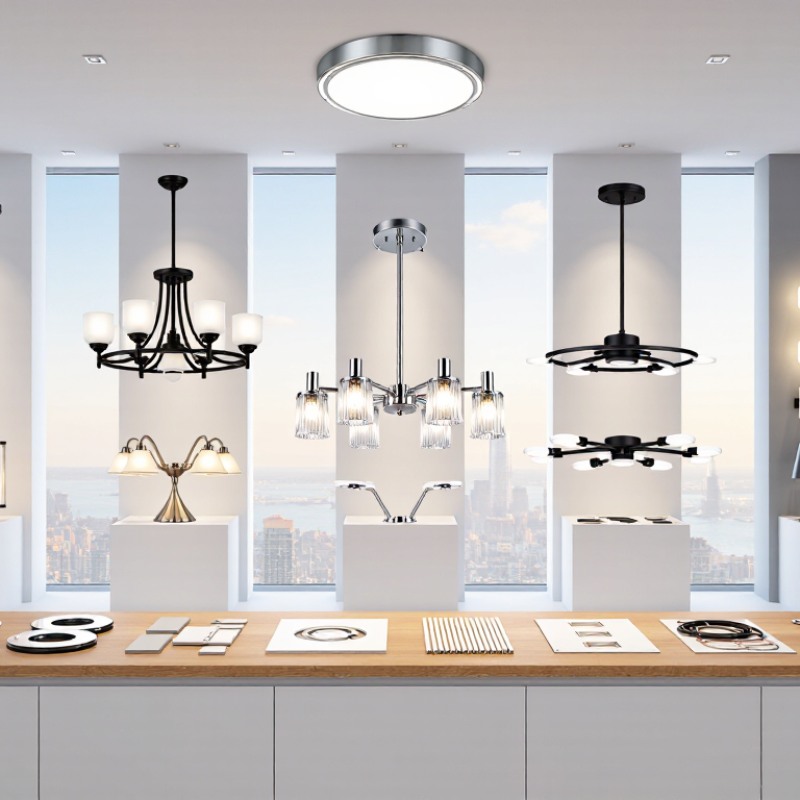
Zhongshan Anjielo Lighting: Product Types, Applications, and Buyer Basics
A lighting range for global buyers may include pendant lights, ceiling fixtures, wall lamps, track systems, and outdoor models. Each serves a different task. Pendants can focus light over dining tables or counters, while wall lamps add softer illumination in corridors and bedrooms. Track lighting suits spaces where displays or work areas change often. Small details matter: beam angle, color temperature, finish, and dimming compatibility can affect the result more than appearance alone.
Applications should guide selection. A compact ceiling fixture may work in a low hallway, but a broad room often needs several light sources to avoid dark corners. For outdoor use, check the fixture’s stated protection rating and materials, then compare them with the site’s exposure to rain, dust, or salt air. Ask for product dimensions, input voltage, light output, and installation instructions before ordering. Requirements differ by market, so confirm applicable local standards with a qualified professional.
Buyer basics are practical. Request clear product photos, packing details, lead times, and warranty terms in writing. Samples help, but they can mislead. A single lamp in a showroom cannot show how a full installation will look, and finishes may vary between batches. That uncertainty is worth discussing early. Review the quotation carefully, including accessories and replacement-part availability, before approving a larger order.
Seven Anjielo Picks Compared by Output, Efficiency, Lifespan, and Use
Seven lighting options can look similar in a product grid, yet their output and efficiency suit different rooms. A high-output model can brighten a warehouse aisle, while a balanced option may work better above a kitchen counter. Check measured brightness alongside wattage; a strong beam is not automatically an efficient one. Small detail, big difference.
For lower energy use, compare light output per watt and consider how many hours the fixture runs daily. Long-life options can reduce replacement work in high ceilings, where access may require a ladder and extra time. Compact models fit tight spaces, but their smaller size may limit heat management or brightness. That trade-off deserves a closer look. For continuous operation, review rated service life and operating conditions rather than relying on a headline number alone.
A value-focused pick should be judged by its expected use, not just its purchase price. Compare the seven candidates under the same conditions: matching brightness targets, room size, and daily operating hours. Ask for test methods and warranty details when available. One comparison can still miss real-world factors, such as dimming habits or poor ventilation. I would treat the ranking as a starting point, not a guarantee.
DOE Benchmark: LEDs Use at Least 75% Less Energy Than Incandescent Lamps
For global buyers comparing LED products, the U.S. Department of Energy’s Energy Saver guidance sets a useful benchmark: LEDs use at least 75% less energy than incandescent lamps. The DOE also reports that LEDs can last up to 25 times longer. In a common 800-lumen comparison, a 9-watt LED replaces a 60-watt incandescent, reducing lamp energy use by about 85% during equal operating hours. That is measurable. Used for ten hours daily, the difference is 510 watt-hours per lamp.
These figures help buyers assess specifications beyond packaging claims. Check lumens for brightness, watts for energy use, color temperature for the room, and dimmer compatibility before ordering. The DOE benchmark does not guarantee identical performance in every fixture. Enclosed fittings, heat, driver quality, and voltage can affect lifespan and light output. Not every room agrees. Request photometric data and test samples at the intended ceiling height and switching pattern. A low wattage alone says little about light quality; that detail is easy to overlook.
Export Readiness: Check CE, RoHS, Voltage, and IEC 60598 Requirements
Before ordering decorative or task lighting for export, verify the exact model and its paperwork. A CE mark alone is not enough. Request the EU Declaration of Conformity and check that it names the product, applicable directives, and standards. Confirm RoHS evidence for the supplied version, not merely a similar item. Keep records tied to model numbers and production batches. Small detail, big difference.
Check the rated voltage and frequency against the destination market, then confirm the plug, driver, and dimmer compatibility. A 220–240 V label does not automatically suit every installation. For luminaires, ask which IEC 60598 requirements were applied and whether the test report covers the product’s construction and intended use. Reports should match the actual model and configuration. If a cable, LED driver, or enclosure changes, ask whether reassessment is needed. A spreadsheet can look complete while hiding one mismatch; I would still verify the documents with a qualified compliance professional before shipment. Keep the answers in writing, and allow time to resolve gaps.
Global Sourcing Checklist: MOQ, Samples, Lead Times, Warranty, and Support
For global buyers comparing home and building products, a sourcing checklist should start with minimum order quantity. Ask whether the quoted MOQ applies per model, finish, or shipment. A low opening quantity may still require costly custom packaging or color setup. Request a written quote at two or three order volumes, with packaging and sample charges shown separately.
Order a production sample before approving a larger shipment. Check dimensions, surface finish, moving parts, and the fit of included components. Photograph the sample beside a ruler, then compare it with the final specification. Small details matter. One sample cannot reveal every production variation, so ask how quality checks are recorded.
Confirm lead times in writing, separating production from freight and delivery. Request milestone dates, including sample approval and packing, and ask what happens if a component is delayed. Review warranty coverage, exclusions, claim documents, and the expected response time. Clarify whether replacement parts are available. Support matters after delivery: confirm service hours, communication channels, and who handles technical questions. I have seen schedules look precise on paper yet leave little room for revisions; build in a buffer, even if it feels overly cautious.
