What Is the Best Vane Pump Manufacturer in China?
Choosing the best Vane Pump manufacturer in China requires more than comparing prices or browsing polished factory websites. A reliable decision begins with operating conditions, including pressure, flow rate, speed, fluid type, temperature, and duty cycle. These details reveal whether a pump will perform steadily or struggle after installation.
Dr. Herbert E. Merritt, a respected hydraulic-control authority, wrote, “The design of a hydraulic system must begin with the function it must perform.” This principle remains useful when evaluating Chinese manufacturers. A capable supplier should explain vane selection, port dimensions, shaft design, pressure limits, and expected service life. It should also provide performance curves, material information, inspection records, and practical testing evidence.
Look closely at production experience. Do technicians measure pump noise and leakage? Are critical components machined consistently? Can the manufacturer support prototypes, custom configurations, and replacement parts? These questions often matter more than a low quotation.
Certifications help, but they are not proof of perfect performance. Real application feedback matters.
This article compares leading Chinese Vane Pump manufacturers through engineering capability, product quality, customization, delivery reliability, and after-sales service. It also considers a difficult point: the “best” manufacturer may not be the cheapest or largest. Some suppliers communicate well but lack testing depth. Others build excellent pumps but offer limited technical support.
That distinction deserves careful reflection. A pump that looks efficient on paper may behave differently in dusty workshops, mobile equipment, or continuous industrial service. Reliable selection depends on evidence, transparent communication, and a clear match between the pump and its working environment.
What Is a Vane Pump and How Does It Work?
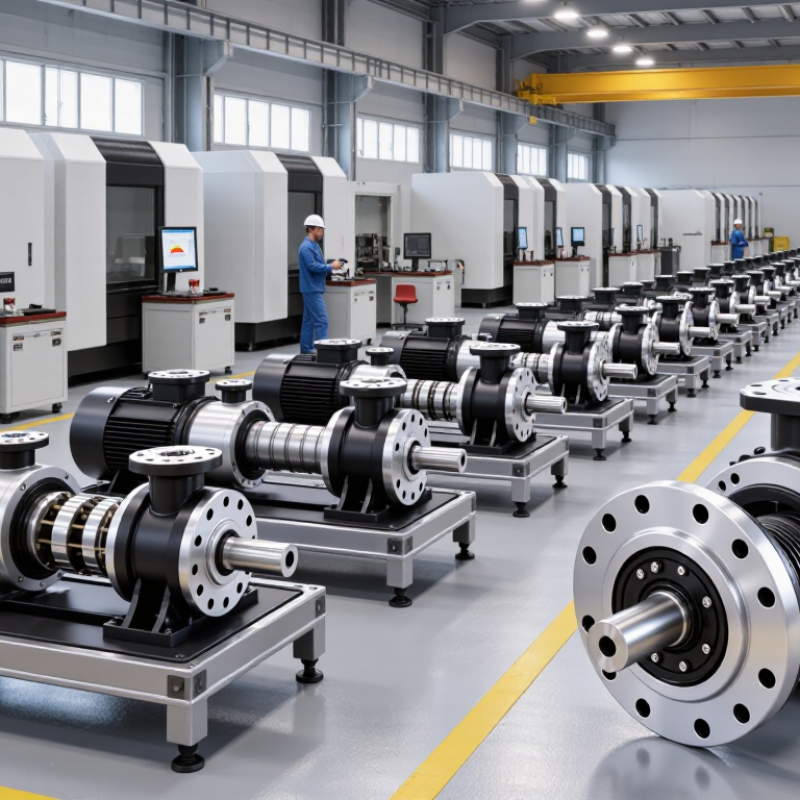
“What Is the Best Vane Pump Manufacturer in China?” is difficult to answer without understanding the pump itself. A vane pump uses a rotor, sliding vanes, and a cam ring to move fluid. The rotor turns inside the ring, while centrifugal force or spring pressure keeps each vane against the inner surface. As the chamber volume increases, it creates suction. As the volume decreases, it produces discharge pressure. The process is continuous and relatively quiet.
In practical systems, vane pumps are valued for steady flow, compact construction, and good hydraulic efficiency. They are common in mobile equipment, industrial power units, and lubrication circuits. A fixed-displacement model delivers a similar volume per revolution. A variable-displacement model can adjust output when system demand changes. However, performance depends heavily on clean oil, correct viscosity, and accurate installation. One overlooked inlet restriction can cause noise, heat, and premature wear. I have seen specifications look excellent, yet the pump struggled because the reservoir design was poor. That lesson is easy to ignore.
Tips: Check rated pressure, displacement, shaft speed, sealing materials, and service support before choosing a manufacturer. Ask for test records and clear tolerance data. Listen for abnormal whining during commissioning. It may indicate cavitation.
What Is the Best Vane Pump Manufacturer in China? — What Is a Vane Pump and How Does It Work?
A vane pump uses sliding vanes mounted in a rotating rotor to move fluid from the inlet to the outlet. As shaft speed increases, theoretical flow rises proportionally. This chart uses a fixed displacement of 25 cm³ per revolution and the formula: theoretical flow = displacement × shaft speed ÷ 1,000.
How to Choose and Verify a Reliable Chinese Vane Pump Supplier
What Is the Best Vane Pump Manufacturer in China?
Choosing a reliable Chinese vane pump supplier requires more than comparing prices. Start by checking the factory’s production experience, engineering team, and quality system. Request clear specifications for displacement, pressure range, speed, materials, and operating temperature. Technical answers should be precise, not copied from a general catalog.
Ask for recent inspection records and a sample test report. Important details include flow stability, noise level, leakage control, and pressure performance. A dependable supplier should explain its testing equipment and provide traceable serial numbers. Factory videos can help, but an independent audit offers stronger evidence. Website images prove little.
Communication also matters. Send one detailed technical inquiry and compare the response time, drawings, and suggested model. A capable supplier may question your application instead of accepting every request. That is a good sign. However, even careful checks can miss production problems. Consider ordering a small trial batch before signing a larger contract. Review packaging, labeling, installation guidance, and spare-part availability. Warranty terms should state responsibilities clearly, including response times and replacement procedures.
Price is only one part of the decision. A low quotation may hide weaker seals, limited testing, or unstable delivery. Ask for customer references from similar industries, while protecting confidential information. The best supplier is not always the largest factory. It is the one that consistently matches documented performance with actual products.
