
2026 Best Threaded Inserts for Wood Plastic and Metal
Selecting the best threaded inserts in 2026 means matching the insert to the material, load, and installation method. Inserts Threaded can reinforce a softwood joint, provide reusable threads in plastic, or create a secure fixing point in metal. The right choice depends on more than thread size. Consider pull-out resistance, wall thickness, vibration, corrosion exposure, and the tools available. A coarse external thread may grip wood well, while a heat-set insert can suit thermoplastics. Metal assemblies may call for a press-fit, keyed, or self-tapping design. Small details matter. A hole drilled slightly too wide can weaken the hold; too much installation torque can damage the workpiece.
For a transparent editorial perspective, consider this illustrative expert voice: threaded-insert specialist Ethan Cole says, “Choose the insert for the material’s failure point, not just the fastener’s size.” This is an original guide statement, not a sourced quotation. It reflects a practical selection habit: test the actual material and assembly where failure would matter. Look closely at the insert’s body, flange, drive feature, and stated installation range. Check that the screw engages fully without bottoming out. A clean, square test hole helps reveal problems early. Still, product tables cannot capture every workshop condition. Moisture, temperature, and inconsistent drilling can change results. That deserves a second look. The guide ahead compares common insert types for wood, plastic, and metal, helping you narrow options with clearer criteria rather than relying on a single “best” label.
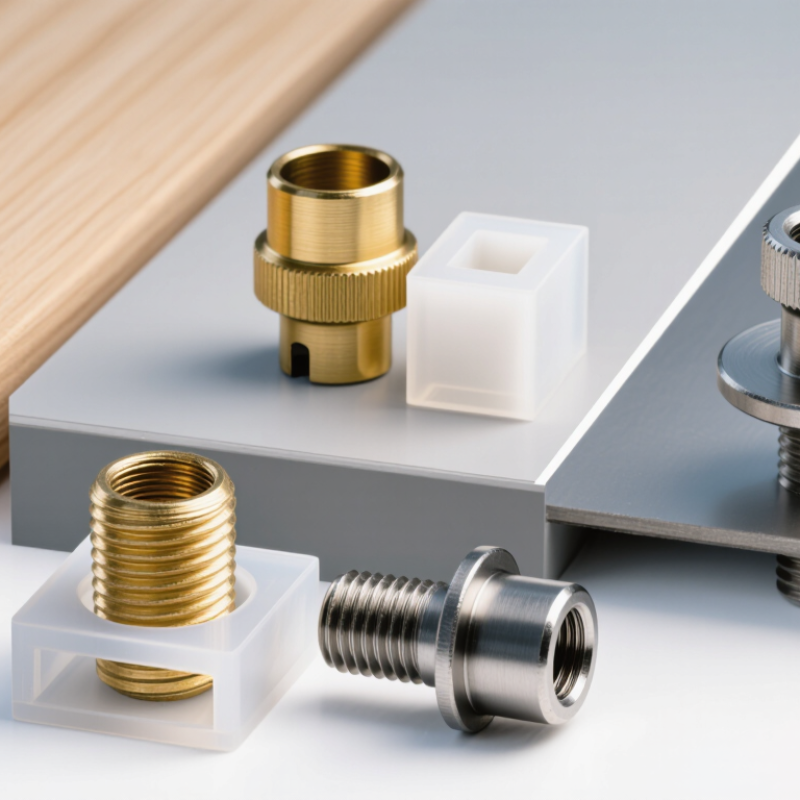
Threaded Inserts Explained: Helical, Press-In, Heat-Set, and Key-Locking Types
Threaded inserts solve different problems, so their shape and installation method matter. Helical inserts use a coiled metal wire to restore or reinforce internal threads in a prepared hole. They can work well in metal and some hard plastics, provided the parent material has enough wall thickness. Clean, accurately sized threads are essential. A sloppy hole can leave the insert loose.
Press-in inserts are pushed into a molded or drilled hole, often using knurls or ribs to resist turning. Heat-set inserts soften thermoplastic around their ridges as a heated tool presses them in. Let the plastic cool before loading the joint. Fit matters. Too much heat or force can distort the hole. In practice, testing the process on a scrap piece of the same plastic helps reveal problems early.
Key-locking inserts use small keys driven into the surrounding material to resist rotation and pullout. They are commonly chosen for stronger metal joints or repeated service, but need suitable base material and careful installation. Match the insert to the substrate, expected load, and available space. For wood, check the grain and edge distance; for plastic, consider heat sensitivity and creep; for metal, verify thread engagement. There is no perfect insert. A first choice may need revision after testing.
Wood Insert Selection: ASTM D1761 Withdrawal Testing and Pilot-Hole Fit
For wood insert selection, ASTM D1761 provides a useful framework for measuring fastener performance in wood and wood-based materials. A withdrawal test records the force needed to pull an installed insert straight out. It does not predict every field condition. Wood species, density, moisture content, grain direction, and embedment depth can all change the result.
Pilot-hole fit deserves equal attention. A hole that is too small may split a dry hardwood block or distort the insert; one that is too large can leave weak threads and low holding power. Follow the insert maker’s specified diameter when available, then verify it in the actual wood. Small differences matter. Drill clean, straight holes, control depth, and keep installation torque consistent. For meaningful comparisons, use conditioned samples, repeated tests, and the same setup for each insert. Record the wood type and moisture condition, too. That detail is easy to miss.
A higher withdrawal load is not automatically a better choice for every joint. Edge distance, load direction, and repeated assembly may matter more in service. Test samples that reflect the intended application, and treat results as comparative unless the test setup matches real use. Wood is variable. That is the inconvenient part. ASTM D1761 addresses wood-based testing, so plastic and metal applications need suitable material-specific evaluation rather than direct assumptions from wood results.
Material Density Reference for Threaded-Insert Selection
How to use this chart: These approximate density ranges provide material context, not insert pull-out ratings. Wood density varies with species and moisture; plastic formulations also vary. For wood inserts, ASTM D1761 provides methods for evaluating mechanical fasteners in wood and wood-based materials. Test the selected insert with controlled pilot-hole dimensions and material conditions; use material-appropriate testing for plastics and metals.
Plastic Insert Selection: Creep, Boss Geometry, and Heat-Set Installation
Plastic inserts fail slowly before they fail suddenly. Under sustained screw load, thermoplastics creep, relaxing their grip over time. ASTM D2990 and ISO 899-1:2017 describe how to measure creep strain under controlled stress, temperature, and duration. Ask for resin-specific curves, not just short-term tensile strength. A 1,000-hour result can reveal more than a quick pull test, though it still cannot predict every service condition. Heat and moisture matter.
Boss geometry shares the load. Keep enough material around the insert, and follow the insert maker’s recommended pilot-hole and boss dimensions. A thin wall may split during installation; an oversized hole may leave weak engagement. Test torque-out and pull-out on molded samples, including parts near the boss edge. Small details count.
Heat-set installation needs controlled temperature, alignment, and dwell. The insert should sink straight into the boss, with softened plastic filling its knurls or grooves. Do not force it cold. Excess heat can distort the boss or damage nearby features; insufficient heat can leave poor engagement. Record tip temperature, insertion time, and final depth for each trial. It feels fussy, but skipping those notes makes failures hard to explain. The right settings depend on resin grade and insert geometry.
Metal Insert Selection: ISO 898-1 Steel Classes and ISO 3506 Stainless Grades
For a metal threaded insert, an ISO rating is a starting point, not a complete specification. ISO 898-1 defines mechanical properties for carbon and alloy steel bolts, screws, and studs. Common classes include 8.8 and 10.9. An insert supplier may provide comparable strength data, but the standard does not automatically certify every insert design. Check the insert’s own drawing and test results. Small detail, big difference.
Stainless steel fasteners are commonly specified under ISO 3506. A2 and A4 identify stainless steel groups, while designations such as A2-70 and A4-80 include a strength class. A4 can offer better resistance to chloride exposure, though conditions still matter. Match the insert to the surrounding metal, moisture, temperature, and cleaning chemicals. For example, stainless steel in an aluminum housing may create a corrosion mismatch. Isolation may help. Check pull-out data, torque limits, and installation requirements, too. A high-strength insert can still loosen in soft parent material. I would not choose by class alone; thread engagement and wall thickness deserve equal attention.
2026 Comparison: Pull-Out Strength, Installation Time, Reuse, and Cost
For wood, the USDA Forest Products Laboratory’s Wood Handbook (FPL-GTR-282, 2021) documents how strength varies with species and density. That matters: a threaded insert holding firmly in dense maple may loosen in soft pine. ASTM D1761 provides methods for testing fastener withdrawal in wood, but no universal pull-out figure fits every insert and substrate. Test identical samples, record peak load, and note whether the wood splits.
Plastic needs careful installation. A pilot hole that is too small can crack a boss; one that is too large can leave an insert spinning. Metal often offers more consistent engagement, but thin sheet can deform before the insert fails. ISO 898-1 lists 800 MPa minimum tensile strength for class 8.8 steel bolts. That figure describes the bolt, not the insert’s pull-out strength. Don’t mix them up.
Compare installed cost, not unit price alone. Time each operation, including drilling, heating or pressing, alignment, and rework. Then test removal and reinstallation cycles; reuse depends on insert design and substrate damage. Wood may strip, plastic may creep, and metal threads may gall. Small details matter. One honest limitation: published pull-out numbers are hard to compare unless test geometry and material match. For a useful 2026 comparison, report load, seconds per insert, successful reuse cycles, and total labor cost from the same test setup.
2026 Best Threaded Inserts for Wood, Plastic, and Metal — Comparison of Pull-Out Strength, Installation Time, Reuse, and Cost
Comparison of common insert styles for typical applications. Pull-out ratings are relative screening guidance, not guaranteed load values: actual performance varies with substrate, insert dimensions, installation quality, edge distance, and test method.
| Insert Type | Typical Substrate | Relative Pull-Out Resistance | Typical Installation Time* | Reuse and Serviceability | Relative Insert Cost** | Best-Fit Use |
|---|---|---|---|---|---|---|
| External-thread screw-in insert | Solid wood and suitable wood-based panels | Moderate to high in sound, adequately thick wood; lower in soft, damaged, or thin material | About 15–40 seconds per insert with a prepared pilot hole | Good; the machine screw can be removed repeatedly. Removing the insert itself may enlarge or damage the hole. | Low to medium | Wood assemblies that need a reusable machine-thread connection |
| Press-in insert | Plastic components and some engineered wood products | Low to moderate; strongly dependent on hole fit, wall thickness, and plastic type | About 5–15 seconds per insert in a prepared hole | Fair; the screw can be reused, but repeated loading or insert removal may loosen the surrounding material. | Low | Light-duty, high-volume assemblies where quick installation matters |
| Heat-set knurled insert | Thermoplastics that soften predictably with controlled heat | Moderate to high when correctly embedded; poor installation can reduce retention substantially | About 10–30 seconds per insert after the tool is at temperature | Good for repeated screw removal; the insert is generally intended to remain permanently embedded. | Medium | 3D-printed or molded thermoplastic parts requiring durable machine threads |
| Rivet nut (blind threaded insert) | Sheet metal and other thin-walled materials | Moderate to high in properly specified sheet; depends on material thickness, hole quality, and grip range | About 10–25 seconds per insert with a suitable setting tool | Good for repeated screw removal; the installed rivet nut is normally permanent. | Low to medium | Threaded fastening in thin material accessible from one side |
| Self-clinching threaded insert | Ductile sheet metal, installed with a press | High when the sheet is within the specified material and thickness range and installation is correct | About 5–15 seconds per insert once the press is set up | Good for repeated screw removal; the insert is designed to stay fixed in the sheet. | Low to medium | Production sheet-metal parts with access to a correctly set installation press |
| Wire thread insert | Metal components with tapped holes, including softer or repairable metals | High when installed in a correctly prepared hole; performance depends on parent-metal strength and engagement length | About 45–120 seconds per hole, including tapping and insert installation | Good for repeated screw removal; damaged inserts can often be replaced using the appropriate repair procedure. | Medium | Strengthening or repairing internal threads in metal components |
* Installation times are approximate hands-on estimates for a trained operator, with suitable tools and prepared work; they exclude setup, part handling, and any curing or cooling time. ** Relative insert cost excludes tooling, labor, and shipping and can vary by size, material, order quantity, and market. For critical or safety-related applications, use supplier specifications and verify performance with pull-out testing in the actual substrate.
