7 Best Servo Amplifiers for Global Buyers?
Industrial automation is moving from isolated factory cells toward connected, high-speed production systems. The International Federation of Robotics reported 541,302 industrial robots were installed worldwide in 2023. Its World Robotics 2024 report also recorded more than 4.2 million robots operating globally. Each robot depends on coordinated motion, and the servo amplifier converts controller commands into accurate motor performance.
That role is easy to underestimate. A servo amplifier manages current, speed, torque, braking, and feedback signals under changing loads. In a packaging line, for example, a small tuning error can shift labels by millimeters or create repeated product waste. The best solution is not always the most powerful unit. It must match the motor, encoder, supply voltage, communication protocol, duty cycle, and regional service network.
This guide examines seven servo amplifier options for global buyers. Selection criteria include positioning accuracy, overload capacity, thermal design, safety functions, software support, and long-term maintainability. Data from MarketsandMarkets and Grand View Research indicate continued growth in industrial automation and motion-control demand, although their market estimates differ by scope and methodology. That difference matters. Market size alone cannot prove product quality.
Practical testing remains essential. Specifications can look impressive on paper. Field conditions are less forgiving. Buyers should verify compatibility with existing controllers, replacement availability, and technical support before ordering. No shortlist is perfect. Some models may perform exceptionally in clean facilities but struggle with heat, dust, or weak network infrastructure. The following comparison therefore combines manufacturer documentation, engineering considerations, and buyer-focused evidence to identify servo amplifier choices that deserve closer evaluation worldwide.
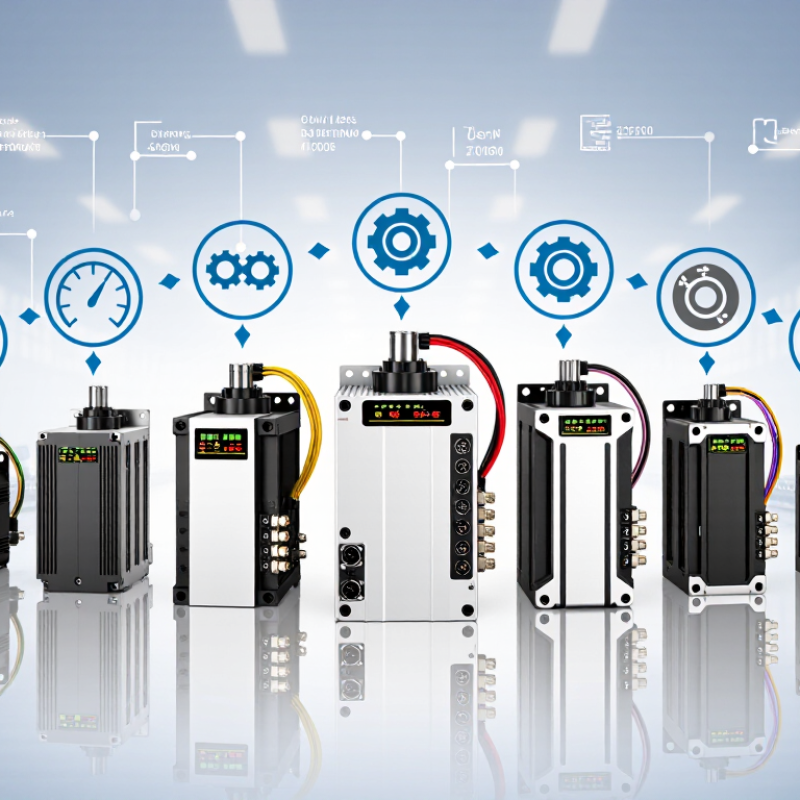
What Is a Servo Amplifier and How Does It Work?
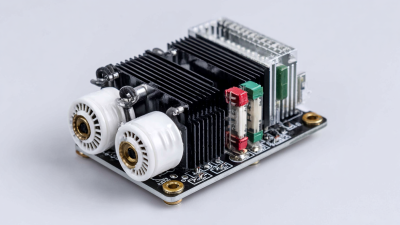
A servo amplifier is the control center between a motion controller and a servo motor. It receives position, speed, or torque commands, then converts them into carefully timed electrical current. Most modern units use pulse-width modulation to control motor phases. An encoder reports the motor’s actual position and speed. The amplifier compares that feedback with the command and corrects the error within milliseconds.
This closed-loop process creates accurate movement for packaging machines, robotic arms, medical equipment, and precision tools. A typical amplifier manages current, velocity, and position loops. The current loop reacts fastest, while the position loop handles final accuracy.
In practical installation work, tuning is rarely perfect on the first attempt. Load weight, belt tension, friction, and cable length can change machine behavior. A motor may sound quiet but still produce unwanted vibration.
Tips:
Check the motor’s rated voltage, continuous current, peak current, feedback type, and communication protocol before purchasing. Global buyers should also confirm input power requirements and local certification needs. Leave space for cooling air around the amplifier. Poor ventilation can shorten service life. Use shielded feedback cables and separate them from high-power wiring. Start with conservative acceleration settings, then test stopping distance, temperature, and repeatability. Documentation matters more than a low initial price. Some specifications look similar, but compatibility can fail at the connector or software level.
Seven Leading Servo Amplifiers for Different Applications
Seven Leading Servo Amplifiers for Different Applications
Global buyers need more than a high power rating. A servo amplifier must match the motor, feedback device, load profile, and local power supply. The wrong match may cause vibration, overheating, or unstable positioning.
For brushed DC motors, a compact DC servo amplifier suits laboratory stages and older production equipment.
Brushless DC amplifiers work well in pumps, fans, and small automated tools.
AC permanent-magnet servo amplifiers deliver precise torque for packaging machines and robotic joints.
Linear motor amplifiers support fast, direct movement in inspection tables and semiconductor equipment.
Multi-axis amplifiers reduce cabinet space in CNC systems and coordinated pick-and-place machines.
Regenerative amplifiers help high-inertia systems return braking energy, especially in hoists and vertical axes.
Safety-rated amplifiers add monitored torque-off functions for machinery requiring controlled shutdowns.
Small details matter.
Check encoder compatibility, peak current, overload time, communication protocol, and cooling clearance. A 400-volt input model may not suit a 230-volt factory without proper system design. Confirm whether the amplifier supports absolute or incremental feedback. Also inspect wiring diagrams and fault logs before purchase. They often reveal practical limits hidden in sales specifications.
Real installations are less perfect than test benches. Dust, long cables, and imperfect grounding can reduce performance. Some applications also need more tuning time than expected. A careful buyer should request thermal data, protection ratings, regional documentation, and technical support response times before approving a global shipment.
Compatibility, Safety, and Regional Compliance Requirements
Choosing the seven best servo amplifiers for global buyers requires more than comparing speed, price, or rated power. In commissioning work, I check motor voltage, peak current, encoder type, feedback resolution, and communication protocol first. A compact low-voltage amplifier may suit a packaging machine, while a high-voltage unit may better support heavy automation. Multi-axis, network-ready, safety-rated, harsh-environment, and highly configurable models complete the shortlist. No single option fits every factory.
Compatibility problems often appear during installation. Confirm connector pinouts, cable shielding, braking resistor limits, and firmware support before ordering. The amplifier should match the motor’s continuous and peak torque demands. It should also communicate with the controller without extra converters. Small details matter. A missing encoder adapter can delay commissioning for days.
Safety and regional compliance deserve equal attention. Look for documented safe torque off, protective isolation, grounding instructions, and clear fault diagnostics. Depending on the market, buyers may need evidence related to IEC 61800-5-1, electromagnetic compatibility, machinery safety, or regional conformity marks. Requirements can differ between countries and machine categories. Ask for current test reports, installation manuals, and declarations from the supplier. My own checklist is not perfect. Local certification authorities should review the final machine, especially when voltage, enclosure design, or operating conditions change.
How to Select the Best Servo Amplifier for Your System
How to Select the Best Servo Amplifier for Your System
Selecting a servo amplifier starts with the machine, not the catalog. Measure motor voltage, continuous current, peak current, feedback type, and acceleration demand. Start with the load. A packaging axis may need brief peak torque, while a conveyor requires stable continuous output. The U.S. Department of Energy reports that motor-driven systems consume more than half of industrial electricity, making efficiency and correct sizing practical cost concerns. Heat matters. Check cabinet temperature, airflow, overload duration, and regenerative energy before approving a compact unit.
Compatibility also extends beyond electrical ratings. Verify encoder protocols, network standards, braking resistance, and available tuning software. IEC 61800-5-2 provides a recognized framework for functional safety in adjustable-speed power drive systems. For global purchasing, confirm input voltage ranges, EMC requirements, documentation languages, spare-part access, and local technical support. Interact Analysis has identified continued growth in industrial motion-control demand, but market growth does not guarantee a suitable product for every machine.
Field experience suggests leaving reasonable current and thermal headroom. Oversizing too far can reduce efficiency and raise costs. A spreadsheet can still mislead. Test the amplifier with the real inertia, cable length, duty cycle, and stopping profile. I would also request fault logs from a comparable installation. Small details, such as a noisy encoder cable or insufficient braking capacity, can undermine an otherwise careful selection.