2026 Top UL Listed 3 Phase Commercial Pad Mount Transformers
Selecting a commercial pad-mounted transformer is not simply a matter of choosing the largest rating. Site conditions, utility requirements, and expected load growth all shape the decision. This 2026 guide examines leading UL-listed three-phase options for commercial projects, with practical attention to ratings, construction, and service support.
A Ul Listed Three Phase Pad Mounted Transformer For Commercial applications should be assessed against its actual installation needs. Check the nameplate voltage, kVA capacity, impedance, insulation system, and enclosure details. Confirm that the specific model and configuration carry the relevant UL listing; certification should not be assumed across an entire product family. Also review access clearances, ventilation, sound expectations, and connection requirements with qualified project professionals. Small details matter. A crowded service area can complicate routine inspection, even when the transformer itself appears suitable.
The sections ahead compare selection factors and features buyers commonly evaluate, including safety provisions, durability, documentation, and lifecycle considerations. They also highlight questions to ask manufacturers before requesting a quote. Product claims deserve careful checking. A brochure cannot replace approved drawings, current certification records, or project-specific engineering review. Even experienced teams can overlook a mismatch between a standard configuration and site requirements. That is worth reconsidering. Use this overview to build a focused shortlist, then verify each candidate against the electrical design, local utility criteria, and the conditions at the installation site.
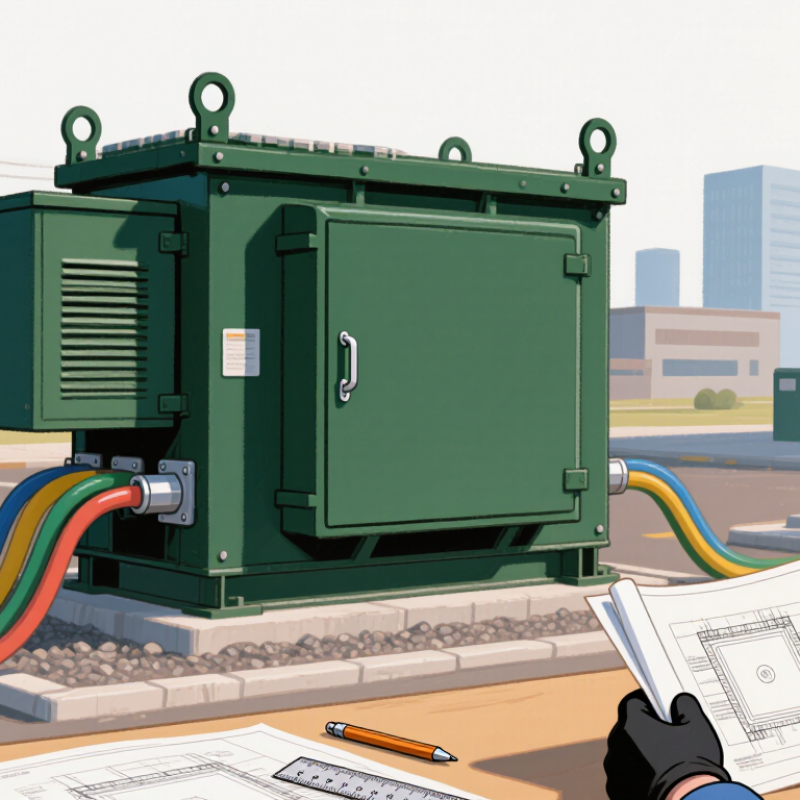
What Is a Commercial Three-Phase Pad-Mount Transformer?
A commercial three-phase pad-mount transformer is a ground-level unit that transfers electrical power between voltage levels. It serves buildings and sites with substantial loads, such as offices, workshops, retail centers, and campuses. Inside its locked metal enclosure, coils and a magnetic core convert incoming utility voltage to levels used by connected equipment. The three-phase design supplies power across three alternating electrical phases, supporting motors, lighting, HVAC systems, and other commercial loads.
It sits on a concrete pad, often near a service entrance or parking area. The enclosure protects internal components from weather and limits public access to energized parts. Not glamorous, but essential. During planning, teams need to check the required voltage, kVA capacity, available clearances, cable entry points, and site conditions. A unit that fits electrically may still be awkward to install if vehicles, doors, or underground services crowd the pad. Where a project requires UL-listed equipment, verify the specific unit’s certification and documentation; appearance alone proves little. Details can be missed, especially when schedules are tight. A qualified electrical professional should confirm that the transformer and its installation suit the project’s design and local requirements.
What Is a Commercial Three-Phase Pad-Mount Transformer?
A commercial three-phase pad-mount transformer is a ground-level, enclosed transformer that supplies three-phase power to a building or site. The chart compares common nominal wye-connected secondary voltage configurations. Actual availability and suitability depend on the utility supply, connected loads, and local electrical requirements.
Values are nominal volts. Phase-to-neutral voltage for the 600Y/347 V system is rounded to 347 V.
How Its Core, Windings, and Enclosure Are Designed
A 2026 UL-listed, three-phase commercial pad-mount transformer is built around three linked decisions: core geometry, winding layout, and enclosure protection. The core typically uses stacked grain-oriented electrical steel. Carefully aligned laminations and step-lap joints help reduce magnetic losses and audible hum. Small details matter. A loose joint or damaged coating can undermine otherwise careful assembly.
Windings use copper or aluminum conductors, selected for electrical, thermal, and project requirements. Their insulation system must withstand operating voltage, heat, and short-circuit forces. DOE’s 2013 distribution-transformer standards analysis projected about 3.4 quadrillion Btu in cumulative energy savings over 30 years for covered equipment. That is a fleet-wide estimate, not a promised saving for one transformer. Actual performance depends on loading, losses, and installation conditions.
The outdoor enclosure separates high-voltage and low-voltage compartments, limits access to energized parts, and shields internal components from weather. Gaskets, corrosion-resistant finishes, drainage, and grounding details all affect service life. EIA’s Electric Power Annual reports transmission and distribution losses near 5% in recent years; that figure covers the wider grid, not transformers alone. For procurement, verify that the exact configuration carries the applicable UL Listing and matches the project’s voltage, capacity, and installation requirements. A label is useful, but it does not replace a careful site review.
What UL Listing Covers and How to Verify Certification
For a three-phase commercial pad-mount transformer, a UL Listing applies to a specific product configuration and intended use—not automatically to every unit from a supplier. Check the nameplate for the exact model or catalog number, electrical ratings, and certification mark. Then search the official certification directory using the model or file number. Confirm that the listing is current and that the product category and applicable standard match the equipment being purchased. A similar model number is not enough.
Compare the directory record with the transformer’s documentation and physical features. Verify primary and secondary voltage, kVA rating, enclosure details, and any included options against the project specification. Changes to accessories or construction can affect whether a listing applies, so request written clarification when records are unclear.
Small discrepancies matter. A label alone is not the whole story. Procurement teams sometimes miss this when options are added late.
Also review the installation instructions and confirm that the equipment suits the site conditions and applicable electrical requirements. Keep the listing record, nameplate details, and supplier documentation with project files; this makes later inspection and maintenance checks more straightforward.
How Three-Phase Transformers Serve Commercial Loads
Three-phase pad-mounted transformers help commercial sites deliver usable power to equipment with steady, coordinated loads. They convert incoming distribution voltage to the levels required by a building’s switchgear, while distributing capacity across three phases. That matters in places with rooftop HVAC units, pumps, lifts, refrigeration cases, and large lighting circuits. Balanced phase loading can reduce avoidable stress, but real buildings rarely stay perfectly balanced. A busy kitchen may add motors and heaters at different times. The load changes.
Selecting a unit starts with measured demand, not just the service entrance rating. Engineers review connected kVA, demand patterns, motor-starting current, expected expansion, and available primary and secondary voltages. They also coordinate transformer impedance, overcurrent protection, grounding, and downstream equipment.
For an outdoor pad-mounted installation, access, working clearances, cable entry, and site drainage deserve attention before concrete is poured.
Small layout errors become expensive later.
A UL Listing should be confirmed for the exact equipment and configuration being specified; it does not replace project-specific engineering or inspection.
I would leave room for uncertainty in forecasts: new refrigeration or charging loads can arrive sooner than expected, while an oversized unit may add cost without solving poor load balance.
How to Compare Ratings, Safety Features, and Installation Needs in 2026
When comparing 2026 three-phase commercial pad-mount transformers, start with the load, not the catalog headline. Match the kVA rating to measured demand and reasonable future growth. Check primary and secondary voltages, impedance, frequency, and available tap settings against the site design. A voltage mismatch can cause costly delays. Confirm the exact transformer configuration carries the required UL listing; a listing is not a substitute for reviewing project specifications. Small details matter.
Compare safety features in the context of the installation. Review the enclosure rating, grounding provisions, compartment separation, and specified protective devices. Ask how fuses, pressure-relief features, and access controls are configured for the selected unit. Do not assume every model includes the same options. Inspecting drawings early is useful, though drawings can miss awkward field conditions.
Installation needs deserve equal attention. Measure the concrete pad, cable-entry locations, working clearances, and route for delivery equipment. Check conductor bend space and confirm utility requirements before ordering. A cabinet that fits the pad may still block a service path. Measure twice. Record ambient conditions and expected loading, then have qualified electrical professionals verify the final selection and installation plan. Even a careful comparison can overlook something; revisit assumptions when the site changes.
