
2026 Best LED Stop Turn Tail Lights for Global Buyers
Choosing the right LED stop turn tail lights in 2026 requires more than comparing brightness or price. Global buyers need dependable signaling, clear specifications, and practical installation support. A quality lamp should provide strong red braking light, visible amber indicators, and steady tail illumination. It should also remain readable during rain, dust, glare, and nighttime driving. Small details matter. A loose connector can cause flickering after only a few weeks.
This guide examines LED stop turn tail products through an experienced buyer’s perspective. It considers light output, beam visibility, housing strength, wiring, heat control, and resistance to water and vibration. Product claims should be checked against test reports, supplier documentation, and real installation feedback. Some impressive ratings may not reflect daily performance. That deserves attention. Compatibility also depends on vehicle voltage, mounting space, connector design, and regional requirements. Standards differ across markets, so buyers should confirm current local rules before ordering large quantities. A reliable supplier should explain these limits clearly, not hide them behind polished catalog language.
The strongest products balance safety, durability, serviceability, and cost. They should perform consistently on a trailer, truck, bus, or commercial vehicle. They should also include replaceable parts or responsive technical support when problems appear. No product is perfect. Even a well-sealed lamp can fail when installation is careless. Careful comparison remains essential for buyers seeking stable, compliant, and long-term lighting solutions worldwide.
What LED Stop Turn Tail Lights Are and How They Work
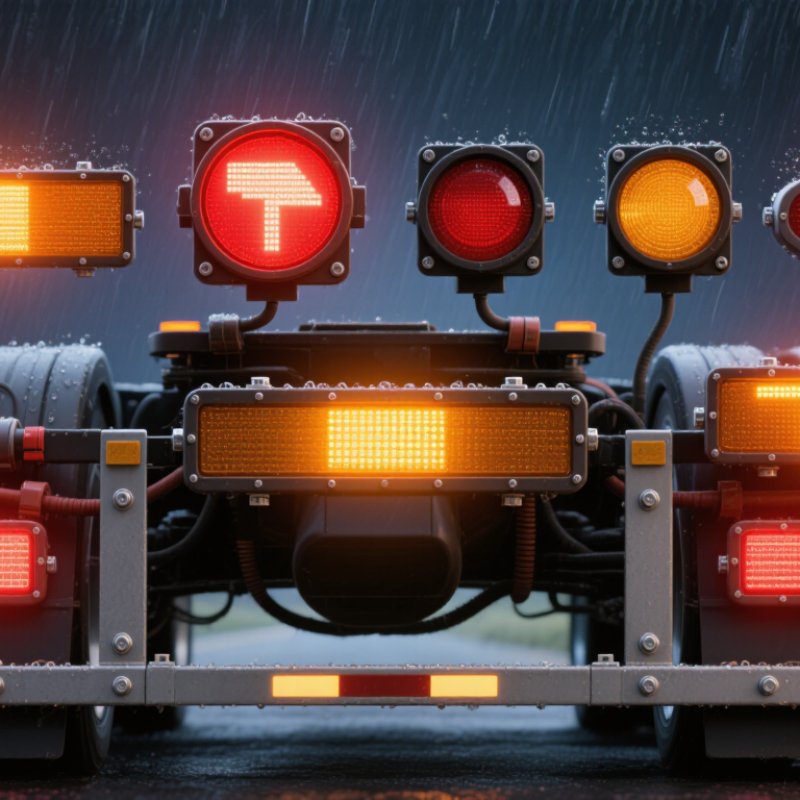
LED stop turn tail lights combine three rear-light functions in one compact housing.
Tail mode provides a lower, steady red glow for visibility at night. Stop mode raises the light output when the brake pedal is pressed. Turn mode flashes on the selected side after the signal switch sends a pulsed electrical command.
Inside, light-emitting diodes convert electrical energy into light through semiconductor junctions. A control circuit manages brightness, timing, and current flow. The brake signal usually has priority over the tail signal, so the lamp becomes brighter during braking. Good designs use resistors or electronic drivers to control heat and prevent unstable output. Polarity matters. Reversed wiring can leave the lamp dark or damage its circuit.
For global buyers, checking voltage range, connector type, mounting depth, and waterproof construction is essential. A sealed lens and protected terminals help resist rain, road spray, dust, and vibration. Yet “waterproof” should not be accepted without a test specification. A lamp may look strong on a workbench but perform poorly after months of heat cycles. I have found that uneven brightness is often caused by weak grounding, not the LED itself. Installation should follow the vehicle wiring diagram and local lighting requirements. A qualified technician can verify flash timing, brake priority, and light distribution before regular use. Small details matter.
Key Features to Compare in 2026 LED Stop Turn Tail Lights
2026 Best LED Stop Turn Tail Lights for Global Buyers
Key Features to Compare in 2026 LED Stop Turn Tail Lights
Choosing LED stop, turn, and tail lights requires more than checking brightness. The IIHS reports that rear-end crashes represent about 23% of police-reported crashes in the United States. Clear rear signals matter. Compare measured light intensity, response time, beam visibility, and color stability from different angles.
Check compliance before discussing price. U.S. FMVSS No. 108 and UNECE Regulations Nos. 6, 7, and 48 define important requirements for signal color, spacing, visibility, and installation. The U.S. Department of Transportation recorded 40,901 traffic deaths in 2023, according to its Traffic Safety Facts report. This does not prove that brighter lamps prevent crashes, but it shows why reliable signaling deserves careful testing.
Thermal control is another practical concern. LEDs may run cool at the lens but hot inside the housing. Compare aluminum heat paths, sealed connectors, vibration resistance, and moisture protection. An IP rating helps, but it cannot replace real water and salt-spray testing. Also confirm 12-volt or 24-volt compatibility, current draw, polarity, and possible electronic fault warnings. A high-lumen number alone can mislead. I would question any specification without test conditions.
Tips: Request photometric test reports, not only catalog photos. Test lamps after cold starts, long operation, and repeated braking. Check the amber turn signal from a side angle. Small details matter. Temperature data is often missing, and that deserves a second look.
2026 Best LED Stop Turn Tail Lights for Global Buyers
Key Features to Compare in 2026 LED Stop Turn Tail Lights
The comparison uses a practical 1–5 evaluation scale for global purchasing decisions, covering compatibility, visibility, durability, installation, and regulatory readiness. Higher scores indicate broader suitability for international vehicle applications.
Best LED Stop Turn Tail Light Types for Global Vehicle Buyers
2026 Best LED Stop Turn Tail Lights for Global Buyers
The best LED stop turn tail light depends on vehicle structure, road use, and installation space. Integrated three-function lamps combine stop, turn, and tail signals in one housing. They suit trailers, utility vehicles, and replacement projects with limited space. Flush-mount types create a clean body line, while surface-mount types simplify installation on flat panels. Direct-fit replacement units are better for vehicles with matching factory connectors and dimensions. Sequential turn patterns look modern, but they may not suit every vehicle or market requirement.
Tips: Check voltage, connector style, lamp dimensions, and mounting depth before ordering. Confirm the lens color and light functions separately. A bright lamp is not automatically a safe lamp. It still needs clear visibility in rain, dust, and sunlight. Look for reliable test information, heat management details, and documented quality control. Regional requirements can differ, so buyers should verify applicable approval markings before shipment or installation.
From practical fitting work, I have found that poor grounding causes many “lamp failures.” The lamp was fine. The connection was not. Waterproof seals also deserve attention, especially on trailers and exposed rear panels. One mistake I made was choosing a compact lamp without measuring cable clearance. It fitted visually, but installation became awkward. That experience changed my buying checklist. I now compare beam visibility, housing strength, service access, and warranty support instead of judging appearance alone.
How to Choose Lights for Vehicle Compatibility and Road Safety
2026 Best LED Stop Turn Tail Lights for Global Buyers
How to Choose Lights for Vehicle Compatibility and Road Safety
Choosing LED stop, turn, and tail lights starts with vehicle compatibility, not brightness. Check the voltage, connector, mounting depth, and housing shape against the original unit. A loose lamp can vibrate, collect water, and fail when braking matters most. Measure twice. Look beyond appearance.
Confirm whether the vehicle uses separate or combined stop and turn circuits. Some systems need a compatible flasher or load adjustment. Incorrect wiring may cause rapid flashing, dim output, or uneven function. Test every mode with the engine running, then inspect the light from several angles. Ask a qualified technician when wiring colors or polarity are unclear. Guessing is risky.
Choose sealed housings, stable output, clear lenses, and effective heat management. Verify visibility in daylight, rain, and heavy traffic. Check local vehicle requirements for color, spacing, flashing behavior, and required reflectors before purchase. Specifications can be incomplete. Keep the original lamp nearby during installation. That small habit prevents confusion. Even careful buyers miss details. Ensure the final light sits firmly, seals correctly, and remains visible after several minutes of operation.
2026 Best LED Stop Turn Tail Lights for Global Buyers - How to Choose Lights for Vehicle Compatibility and Road Safety
| Vehicle / Application | Recommended LED Configuration | Typical Electrical System | Key Compatibility Checks | Road-Safety Considerations | Useful Protection Features | Best Buying Priority |
|---|---|---|---|---|---|---|
| Passenger Cars | Combined stop, tail and turn lamp with red tail/stop output and amber or red turn-signal output, depending on local regulations. | Normally 12 V; confirm the vehicle charging-system voltage before installation. | Housing dimensions, mounting-hole spacing, connector polarity, bulb-replacement space and CAN-bus compatibility. | The stop function should be clearly brighter than the tail function. Maintain the original lamp height, spacing and viewing angle. | Sealed lens, reverse-polarity protection, thermal management and a sealed automotive connector. | Exact fit, legal photometric approval and fault-free operation with the vehicle electronics. |
| Pickup Trucks and Light Commercial Vehicles | Large-area combination lamps with separate or combined stop, tail, turn and rear-reflex functions. | 12 V or 24 V; dual-voltage products are suitable only when the specified operating range is confirmed. | Bed or body mounting location, vertical or horizontal orientation, wiring length, connector type and clearance from cargo or tailgates. | Use adequate separation from work lights and accessories so the regulated stop and turn signals remain unmistakable. | Impact-resistant lens, vibration-resistant mounting, water sealing and protection against voltage transients. | Mechanical durability, correct voltage range and resistance to vibration and road spray. |
| Heavy Trucks and Buses | High-visibility modular LED units, often with separate stop, tail, turn, rear fog and reflex functions. | Commonly 24 V, but vehicle voltage and allowable voltage range must be verified. | Fleet mounting pattern, body width, lamp grouping, connector pinout, chassis ground and trailer-system compatibility. | Check required lamp quantity, spacing, height, color and visibility under the destination market’s commercial-vehicle rules. | IP-rated sealing, reinforced brackets, corrosion-resistant terminals and replaceable or serviceable connectors. | Regulatory compliance documentation and long service life in high-duty operation. |
| Trailers and Caravans | Combination rear lamps with stop, tail, turn, rear-reflex and license-plate illumination where required. | 12 V or 24 V, depending on the towing vehicle and trailer wiring system. | 7-pin or 13-pin wiring arrangement, wire polarity, lamp orientation, rear overhang and space for reflex reflectors. | Verify that the lamp remains visible when the trailer is loaded and that the turn signal does not get hidden by cargo. | Waterproof housing, drain design, corrosion-resistant terminals and strong resistance to road vibration. | Water resistance, connector reliability and compatibility with the towing vehicle’s flasher system. |
| Motorcycles and Scooters | Compact low-profile tail/stop lamp, with separate turn indicators unless an approved integrated design is permitted. | Normally 12 V; the product must match the motorcycle’s charging and flasher system. | Rear-seat or fender mounting, plate visibility, indicator separation, connector size and available current capacity. | Do not reduce required turn-signal separation or obscure the license plate. Avoid excessive glare to following drivers. | Compact sealed housing, vibration resistance, UV-resistant lens and stable operation during frequent engine-speed changes. | Legal mounting geometry, clear signaling and secure vibration-resistant installation. |
| Off-Road, Agricultural and Utility Vehicles | Heavy-duty sealed combination lamps with stop, tail, turn and reflex functions selected for exposed mounting. | 12 V or 24 V; confirm whether the vehicle uses a regulated or variable charging output. | Bracket strength, lamp orientation, protective guards, cable routing and clearance from hydraulic or exhaust components. | Keep lamps clean and unobstructed by mud, attachments or implements. Check visibility during both road and work use. | High ingress protection, shock resistance, UV stability and sealed cable entries. | Environmental durability and protection from impact, dust, water and chemical exposure. |
| Global Regulatory Selection | Select lamps tested for the destination market and the specific lamp function, rather than relying only on an “LED” description. | Confirm nominal voltage, operating-voltage range, current draw and any load-resistor requirement. | Compare the manufacturer’s drawings, approval markings, wiring diagram, mounting instructions and replacement-part details. | Typical references may include applicable UNECE regulations or relevant North American SAE requirements; acceptance depends on the country and vehicle type. | An IP rating describes resistance to dust and water under defined tests; it does not by itself prove road-legal photometric performance. | Prioritize verified compliance, correct installation and local inspection requirements over brightness alone. |
Installation, Regulations, Maintenance, and Buying Considerations
2026 Best LED Stop Turn Tail Lights for Global Buyers
Installation, Regulations, Maintenance, and Buying Considerations
LED stop, turn, and tail lights improve response time when correctly installed. NHTSA’s Traffic Safety Facts 2022 reports that 49% of traffic fatalities occurred at night. This makes clear rear signaling important, especially on crowded roads and poorly lit routes. Choose lights with stable brightness, sealed housings, and clear red or amber functions. Confirm polarity, connector fit, and mounting depth before purchase. A rushed installation can create flicker, water entry, or confusing signals.
Regulations differ by market. In the United States, vehicle lamps generally follow FMVSS 108 requirements. UNECE Regulation No. 48 covers installation and signaling arrangements in many other markets. Check required colors, spacing, visibility angles, flash rates, and approval markings. A light that fits physically may still fail local inspection. That detail is easy to miss. It happened during one fleet retrofit I reviewed. The wiring was correct, but the lamp angle reduced visibility from the side.
Tips: Photograph the original wiring first. Use a fused test lead, heat-shrink connectors, and a waterproof ground point. After installation, test braking, turning, hazard operation, and reverse polarity protection. Inspect lenses for cracks and condensation every month. Salt, vibration, and pressure washing can shorten service life. SAE technical guidance also stresses photometric consistency, so avoid mixing noticeably different light outputs. Buy replacement units with traceable specifications, warranty terms, and documented testing rather than choosing by brightness alone.
